
콘텐츠로 건너뛰기
Atlas Anatolia
디그
뉴스술라웨시 빙하기 치아에서 빈랑 사용 25,000년 전까지 소급카스타모누 폼페이오폴리스 바실리카에서 로마 모자이크와 에로스 두상 발견
Prague Castle and Charles Bridge above the Vltava River

Wikimedia Commons (CC BY-SA 4.0)

유산복합 단지유네스코주요

Prague Castle

Seyfi Cem Baskin

Pražský hrad870 서기 – 2024 서기

The hilltop fortress and palace complex dominating Prague — St Vitus Cathedral, Golden Lane, and a millennium of Bohemian and Habsburg rule — ranks first among missing monuments in our EN/DE/TR/ZH Wikipedia pageview audit and anchors the Czech capital's UNESCO skyline.

21
관심 77

Area

~70 ha — among the largest ancient castles in the world

St Vitus Cathedral

Gothic core 14th c.; neo-Gothic west front 19th c.

Habsburg seat

Bohemian capital residence from 1526

UNESCO

Historic Centre of Prague (1992)

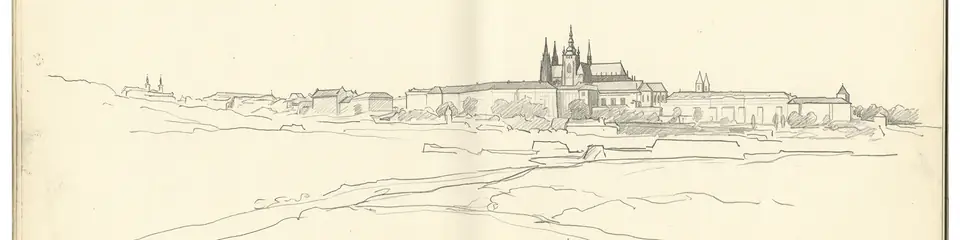
Graphite pencil sketch banner of Prague Castle

“Prague Castle compresses Central European state formation — from early medieval Bohemian dukes through Holy Roman coronations to Habsburg absolutism — in one continuously occupied citadel.”

위치

개요

Prague Castle crowns Hradčany hill above the Vltava River in Prague, Czechia. Chronicle tradition dates a fortification to the 9th century; the Romanesque Basilica of St George and the Gothic St Vitus Cathedral grew under the Přemyslid and Luxembourg dynasties. Charles IV made the castle the seat of the Holy Roman Empire in the 14th century, commissioning the cathedral nave and the royal palace halls that still frame the third courtyard.

After the Hussite wars and Jagiellon interlude, the Habsburgs from 1526 reshaped the complex into a Renaissance and Baroque palace — the Spanish Hall, Matthias Gate, and Teresa of Savoy's chapel layers document court life from Rudolf II's alchemists to the Defenestrations of Prague. The cathedral received its neo-Gothic west front in the 19th century; St Wenceslas Chapel preserves medieval Bohemian coronation regalia.

The castle remains the official residence of the Czech president. UNESCO inscribed "Historic Centre of Prague" in 1992, with the castle ensemble as its dominant landmark. Pair with Himeji Castle for contrasting European and East Asian fortress-palace traditions.

중요성

Prague Castle compresses Central European state formation — from early medieval Bohemian dukes through Holy Roman coronations to Habsburg absolutism — in one continuously occupied citadel. Its St Vitus Cathedral and palace courts are the reference for how Gothic sacred architecture and royal residence fused on a single defensive hill.

증거와 해석

확립된 사실과 논쟁 중인 사항을 구분합니다.

잘 확립된 사실

2
  • Archaeological layers under the courtyard document 9th–10th century Premyslid fortifications and church foundations.
  • Royal and cathedral building accounts, tombs of Charles IV and St Wenceslas, date major Gothic phases.

학술적 추론

1
  • Continuous Habsburg renovation aimed to rival Vienna while preserving Bohemian coronation symbolism.

커뮤니티 사진

당신의 경험을 공유하세요

이 유적지를 방문하셨나요? 다른 탐험가들을 위해 사진을 업로드해 보세요.

이 페이지 인용 방법

Atlas Anatolia. (870). Prague Castle. Atlas Anatolia. https://atlasanatolia.com/ko/site/prague-castle

콘텐츠는 CC BY-SA 4.0 라이선스에 따라 제공됩니다 — 재사용 시 출처 표시가 필요합니다.

출처

  • Prague Castle in Photographs — Fucíková, Eliška (2005)
  • UNESCO — Historic Centre of Prague링크

자주 묻는 질문

Prague Castle은(는) 어디에 위치해 있나요?

Prague Castle은(는) Czechia에 위치해 있습니다.

Prague Castle의 연대는 언제인가요?

Prague Castle의 연대는 대략 870 서기 – 2024 서기로 거슬러 올라갑니다.

Prague Castle과(와) 관련된 고대 문명은 무엇인가요?

Prague Castle은(는) Habsburg, Bohemian 문명과 관련이 있습니다.

Prague Castle이(가) 중요한 이유는 무엇인가요?

Prague Castle compresses Central European state formation — from early medieval Bohemian dukes through Holy Roman coronations to Habsburg absolutism — in one continuously occupied citadel.

Prague Castle은(는) 유네스코 세계유산인가요?

예 — Prague Castle은(는) 유네스코 세계유산으로 등재되어 있습니다.