
콘텐츠로 건너뛰기
Atlas Anatolia
디그
뉴스술라웨시 빙하기 치아에서 빈랑 사용 25,000년 전까지 소급카스타모누 폼페이오폴리스 바실리카에서 로마 모자이크와 에로스 두상 발견
The yellow façade and gardens of Schönbrunn Palace, Vienna

Wikimedia Commons (CC BY-SA 4.0)

유산복합 단지유네스코

Schönbrunn Palace

Seyfi Cem Baskin

Schloss Schönbrunn1696 서기 – 1918 서기

The Habsburg summer palace in Vienna — 1,441 rooms, formal gardens, and the Gloriette viewpoint — ranks among the most searched palaces in German and Chinese Wikipedia and rivals Versailles for Baroque court spectacle.

21
관심 78

위치

오스트리아

48.18°N · 16.31°E · 유럽

Rooms

1,441; state rooms open to visitors

Maria Theresa

Major Baroque remodelling 1740s–50s

Gloriette

Colonnade viewpoint above formal gardens

UNESCO

Palace and Gardens of Schönbrunn (1996)

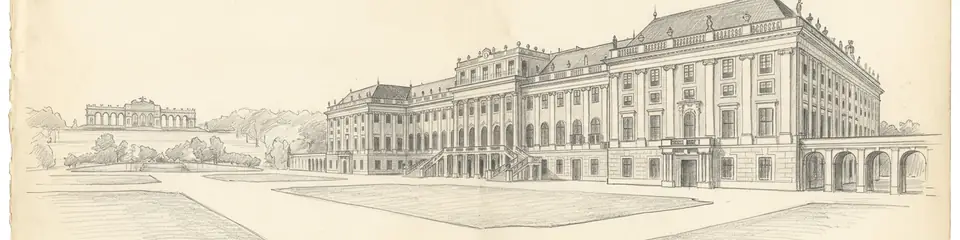
Graphite pencil sketch banner of Schönbrunn Palace

“Schönbrunn condenses Habsburg imperial history — Maria Theresa, Mozart, Franz Joseph, and the end of empire — into one Baroque ensemble.”

위치

개요

Schönbrunn Palace stands in Hietzing, Vienna, Austria, on the site of a hunting lodge the Habsburgs expanded after the failed 1683 Ottoman siege. Empress Maria Theresa remodelled the palace in the 1740s–50s into the chief summer residence of the Austrian monarchy. Johann Bernhard Fischer von Erlach and Nicolaus Pacassi shaped the yellow façade stretching 180 metres.

State rooms include the Great Gallery where Mozart performed as a child and where metternich-era diplomacy unfolded. The gardens feature the Neptune Fountain, Roman Ruin folly, maze, and the Gloriette colonnade on the hill. Franz Joseph was born and died here; the last Habsburg emperor Karl I signed his abdication in 1918.

UNESCO inscribed the Palace and Gardens of Schönbrunn in 1996. Visitor numbers rank among Europe's highest for historic houses. The zoo (Tiergarten) on the grounds is the world's oldest continuously operating menagerie.

중요성

Schönbrunn condenses Habsburg imperial history — Maria Theresa, Mozart, Franz Joseph, and the end of empire — into one Baroque ensemble. Its German-language search dominance makes it essential for a multilingual atlas serving DE audiences.

증거와 해석

확립된 사실과 논쟁 중인 사항을 구분합니다.

잘 확립된 사실

2
  • Habsburg court records and Fischer von Erlach plans document 18th-century rebuilding campaigns.
  • Franz Joseph's birth (1830) and death (1916) at Schönbrunn recorded in imperial chronicles.

학술적 추론

1
  • Garden axes align with Baroque triumphal symbolism — Gloriette frames palace as hilltop exedra.

커뮤니티 사진

당신의 경험을 공유하세요

이 유적지를 방문하셨나요? 다른 탐험가들을 위해 사진을 업로드해 보세요.

이 페이지 인용 방법

Atlas Anatolia. (1696). Schönbrunn Palace. Atlas Anatolia. https://atlasanatolia.com/ko/site/schonbrunn-palace

콘텐츠는 CC BY-SA 4.0 라이선스에 따라 제공됩니다 — 재사용 시 출처 표시가 필요합니다.

출처

  • Music and Spectacle in Baroque Rome — Hammond, Frederick (1994)
  • UNESCO — Palace and Gardens of Schönbrunn링크

자주 묻는 질문

Schönbrunn Palace은(는) 어디에 위치해 있나요?

Schönbrunn Palace은(는) Austria에 위치해 있습니다.

Schönbrunn Palace의 연대는 언제인가요?

Schönbrunn Palace의 연대는 대략 1696 서기 – 1918 서기로 거슬러 올라갑니다.

Schönbrunn Palace과(와) 관련된 고대 문명은 무엇인가요?

Schönbrunn Palace은(는) Habsburg 문명과 관련이 있습니다.

Schönbrunn Palace이(가) 중요한 이유는 무엇인가요?

Schönbrunn condenses Habsburg imperial history — Maria Theresa, Mozart, Franz Joseph, and the end of empire — into one Baroque ensemble.

Schönbrunn Palace은(는) 유네스코 세계유산인가요?

예 — Schönbrunn Palace은(는) 유네스코 세계유산으로 등재되어 있습니다.