
콘텐츠로 건너뛰기
Atlas Anatolia
디그
뉴스술라웨시 빙하기 치아에서 빈랑 사용 25,000년 전까지 소급카스타모누 폼페이오폴리스 바실리카에서 로마 모자이크와 에로스 두상 발견
Early Chalukya temples at Pattadakal on the Malaprabha River, Karnataka

Wikimedia Commons (CC BY-SA 4.0)

신전유네스코주요

Pattadakal

Seyfi Cem Baskin

ಪಟ್ಟದಕಲ್650 서기 – 760 서기

An Early Chalukya coronation and temple ensemble on the Malaprabha River in Karnataka, mixing northern nagara and southern dravida towers, inscribed by UNESCO in 1987.

21
관심 58

위치

인도

15.95°N · 75.81°E · 아시아

Dynasty

Early Chalukyas of Badami, 7th–8th centuries CE

Virupaksha

Queen Lokamahadevi, c. 740 CE

UNESCO

World Heritage Site (1987), ref. 239

Forms

Nagara and dravida towers in one compound

“Pattadakal is the textbook Early Chalukya laboratory for north and south Indian temple forms on one river terrace.”

위치

개요

Pattadakal (Pattadakallu) sits on the Malaprabha in Bagalkot district, Karnataka, downstream from the Early Chalukya centres at Aihole and Badami. The main group — Virupaksha, Mallikarjuna, Sangameshwara, Galaganatha, and neighbours — was a royal commemorative landscape in the 7th–8th centuries CE. Queen Lokamahadevi’s Virupaksha temple (c. 740) celebrates Vikramaditya II’s victories; its inscriptions name architects from the southern tradition.

The site is famous for placing nagara (curvilinear northern) and dravida (pyramidal southern) shikharas in one compound, so students can walk the two languages of Indian temple elevation in a single morning. A Jaina temple stands slightly apart. George Michell and the ASI published plans and conservation notes; UNESCO listed the Group of Monuments at Pattadakal in 1987 (ref. 239).
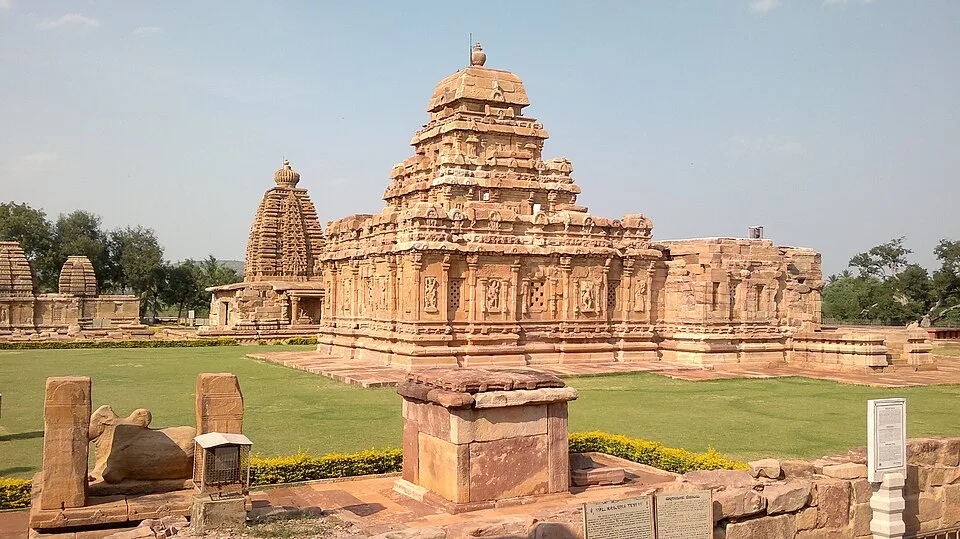
A-temple-at-pattadakal-badami
A-temple-at-pattadakal-badami | rajeshodayanchal (CC BY 3.0)
"Pattadakal represents the high point of an eclectic art which, in the 7th and 8th centuries under the Chalukya dynasty, achieved a harmonious blend of architectural forms from northern and southern India."
— UNESCO, Group of Monuments at Pattadakal (World Heritage List, 1987)

Read with Aihole and the Badami Cave Temples for the rest of the Early Chalukya river circuit, and with Hampi for a later Vijayanagara sacred landscape in the same state.
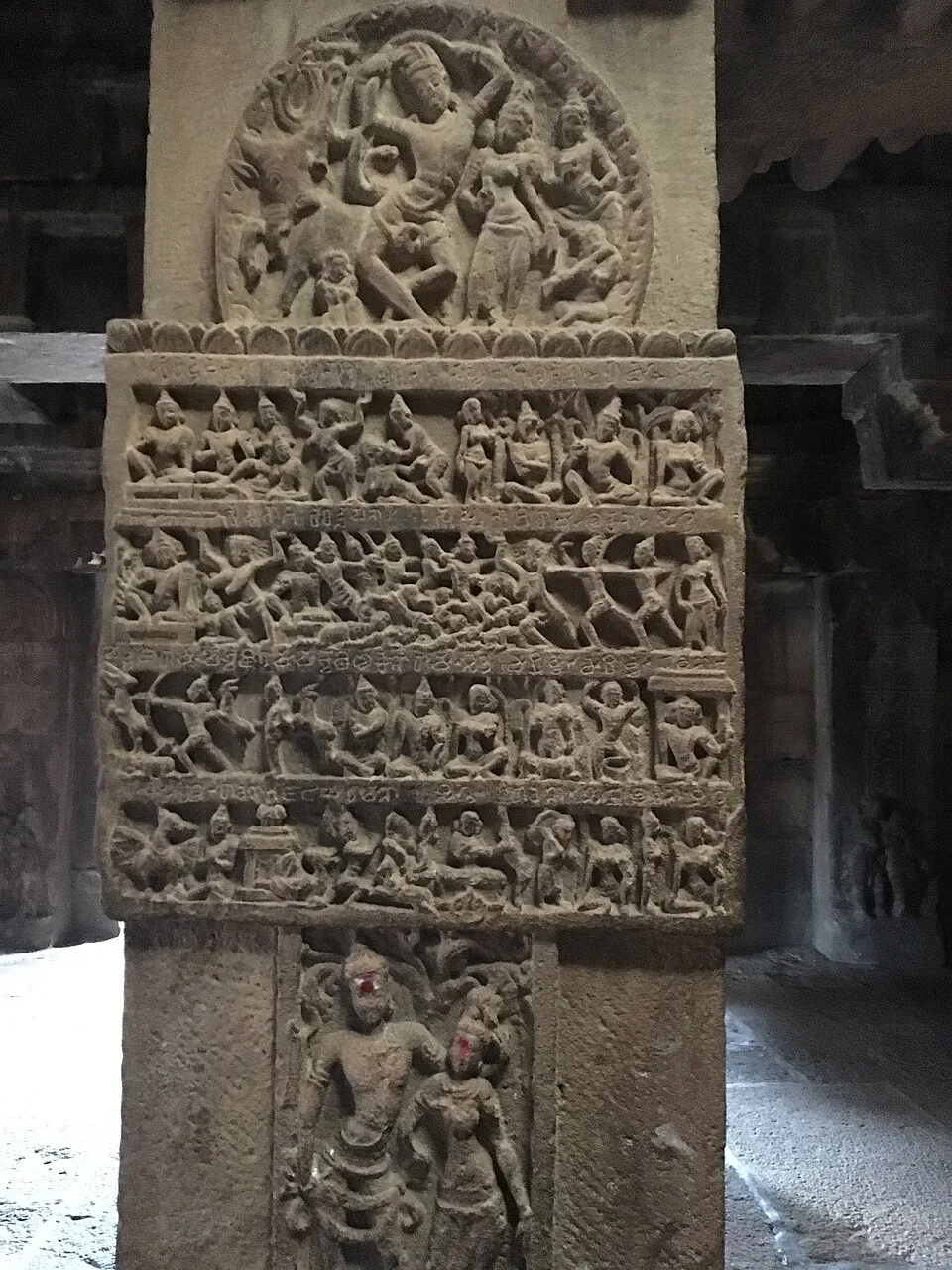
Virupaksha Temple-Pattadakal-Karnataka-05
Virupaksha Temple-Pattadakal-Karnataka-05 | Sachin Ravikumar (CC BY-SA 4.0)

Aihole and Badami complete the Early Chalukya circuit; Pattadakal is the commemorative middle term, not an isolated “style museum.”

중요성

Pattadakal is the textbook Early Chalukya laboratory for north and south Indian temple forms on one river terrace. It is also a coronation landscape: inscriptions make patronage, victory, and architects visible in a way most Deccan ruins do not.

증거와 해석

확립된 사실과 논쟁 중인 사항을 구분합니다.

잘 확립된 사실

2
  • Inscriptions name Chalukya patrons, architects, and the Virupaksha temple’s commemorative function after Vikramaditya II’s campaigns.
  • Standing temples preserve both nagara and dravida superstructures on measured ASI plans.

학술적 추론

1
  • The riverside group functioned as a coronation and commemorative landscape tied to Aihole and Badami.

커뮤니티 사진

당신의 경험을 공유하세요

이 유적지를 방문하셨나요? 다른 탐험가들을 위해 사진을 업로드해 보세요.

이 페이지 인용 방법

Atlas Anatolia. (650). Pattadakal. Atlas Anatolia. https://atlasanatolia.com/ko/site/pattadakal

콘텐츠는 CC BY-SA 4.0 라이선스에 따라 제공됩니다 — 재사용 시 출처 표시가 필요합니다.

출처

  • Temple Architecture and Art of the Early Chalukyas — Michell, George (2014)
  • UNESCO — Group of Monuments at Pattadakal링크

자주 묻는 질문

Pattadakal은(는) 어디에 위치해 있나요?

Pattadakal은(는) India에 위치해 있습니다.

Pattadakal의 연대는 언제인가요?

Pattadakal의 연대는 대략 650 서기 – 760 서기로 거슬러 올라갑니다.

Pattadakal과(와) 관련된 고대 문명은 무엇인가요?

Pattadakal은(는) Chalukya 문명과 관련이 있습니다.

Pattadakal이(가) 중요한 이유는 무엇인가요?

Pattadakal is the textbook Early Chalukya laboratory for north and south Indian temple forms on one river terrace.

Pattadakal은(는) 유네스코 세계유산인가요?

예 — Pattadakal은(는) 유네스코 세계유산으로 등재되어 있습니다.