
콘텐츠로 건너뛰기
Atlas Anatolia
디그
뉴스술라웨시 빙하기 치아에서 빈랑 사용 25,000년 전까지 소급카스타모누 폼페이오폴리스 바실리카에서 로마 모자이크와 에로스 두상 발견
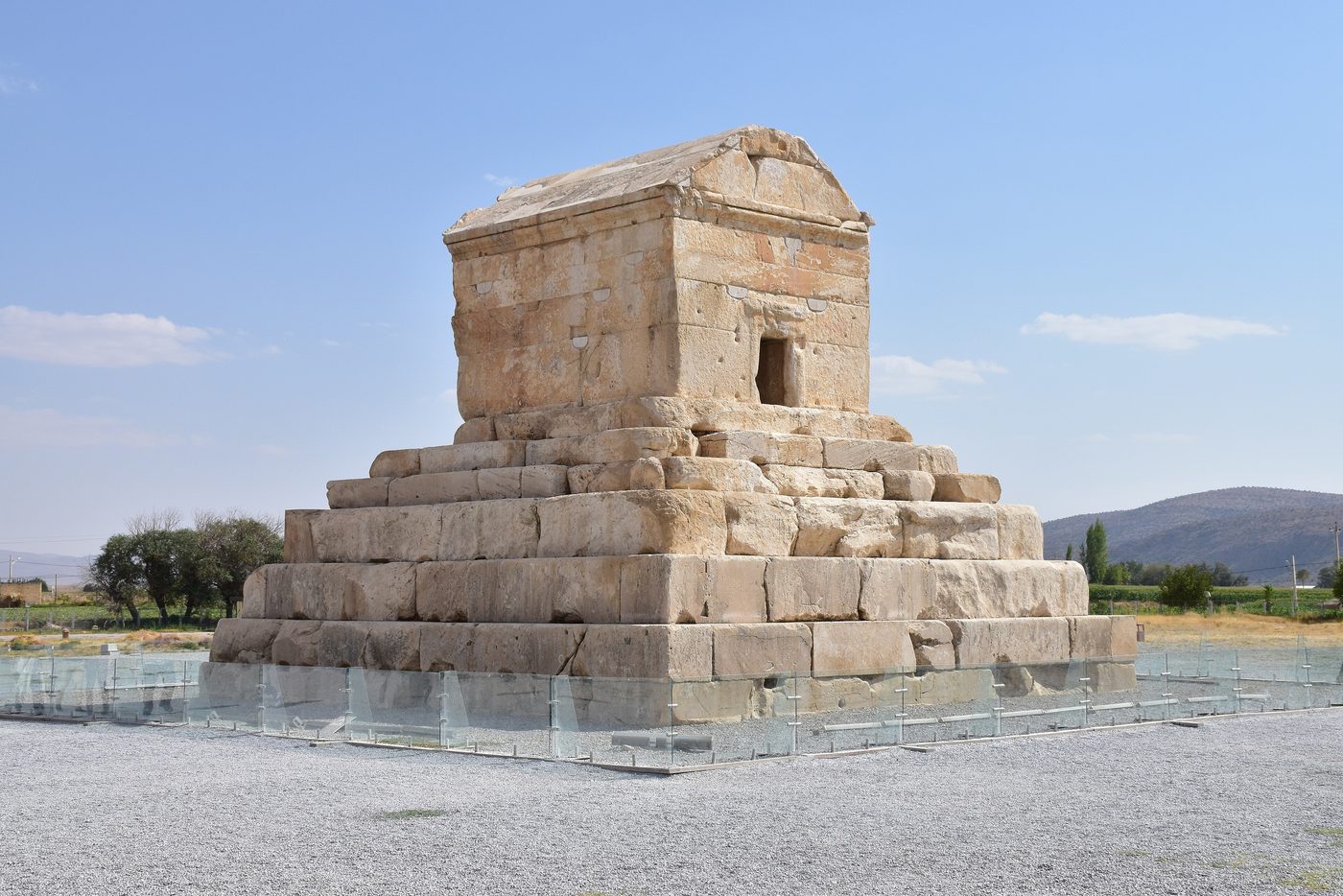
Pasargadae — Iran

Wikimedia Commons (CC BY-SA)

Country Record

Oldest Complex in Iran

복합 단지유네스코주요

Pasargadae

Seyfi Cem Baskin

پاسارگاد546 기원전 – 330 기원전

Pasargadae, the first dynastic capital of the Achaemenid Empire, founded by Cyrus the Great in 546 BCE, exemplifies early Persian royal architecture and urban planning.

322
관심 69

위치

Fars Province · Murghab Plain · 이란

30.19°N · 53.17°E · 아시아

Built

c. 546 BCE

Civilization

Achaemenid Persian

Discovered

Modern excavations began 1908 by Ernst Herzfeld

Status

UNESCO World Heritage Site (inscribed 2004)

Founder

Cyrus the Great

Function

Ceremonial and dynastic capital, royal garden complex

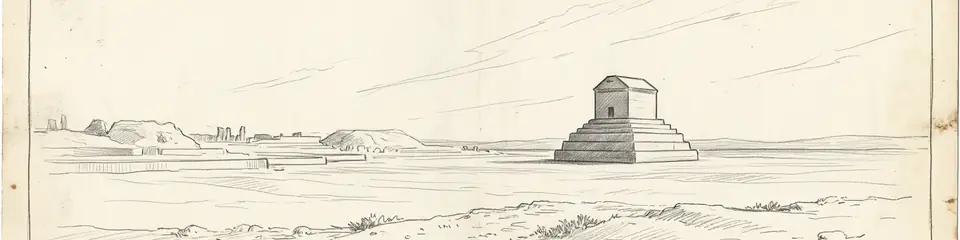
Graphite pencil sketch banner of Pasargadae

“Pasargadae embodies the foundational moment of the Achaemenid Empire, marking the shift from regional power to world empire.”

위치

개요

Historical Context

Pasargadae was founded by Cyrus the Great around 546 BCE on the fertile plain of the Pulvar River, following his conquest of the Median Empire. It served as the ceremonial and administrative nucleus of the nascent Achaemenid dynasty, embodying the ideological synthesis of Elamite, Mesopotamian, and Iranian traditions. The city remained a sacred dynastic center even after the capital moved to Persepolis under Darius I. Its abandonment accelerated after Alexander the Great’s invasion in 330 BCE, though the tomb of Cyrus continued to be venerated for centuries.

Discovery and Excavation

Early European travelers, such as Josafa Barbaro in 1474 and Carsten Niebuhr in 1765, noted the ruins, but systematic archaeological investigation began in 1908 with Ernst Herzfeld. Herzfeld’s work, continued in 1928, produced the first detailed plans and photographs. The most comprehensive excavations were undertaken by David Stronach from 1961 to 1963 on behalf of the British Institute of Persian Studies, which revealed the palace complex, gardens, and fortifications. Later Iranian teams led by Ali Sami and subsequent conservation efforts have focused on preservation and restoration.
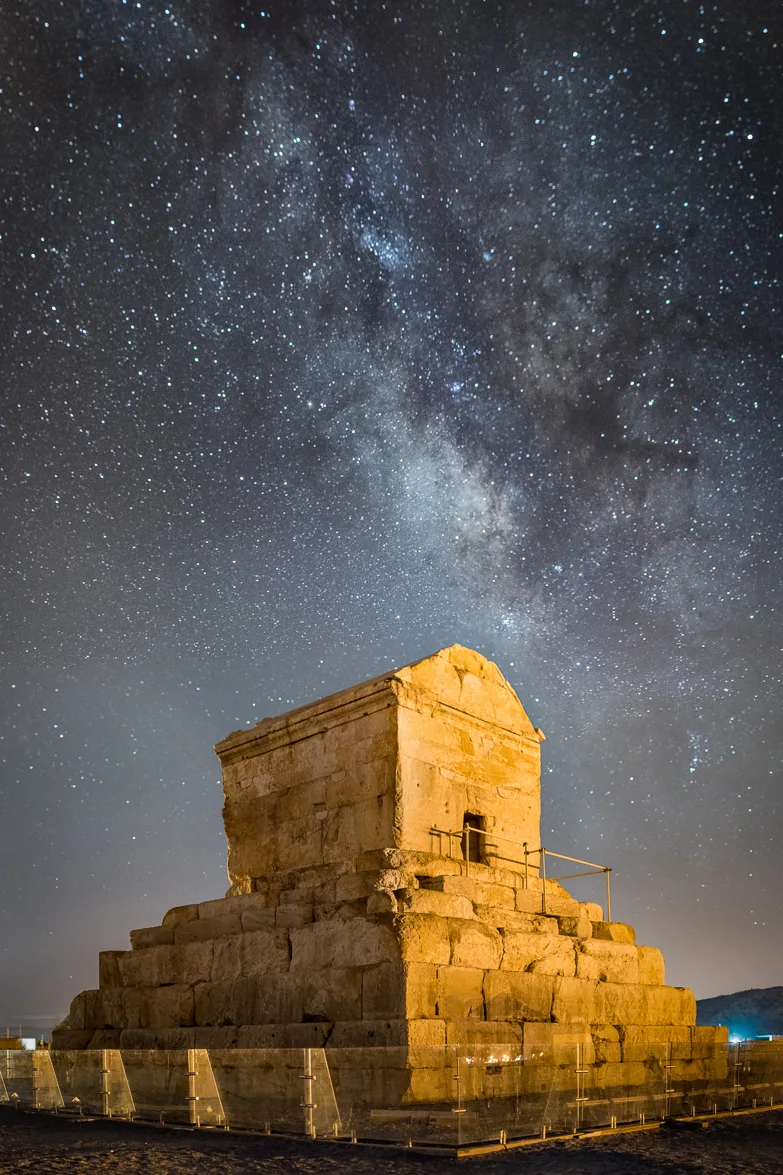
Tomb of Cyrus the Great
Tomb of Cyrus the Great | Mohammad Reza Domiri Ganji محمدرضا دومیری گنجی (CC BY-SA 4.0)
"O man, whoever you are and wherever you come from — I am Cyrus, who founded the empire of the Persians. Do not therefore grudge me this little earth which covers my body."
— Inscription on the Tomb of Cyrus the Great at Pasargadae, recorded by Strabo, Geography XV.3.7

Architectural Significance

The site’s layout reflects an innovative open-plan design, with palace pavilions, audience halls, and a tomb set within a vast garden—the earliest known royal park or ‘paradise’ (from Old Persian paridaida). The structures employ a characteristic blend of architectural traditions: Ionian Greek stone-working techniques, Assyrian lamassu-style guardian figures, and Urartian rock-cut tombs. The use of white limestone columns with black stone bases and capitals influenced later Achaemenid architecture at Persepolis and Susa.
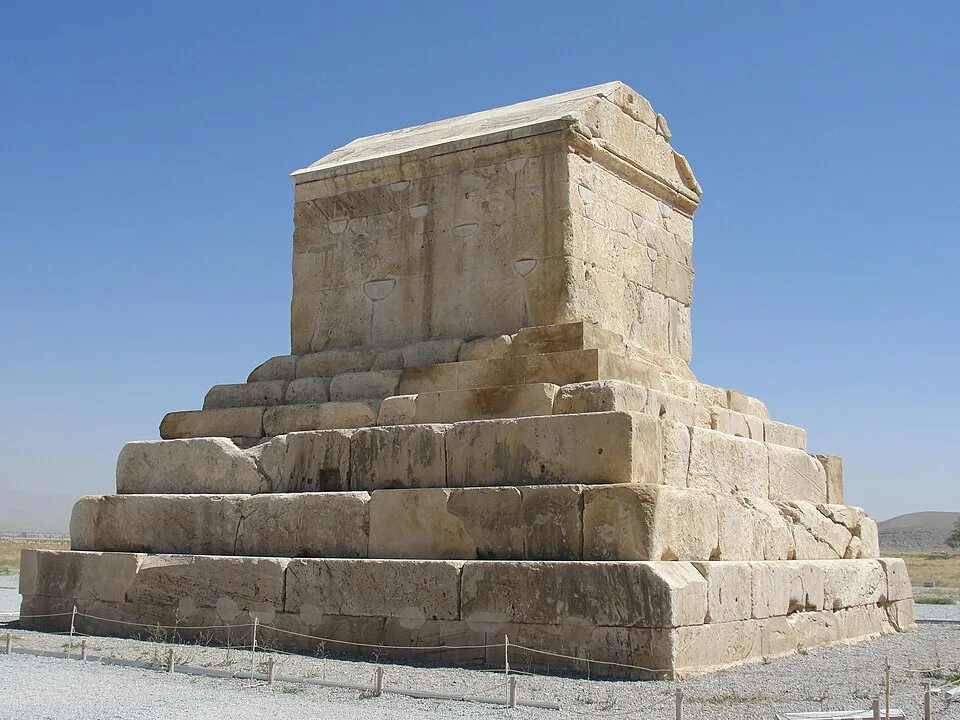
CyrustheGreatTomb 22059
CyrustheGreatTomb 22059 | Truth Seeker (CC BY-SA 3.0)

The Tomb of Cyrus

A modest gabled tomb on a stepped platform, traditionally attributed to Cyrus based on Greek historians’ descriptions and a long-lost inscription, stands as the focal point of the site. The structure measures about 11 meters in height and was once surrounded by a colonnade. Its restrained design contrasts sharply with later royal tombs, likely reflecting Cyrus’s personal ethos. Inscribed on the tomb, according to Arrian, was the plea: ‘O man, I am Cyrus… grudge me not therefore this monument.’

Royal Complex and Monuments

The palace area includes the Residential Palace (Palace P), the Gatehouse (Gate R) with its famous four-winged guardian figure, and the Audience Hall (Palace S). The Zendan-e Suleiman, a towering stone structure of debated function (possibly a tomb or fire temple), punctuates the northern precinct. The Tall-e Takht, a massive stone platform overlooking the plain, likely served as a fortified citadel. These monuments illustrate the early Achaemenid experimental phase in monumental construction, prior to the mature forms seen at Persepolis.
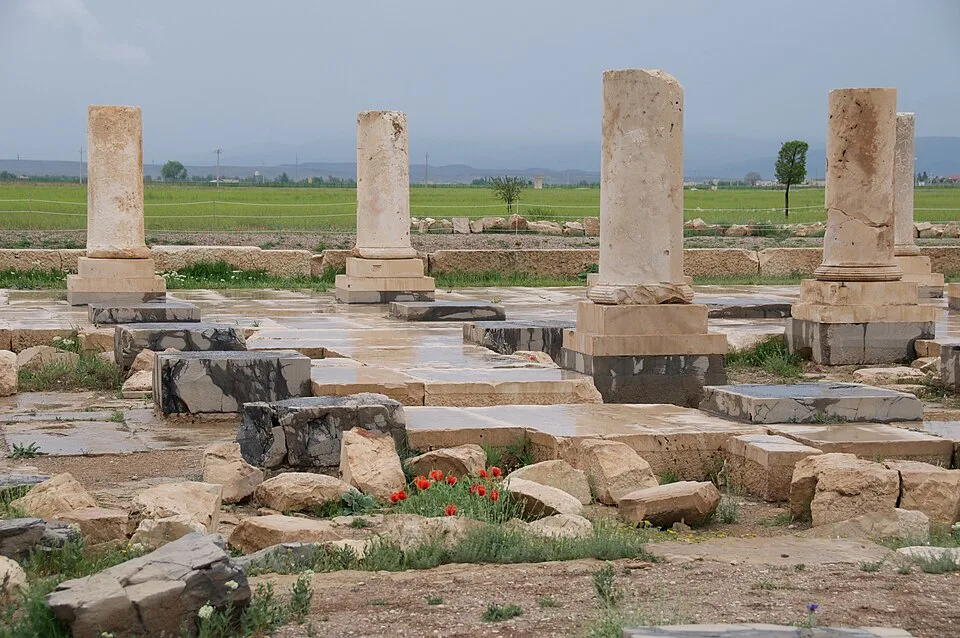
Pasargadae ruins
Pasargadae ruins | A. Davey (CC BY 2.0)

Legacy and Interpretation

Pasargadae remains central to debates on the nature of Achaemenid kingship and urbanism. While some scholars see it as a fully-fledged capital, others interpret it as a dynastic sanctuary and coronation site. Its planned gardens and multicultural artistry underscore Cyrus’s vision of a universal empire. Today, as a UNESCO World Heritage Site, Pasargadae provides crucial evidence for understanding the origins of Persian imperial ideology and its enduring influence on the ancient world.

중요성

Pasargadae embodies the foundational moment of the Achaemenid Empire, marking the shift from regional power to world empire. Its architectural and urban innovations set the template for later Persian capitals and spread the concept of the royal garden across Eurasia. The site offers vivid testimony to Cyrus the Great’s policy of cultural synthesis and tolerance, which resonates in later traditions of Persian kingship.

증거와 해석

확립된 사실과 논쟁 중인 사항을 구분합니다.

잘 확립된 사실

3
  • The tomb of Cyrus is securely identified based on descriptions by Greek historians (Arrian, Strabo) and its unique architectural form.
  • Inscribed fragments and the Cyrus Cylinder confirm the use of multilingual proclamations and the promotion of Cyrus’s tolerance.
  • Excavations revealed an extensive irrigation system and garden layout, the oldest known royal paradise (paridaida).

학술적 추론

2
  • The four-winged guardian figure at Gate R likely represents Cyrus the Great, blending Egyptian, Elamite, and Assyrian iconography to symbolize universal rule.
  • The palace layout with isolated pavilions within a garden reflects a ceremonial rather than residential function, possibly used for audience and ritual.

논쟁 중인 해석

2
  • The function of the Zendan-e Suleiman remains disputed: interpretations range from a tomb for Cambyses to a fire temple or treasury.
  • Scholars disagree on whether Pasargadae was the primary administrative capital or solely a sacred dynastic center, with royal administration concentrated elsewhere.

발견과 발굴

Modern conservation and monitoring

지휘 Various Iranian and international teams

Ongoing collaborative projects involving the Iranian Cultural Heritage Organization and international partners focus on stabilization, environmental monitoring, and addressing structural issues, particularly at the Tomb of Cyrus.

1908–1928

Initial Scientific Survey and Excavations

지휘 Ernst Herzfeld

Ernst Herzfeld conducted the first systematic mapping, photography, and excavations, documenting the major monuments and recovering architectural fragments.

1950–1958

Conservation and Iranian Investigations

지휘 Ali Sami

Ali Sami and the Iranian Antiquities Service carried out restoration and further investigations, consolidating structures and preparing the site for visitors.

1961–1963

Comprehensive Excavations of the Royal Complex

지휘 David Stronach

David Stronach led the British Institute of Persian Studies’ excavations, revealing the palace plan, gardens, water channels, and artifacts, forming the basis of modern understanding of the site.

커뮤니티 사진

당신의 경험을 공유하세요

이 유적지를 방문하셨나요? 다른 탐험가들을 위해 사진을 업로드해 보세요.

이 페이지 인용 방법

Atlas Anatolia. (546). Pasargadae. Atlas Anatolia. https://atlasanatolia.com/ko/site/pasargadae

콘텐츠는 CC BY-SA 4.0 라이선스에 따라 제공됩니다 — 재사용 시 출처 표시가 필요합니다.

출처

  • Stronach, D. (1978) Pasargadae: A Report on the Excavations Conducted by the British Institute of Persian Studies from 1961 to 1963 — David Stronach (1978)
  • Briant, P. (2002) From Cyrus to Alexander: A History of the Persian Empire — Pierre Briant (2002)
  • Stronach, D. (1990) 'The Garden as a Political Statement: Some Case Studies from the Near East in the First Millennium B.C.', Bulletin of the Asia Institute — David Stronach (1990)
  • Root, M.C. (1979) 'The King and Kingship in Achaemenid Art: Essays on the Creation of an Iconography of Empire', Acta Iranica — Margaret Cool Root (1979)
  • UNESCO World Heritage List: Pasargadae링크
  • Encyclopaedia Iranica: Pasargadae링크

자주 묻는 질문

Pasargadae은(는) 어디에 위치해 있나요?

Pasargadae은(는) Fars Province, Murghab Plain, Iran에 위치해 있습니다.

Pasargadae의 연대는 언제인가요?

Pasargadae의 연대는 대략 546 기원전 – 330 기원전로 거슬러 올라갑니다.

Pasargadae과(와) 관련된 고대 문명은 무엇인가요?

Pasargadae은(는) Achaemenid Persian 문명과 관련이 있습니다.

Pasargadae이(가) 중요한 이유는 무엇인가요?

Pasargadae embodies the foundational moment of the Achaemenid Empire, marking the shift from regional power to world empire.

Pasargadae은(는) 유네스코 세계유산인가요?

예 — Pasargadae은(는) 유네스코 세계유산으로 등재되어 있습니다.