
콘텐츠로 건너뛰기
Atlas Anatolia
디그
뉴스술라웨시 빙하기 치아에서 빈랑 사용 25,000년 전까지 소급카스타모누 폼페이오폴리스 바실리카에서 로마 모자이크와 에로스 두상 발견
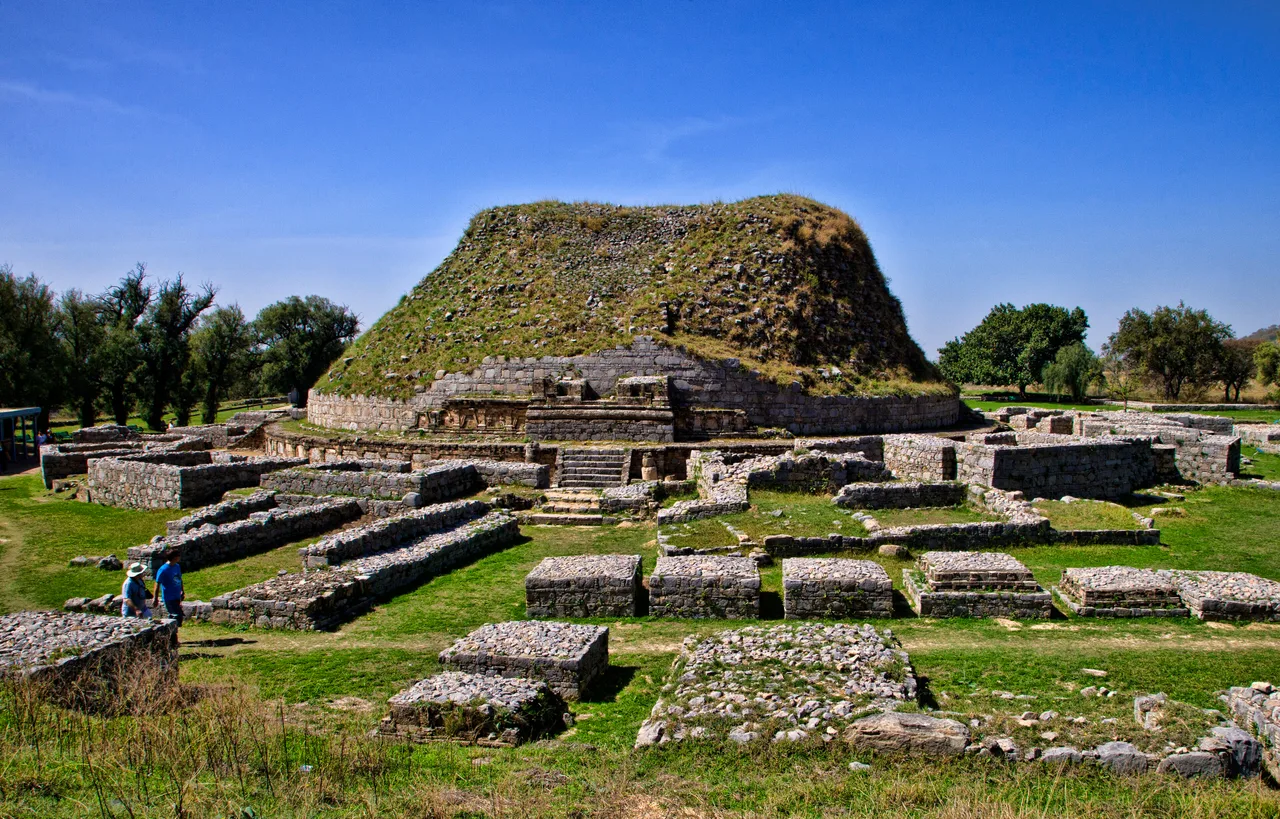
Ruins of Sirkap, the Hellenistic-era city of Taxila, with grid-plan streets visible

Wikimedia Commons

Country Record

Longest Continuously Occupied Site in Pakistan

도시유네스코

Taxila

Seyfi Cem Baskin

ٹیکسلا518 기원전 – 600 서기

An ancient city in the Pothohar Plateau of Pakistan where Achaemenid Persia, Alexander's Macedonia, and Mauryan India met — its three successive city sites and Buddhist monasteries document 1,200 years of continuous urban life at the crossroads of the ancient world.

31
관심 65

위치

파키스탄

33.78°N · 72.83°E · 아시아

First Persian mention

Behistun Inscription of Darius I, c. 518 BCE

Alexander's arrival

326 BCE — used as base before crossing the Indus

Three city layers

Bhir Mound (6th–2nd c. BCE), Sirkap (2nd c. BCE–2nd c. CE), Sirsukh (2nd c. CE+)

Artistic legacy

Origin of Gandharan style — first human depictions of the Buddha

UNESCO

World Heritage Site since 1980

Location

35 km northwest of Islamabad, eastern end of the Khyber Pass corridor

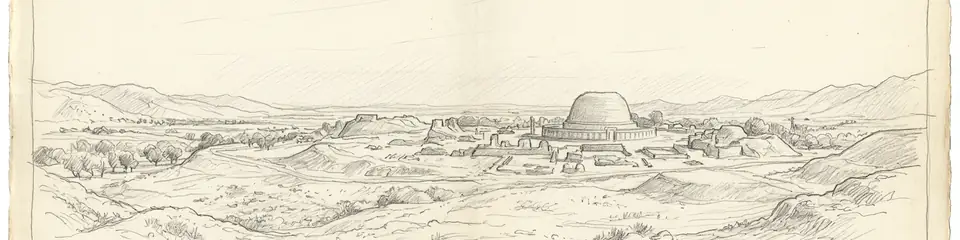
Graphite pencil sketch banner of Taxila

“Taxila is where the Buddha got a face.”

위치

개요

Taxila lies in the Pothohar Plateau, 35 km northwest of Islamabad, at the eastern end of the Khyber Pass route from Central Asia into the subcontinent. The strategic position made it the meeting point of overland trade routes connecting Persia, Central Asia, China, and India — and the city reflects this intersection in its architecture, coinage, and art.

The site encompasses three major successive urban settlements, each occupying a distinct location on the plateau:

Bhir Mound (6th–2nd century BCE): The oldest city at Taxila, founded in the Achaemenid period when Taxila was a provincial capital of the Persian Empire (mentioned in the Behistun Inscription of Darius I, c. 518 BCE). The city became an important intellectual center — later tradition identifies it as the location of a university where the grammarian Panini (author of the Ashtadhyayi, the world's first formal linguistic grammar) was educated, and where Chanakya (Kautilya), author of the Arthashastra statecraft manual, taught. Alexander the Great received the submission of the city's king Ambhi in 326 BCE and used Taxila as his base before crossing the Indus.

Sirkap (2nd century BCE – 2nd century CE): Founded by the Bactrian Greek king Demetrius I after his invasion of the subcontinent c. 185 BCE, Sirkap was laid out on a Hellenistic grid plan with a main street (a typical Greek decumanus) and rectangular blocks. The city passed successively under Saka, Parthian, and Kushana rule. Its most remarkable monument is the Dharmarajika Stupa complex, built by Ashoka in the 3rd century BCE and expanded over the following centuries.

Sirsukh (2nd century CE onward): Founded by the Kushana emperor Kanishka (c. 127 CE), Sirsukh is a large rectangular walled city of the Kushana type. The Kushana period was the golden age of Gandharan Buddhist art: the sculpture workshops of Taxila produced the first realistic human depictions of the Buddha in stone and stucco, combining Hellenistic figural conventions with Buddhist iconography. The resulting Gandharan style spread Buddha imagery across Asia.

Dozens of Buddhist monasteries, stupas, and viharas surround the three city sites, the most celebrated being the Jaulian Monastery (2nd–5th century CE) with its decorated stupa and assembly hall.

중요성

Taxila is where the Buddha got a face. Before Gandharan art developed in the workshops of Taxila and its region, the Buddha was depicted aniconically — by symbols, as at Sanchi. Gandharan sculptors, working in a tradition that merged Greek figural realism with Buddhist devotional needs, created the first human portraits of the Buddha, establishing the iconographic canon — ushnisha cranial protuberance, elongated earlobes, dhyana mudra hand gesture — that all subsequent Buddhist art from Japan to Java follows. Every Buddha image in the world is descended from the workshops of Taxila. Beyond art, Taxila is the physical site of the encounter of three great imperial traditions: Achaemenid administrative culture, Macedonian Hellenism, and Mauryan and Kushana Indian statecraft — each leaving material evidence in a single hilltop plateau.

증거와 해석

확립된 사실과 논쟁 중인 사항을 구분합니다.

잘 확립된 사실

3
  • The Behistun Inscription of Darius I (c. 518 BCE) lists Gadara (Gandhara, centered on Taxila) as a tributary province of the Achaemenid Empire, providing the earliest textual attestation of the site's political status.
  • Coins found at Sirkap follow a clear numismatic sequence: Indo-Greek (with Greek legends and Athena iconography), Indo-Scythian (Saka rulers), Indo-Parthian, and Kushana — documenting the city's succession of rulers with physical evidence at each stratum.
  • Gandharan Buddha sculptures from the Taxila region display a consistent fusion of Hellenistic figural anatomy (contrapposto stance, naturalistic drapery) with Buddhist iconographic conventions (ushnisha, elongated earlobes, hand mudras), a hybrid style dated by coin associations to the 1st–3rd centuries CE.

학술적 추론

1
  • The oral tradition that Taxila hosted a famous university where Chanakya, Panini, and Jivaka (the Buddha's physician) were educated is supported by the city's intellectual products — the Arthashastra, the Ashtadhyayi — but no physical remains of a university building have been identified.

커뮤니티 사진

당신의 경험을 공유하세요

이 유적지를 방문하셨나요? 다른 탐험가들을 위해 사진을 업로드해 보세요.

이 페이지 인용 방법

Atlas Anatolia. (518). Taxila. Atlas Anatolia. https://atlasanatolia.com/ko/site/taxila

콘텐츠는 CC BY-SA 4.0 라이선스에 따라 제공됩니다 — 재사용 시 출처 표시가 필요합니다.

출처

  • Taxila, 3 vols. — John Marshall (1951)
  • Gandharan Art in Context — Elizabeth Errington and Joe Cribb (eds.) (1992)
  • UNESCO — Archaeological Ruins at Moenjodaro링크

자주 묻는 질문

Taxila은(는) 어디에 위치해 있나요?

Taxila은(는) Pakistan에 위치해 있습니다.

Taxila의 연대는 언제인가요?

Taxila의 연대는 대략 518 기원전 – 600 서기로 거슬러 올라갑니다.

Taxila과(와) 관련된 고대 문명은 무엇인가요?

Taxila은(는) Achaemenid Persian, Greek, Mauryan, Indus Valley 문명과 관련이 있습니다.

Taxila이(가) 중요한 이유는 무엇인가요?

Taxila is where the Buddha got a face.

Taxila은(는) 유네스코 세계유산인가요?

예 — Taxila은(는) 유네스코 세계유산으로 등재되어 있습니다.