콘텐츠로 건너뛰기
Atlas Anatolia
디그
뉴스술라웨시 빙하기 치아에서 빈랑 사용 25,000년 전까지 소급카스타모누 폼페이오폴리스 바실리카에서 로마 모자이크와 에로스 두상 발견
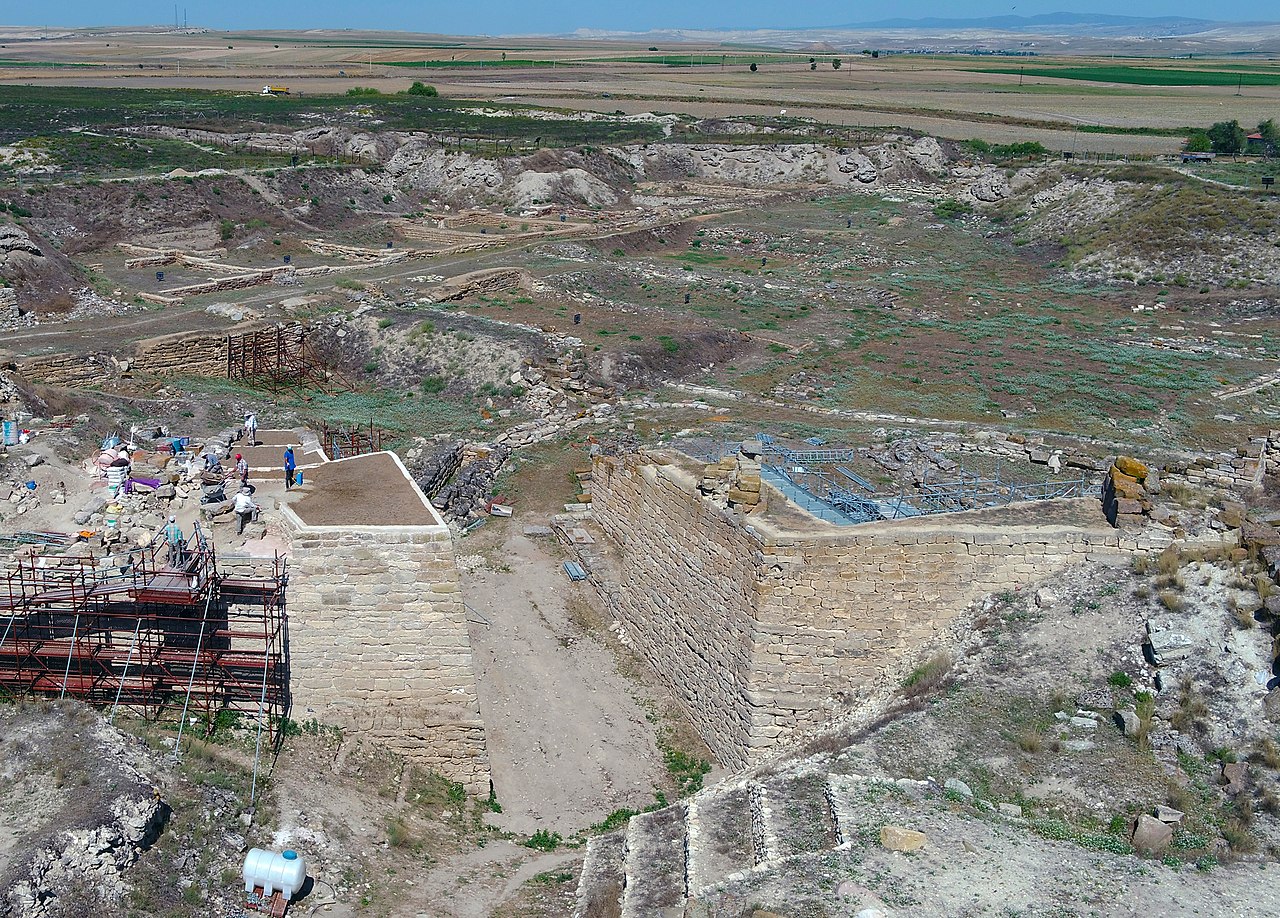
The Early Phrygian East Gate at Gordion

Wikimedia Commons (CC BY-SA)

도시

Gordion

Seyfi Cem Baskin

950 기원전 – 200 기원전

Capital of ancient Phrygia, famous for the legend of the Gordian Knot and the monumental tumulus believed to be the tomb of King Midas. One of the most important Iron Age sites in Anatolia.

312
관심 52

위치

Ankara · Central Anatolia · 튀르키예

39.65°N · 31.99°E · 아시아

Date Range

c. 950–200 BCE

Tumulus Height

~53 m (Midas Mound)

Tomb Date

c. 740 BCE (dendro)

Tumuli Count

100+

Notable Finds

The 'Midas Mound' (Tumulus MM) contained a log coffin, bronze vessels, and over 170 bronze fibulae.

Dating Method

The 800 BCE destruction level was dated using dendrochronology on burnt timbers.

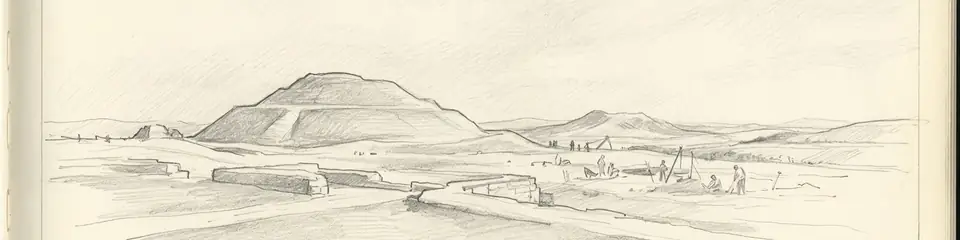
Graphite pencil sketch banner of Gordion

“Gordion is the key site for understanding Phrygian civilization, a major Anatolian power that bridged the gap between the collapse of the Hittite Empire and the rise of the Lydian and Persian empires.”

위키백과에서

Gordion was the capital city of ancient Phrygia. It was located at the site of modern Yassıhöyük, about 70–80 km southwest of Ankara. The site is famous for the legend of the Gordian Knot and the monumental tumulus believed to be the tomb of King Midas.

위키백과에서 전체 기사 읽기 →

위치

개요

Gordion, located at modern Yassıhöyük in Ankara Province, was the capital of the Phrygian Kingdom from approximately the 9th to the 7th century BCE. The site includes a large settlement mound (the citadel), an extensive lower town, and over 100 burial tumuli.

The largest tumulus, known as the "Midas Mound" or Tumulus MM, stands about 53 meters high and is one of the largest ancient burial mounds in Anatolia. When excavated in 1957 by Rodney Young of the University of Pennsylvania, it was found to contain a remarkably well-preserved wooden burial chamber with the remains of a man in his 60s, surrounded by elaborate wooden furniture and bronze vessels. Tree-ring dating places the tomb around 740 BCE.

"Gordion, the city of Midas, where the ox-cart was fastened with the famous knot."
— Arrian, c. 2nd century AD

Gordion is also associated with the legend of the Gordian Knot — the prophecy that whoever untied the knot on an oxcart in the city would rule all of Asia. Alexander the Great famously dealt with it during his visit in 333 BCE.

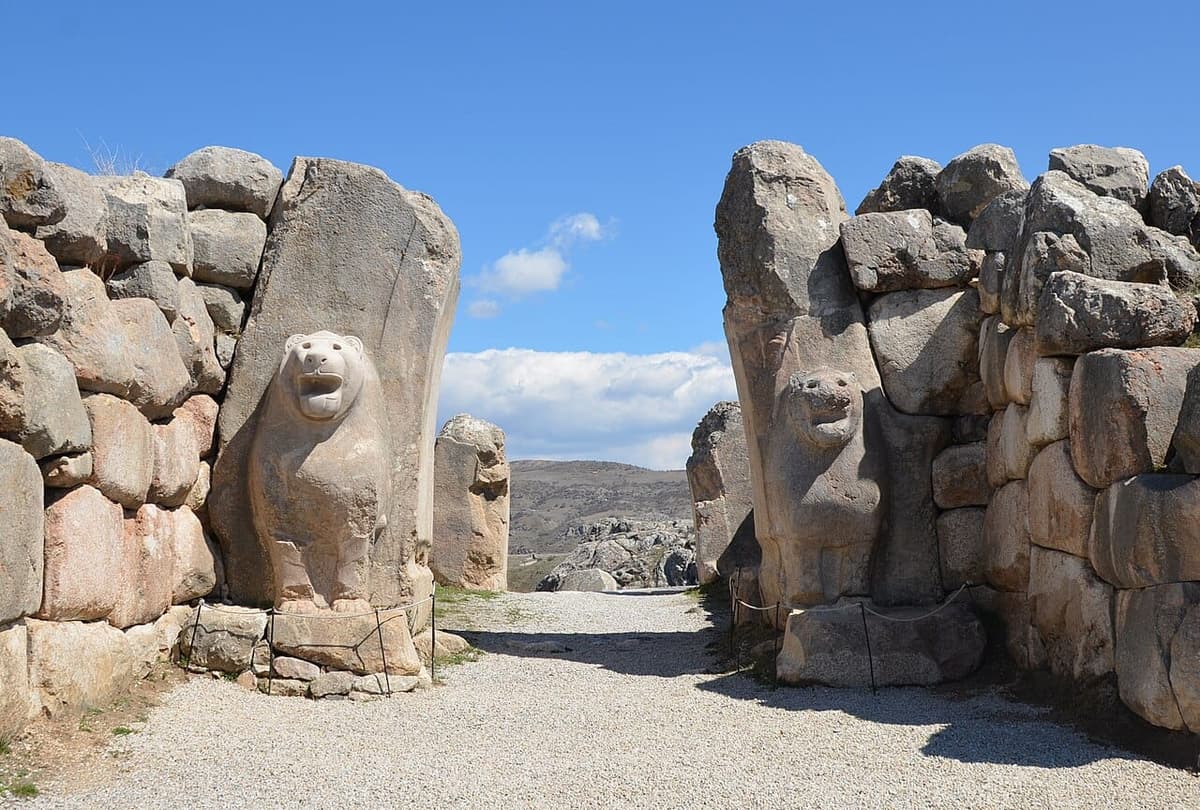
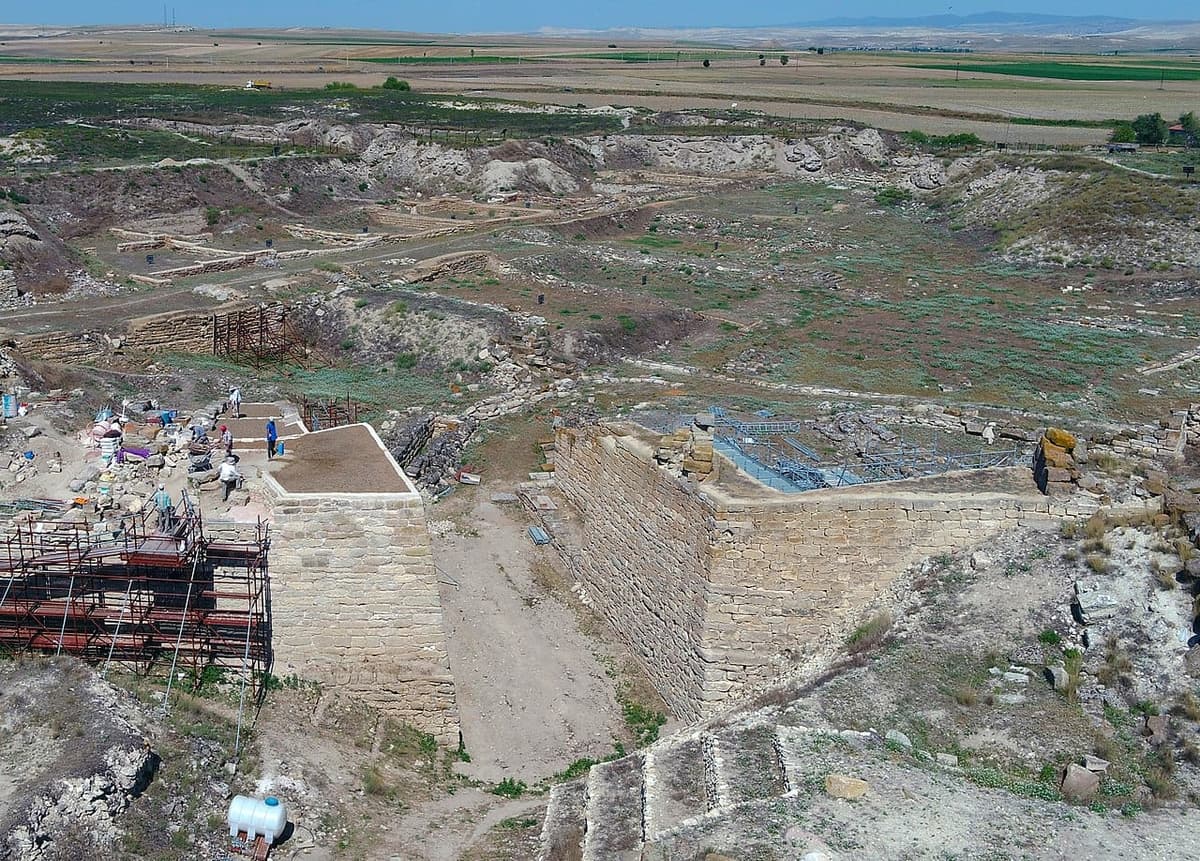
The citadel's architecture reveals a sophisticated urban center. Its most prominent feature is a massive stone gate complex, built around 800 BCE, which controlled access to the elite quarter. Within this quarter, large megaron-style buildings with intricate geometric mosaic floors, the oldest known in Anatolia, served as administrative and ceremonial centers. The settlement's wealth was derived from control over fertile agricultural land and strategic trade routes connecting Anatolia with Assyria and the Aegean world.
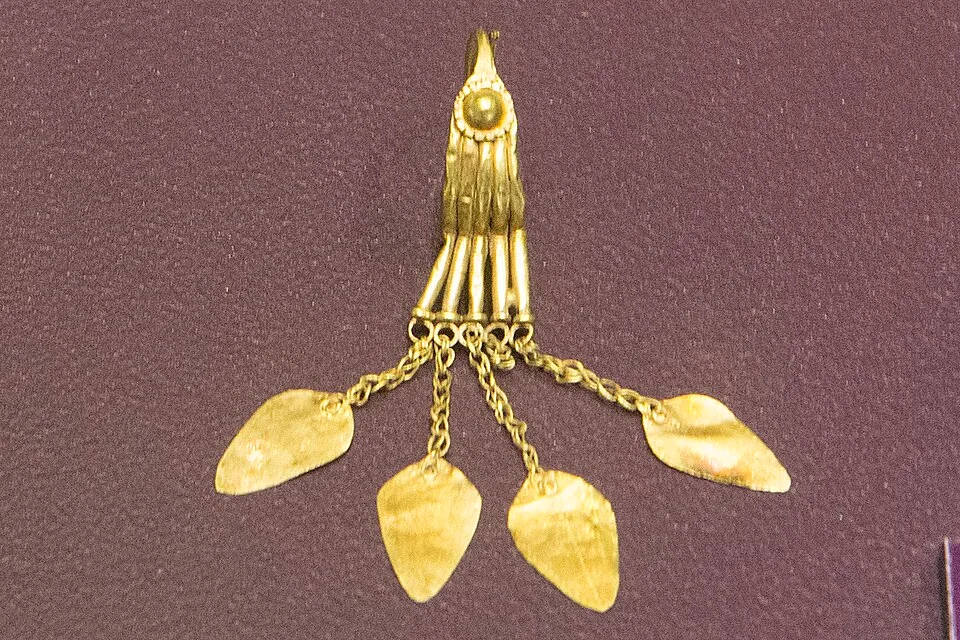
Troy Museum Troad Gold (Ankara picture) Gold, Electrum Early Bronze Age 3496
Troy Museum Troad Gold (Ankara picture) Gold, Electrum Early Bronze Age 3496 | Dosseman (CC BY-SA 4.0)

Daily life is illuminated by finds from the destruction level, which sealed houses containing tools, loom weights, and foodstuffs. The site's importance waned after its conquest by the Lydians in the 7th century BCE and later by the Persians, though it remained inhabited into the Hellenistic period. Alexander the Great's famous visit in 333 BCE, where he cut the Gordian Knot, marks a final legendary chapter before the city's gradual decline.
중요성

Gordion is the key site for understanding Phrygian civilization, a major Anatolian power that bridged the gap between the collapse of the Hittite Empire and the rise of the Lydian and Persian empires. The "Midas Mound" tomb provides one of the best-preserved assemblages of elite material culture from the early Iron Age anywhere in the ancient world. The site is also significant for its evidence of the "destruction level" dated to around 800 BCE, which some scholars have linked to the Cimmerian invasion.

증거와 해석

확립된 사실과 논쟁 중인 사항을 구분합니다.

잘 확립된 사실

3
  • The wooden tomb chamber in Tumulus MM is one of the best-preserved Iron Age burials known.
  • Dendrochronology dates the tomb to approximately 740 BCE.
  • The Phrygian citadel at Gordion was rebuilt on a grander scale with a new megaron-style palace complex after the 800 BCE destruction.

학술적 추론

1
  • The individual buried in Tumulus MM was likely a Phrygian king, possibly Midas' father Gordias.

논쟁 중인 해석

2
  • Whether the occupant of Tumulus MM is King Midas himself, his father Gordias, or another royal figure is debated.
  • The cause of the major destruction level at Gordion (c. 800 BCE) — Cimmerian invasion, fire, or other event — remains contested.

발견과 발굴

1900

Early German excavations

지휘 Gustav & Alfred Körte

Gustav and Alfred Körte conducted the first archaeological work at Gordion.

1950–1973

University of Pennsylvania excavations

지휘 Rodney S. Young / University of Pennsylvania

Rodney Young led major excavations including the opening of the Midas Mound tumulus in 1957.

1988

Ongoing research

지휘 University of Pennsylvania Museum

The Gordion Archaeological Project continues research at the site under various directors.

1993

New Gordion Project

지휘 University of Pennsylvania Museum, led by Mary M. Voigt

A major, ongoing multidisciplinary research program initiated to re-evaluate the site's chronology and stratigraphy.

커뮤니티 사진

당신의 경험을 공유하세요

이 유적지를 방문하셨나요? 다른 탐험가들을 위해 사진을 업로드해 보세요.

관련 이야기

이 페이지 인용 방법

Atlas Anatolia. (950). Gordion. Atlas Anatolia. https://atlasanatolia.com/ko/site/gordion

콘텐츠는 CC BY-SA 4.0 라이선스에 따라 제공됩니다 — 재사용 시 출처 표시가 필요합니다.

그래프

관련 유적지와 스토리로의 연결.

World History Encyclopedia에서 전체 기사 읽기
World History Encyclopedia · CC BY-NC-SA

출처

  • The Archaeology of Phrygian Gordion, Royal City of Midas — C. Brian Rose (2012)
  • Gordion: The Midas Mound — Rodney S. Young (1981)

자주 묻는 질문

Gordion은(는) 어디에 위치해 있나요?

Gordion은(는) Ankara, Central Anatolia, Türkiye에 위치해 있습니다.

Gordion의 연대는 언제인가요?

Gordion의 연대는 대략 950 기원전 – 200 기원전로 거슬러 올라갑니다.

Gordion과(와) 관련된 고대 문명은 무엇인가요?

Gordion은(는) Phrygian, Greek 문명과 관련이 있습니다.

Gordion이(가) 중요한 이유는 무엇인가요?

Gordion is the key site for understanding Phrygian civilization, a major Anatolian power that bridged the gap between the collapse of the Hittite Empire and the rise of the Lydian and Persian empires.

Gordion은(는) 유네스코 세계유산인가요?

Gordion은(는) 현재 유네스코 세계유산 목록에 등재되어 있지 않습니다.