
콘텐츠로 건너뛰기
Atlas Anatolia
디그
뉴스술라웨시 빙하기 치아에서 빈랑 사용 25,000년 전까지 소급카스타모누 폼페이오폴리스 바실리카에서 로마 모자이크와 에로스 두상 발견
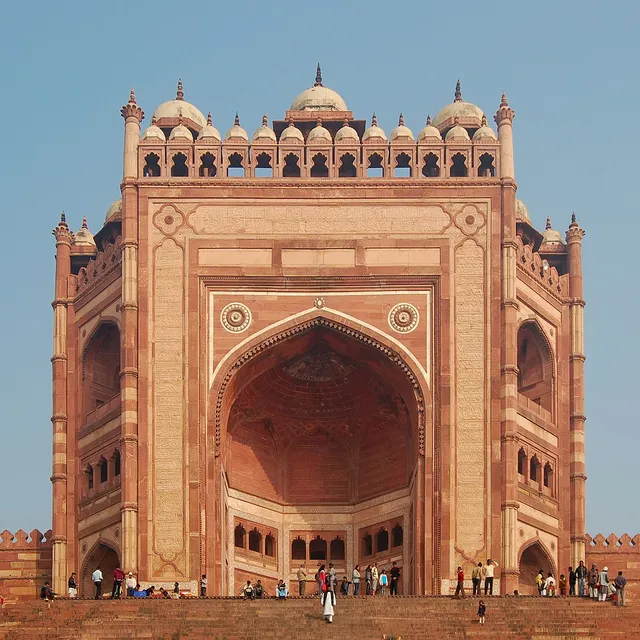
The Buland Darwaza victory gate at Fatehpur Sikri, India

Wikimedia Commons

도시유네스코

Fatehpur Sikri

Seyfi Cem Baskin

फ़तेहपुर सीकरी1571 서기 – 1586 서기

The red-sandstone Mughal capital Akbar built near Agra in the 1570s–1580s — a planned imperial city with the Buland Darwaza, Diwan-i-Khas, and Panch Mahal — abandoned after only a generation yet preserved as one of India's great UNESCO ensembles.

21
관심 74

위치

인도

27.09°N · 77.67°E · 아시아

Patron

Emperor Akbar (r. 1556–1605)

Capital period

c. 1571–1586 CE, then largely abandoned

Landmark

Buland Darwaza — 54 m high victory gate

UNESCO

World Heritage Site (1986)

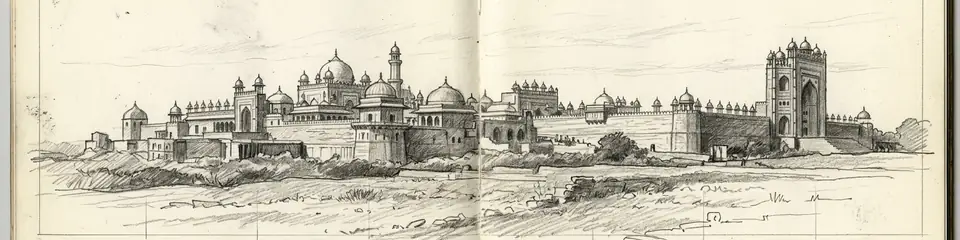
Graphite pencil sketch banner of Fatehpur Sikri

“Fatehpur Sikri is Akbar's most ambitious built statement — a capital designed to embody imperial universalism in stone, at the moment the Mughal Empire consolidated northern India.”

위치

개요

Fatehpur Sikri stands on a rocky ridge west of Agra in Uttar Pradesh, India. The emperor Akbar (r. 1556–1605) began construction here in the 1570s after the Sufi saint Shaikh Salim Chishti of Sikri reportedly foretold the birth of his heir Jahangir. The city served as Akbar's principal capital from about 1571 until he relocated the court back to Agra in 1585–1586; reasons for abandonment are debated (water shortage, strategic shift to the northwest, completion of symbolic programme) but the site was never wholly depopulated.

The city is built chiefly of red sandstone with white marble accents, synthesising Persian, Hindu, and Jain architectural elements in a court that pursued religious dialogue. The Buland Darwaza ("Lofty Gate") — approached by a monumental stair — commemorates Akbar's Gujarat campaign (1573). The Diwan-i-Khas (Hall of Private Audience) contains the central pillar with serpentine bracketed balcony where Akbar is said to have received scholars of many faiths. The Panch Mahal is a five-storey pavilion of decreasing size; the Jama Masjid and Shaikh Salim Chishti's white marble tomb remain active pilgrimage destinations.
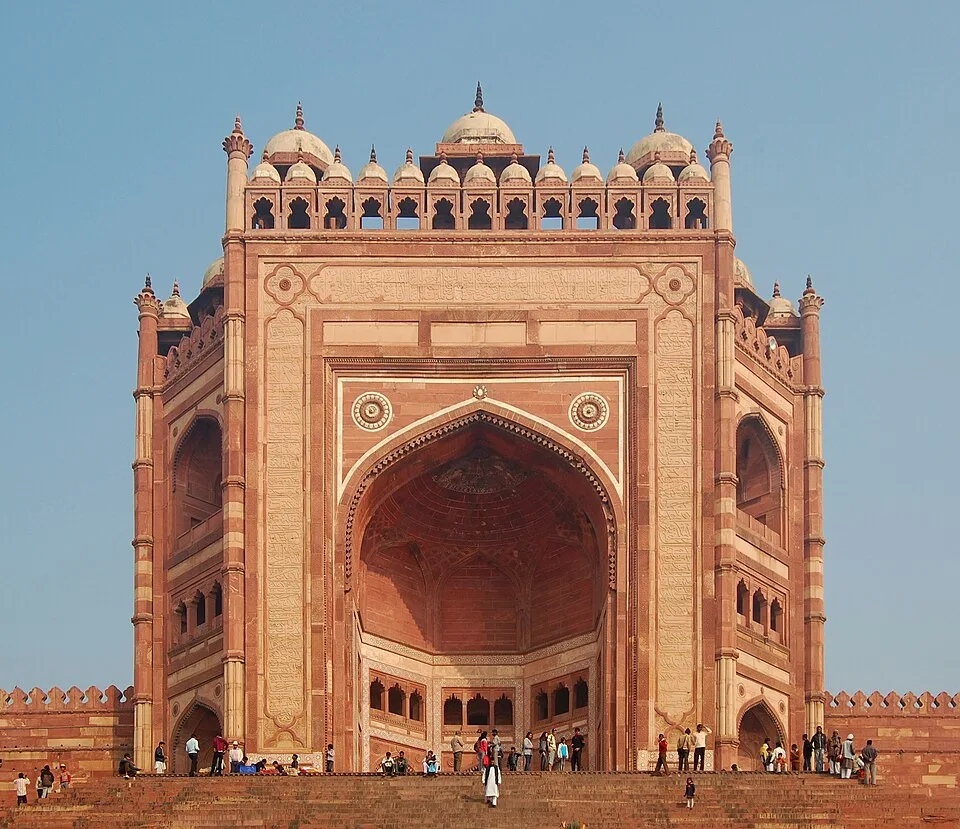
Fatehput Sikiri Buland Darwaza gate 2010
Fatehput Sikiri Buland Darwaza gate 2010 | Marcin Białek (CC BY-SA 3.0)
"His Majesty gives audience to all sorts and conditions of men, and holds disputations on religion with learned men of every faith."
— Abu'l-Fazl, Akbarnama, on Akbar's court at Fatehpur Sikri (c. 1590s)

Fatehpur Sikri forms part of the Golden Triangle tourist circuit with Agra (Taj Mahal) and Delhi. The Archaeological Survey of India administers the ruins; UNESCO inscribed it in 1986. Despite its short occupation, the city is indispensable for understanding Akbar's statecraft, syncretic court culture, and Mughal urban design.

중요성

Fatehpur Sikri is Akbar's most ambitious built statement — a capital designed to embody imperial universalism in stone, at the moment the Mughal Empire consolidated northern India. Its abrupt abandonment makes it a rare near-intact Mughal ghost city, preserving court architecture that at Agra and Delhi was repeatedly rebuilt or overlaid.

증거와 해석

확립된 사실과 논쟁 중인 사항을 구분합니다.

잘 확립된 사실

2
  • Mughal chronicles (Abu'l-Fazl's Akbarnama) and inscriptions document construction phases, court ceremonies, and Akbar's presence at Sikri.
  • Standing architecture preserves Akbar-period red sandstone and marble craft, including the Diwan-i-Khas pillar and Panch Mahal.

논쟁 중인 해석

1
  • Whether chronic water stress or political strategy primarily caused abandonment remains unresolved in specialist literature.

커뮤니티 사진

당신의 경험을 공유하세요

이 유적지를 방문하셨나요? 다른 탐험가들을 위해 사진을 업로드해 보세요.

이 페이지 인용 방법

Atlas Anatolia. (1571). Fatehpur Sikri. Atlas Anatolia. https://atlasanatolia.com/ko/site/fatehpur-sikri

콘텐츠는 CC BY-SA 4.0 라이선스에 따라 제공됩니다 — 재사용 시 출처 표시가 필요합니다.

출처

  • Mughal Architecture — Koch, Ebba (1991)
  • UNESCO — Fatehpur Sikri링크

자주 묻는 질문

Fatehpur Sikri은(는) 어디에 위치해 있나요?

Fatehpur Sikri은(는) India에 위치해 있습니다.

Fatehpur Sikri의 연대는 언제인가요?

Fatehpur Sikri의 연대는 대략 1571 서기 – 1586 서기로 거슬러 올라갑니다.

Fatehpur Sikri과(와) 관련된 고대 문명은 무엇인가요?

Fatehpur Sikri은(는) Mughal 문명과 관련이 있습니다.

Fatehpur Sikri이(가) 중요한 이유는 무엇인가요?

Fatehpur Sikri is Akbar's most ambitious built statement — a capital designed to embody imperial universalism in stone, at the moment the Mughal Empire consolidated northern India.

Fatehpur Sikri은(는) 유네스코 세계유산인가요?

예 — Fatehpur Sikri은(는) 유네스코 세계유산으로 등재되어 있습니다.