
콘텐츠로 건너뛰기
Atlas Anatolia
디그
뉴스술라웨시 빙하기 치아에서 빈랑 사용 25,000년 전까지 소급카스타모누 폼페이오폴리스 바실리카에서 로마 모자이크와 에로스 두상 발견
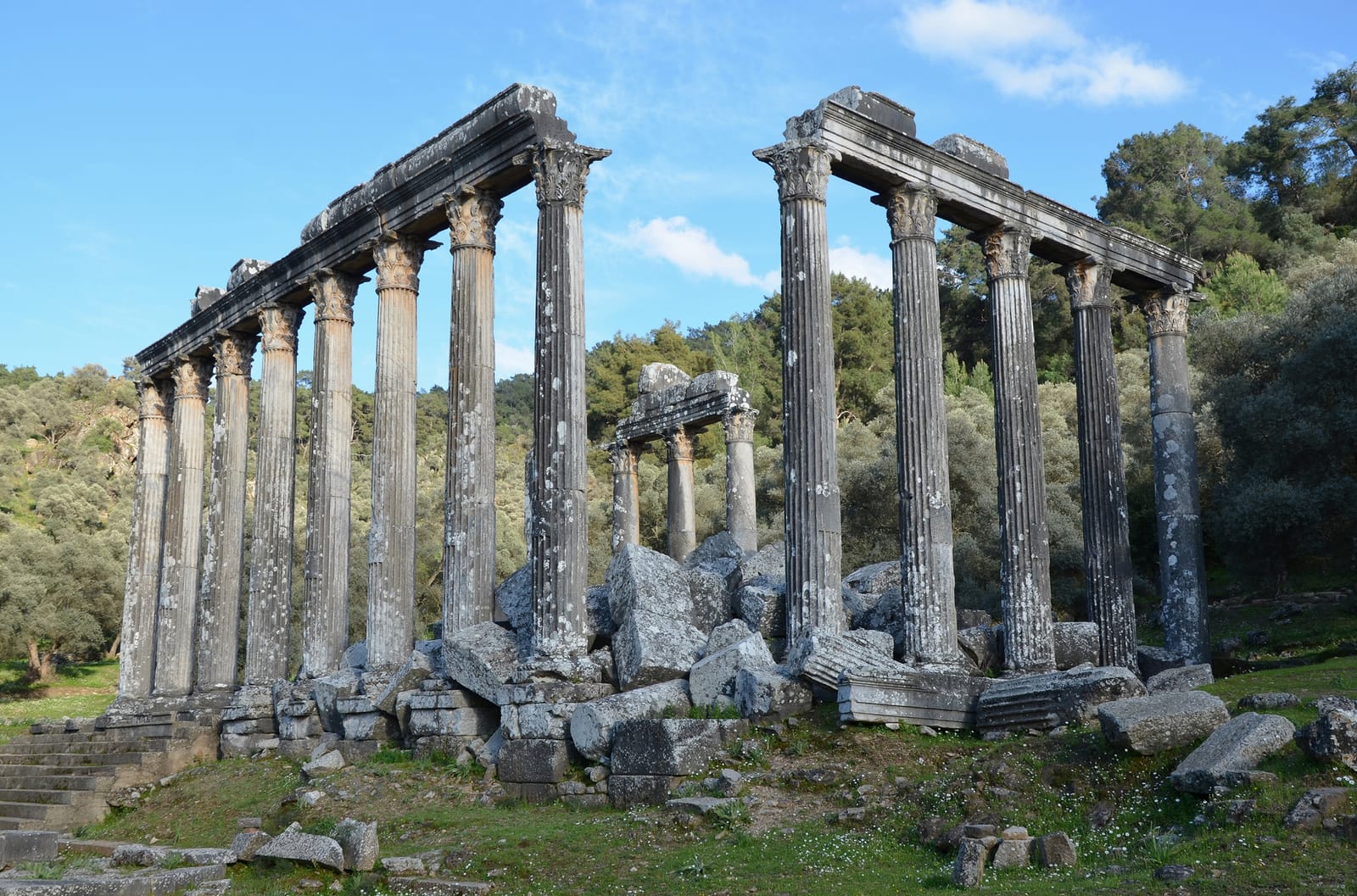
Standing Corinthian columns of the Temple of Zeus at Euromos

Wikimedia Commons (CC BY-SA)

Country Record

Known by the Most Names in Türkiye

신전

Euromos

Seyfi Cem Baskin

500 기원전 – 400 서기

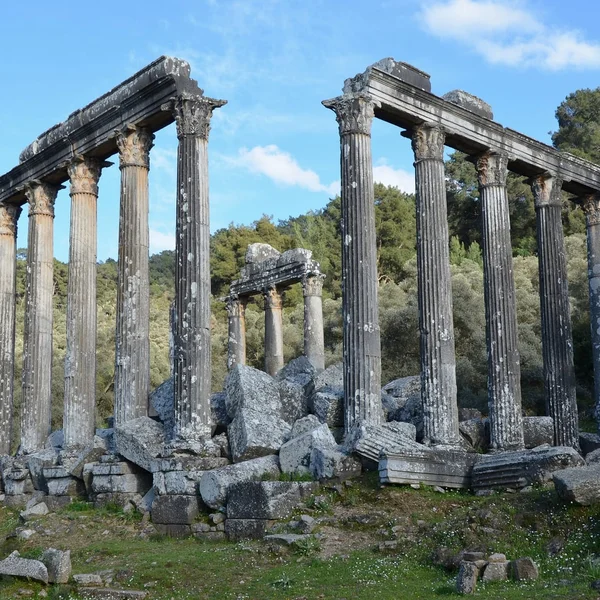
Home to one of the best-preserved ancient temples in Anatolia — the Temple of Zeus Lepsynos stands with 16 of its original Corinthian columns intact amid an olive grove, a hauntingly beautiful sight.

312
관심 44

위치

Mugla · Aegean · 튀르키예

37.42°N · 27.72°E · 아시아

Standing Columns

16 Corinthian columns with capitals intact

Temple Deity

Zeus Lepsynos (Carian/Greek syncretism)

Construction

2nd century CE (Hadrianic period)

Unique Feature

Donor names inscribed on individual columns

City Fortifications

Extensive Hellenistic city walls with towers and gates, including a well-preserved northern gate, encircle the acropolis.

Associated Structures

A Roman-era theater, agora, bath complex, and necropolis are located within the city's territory, though less excavated.

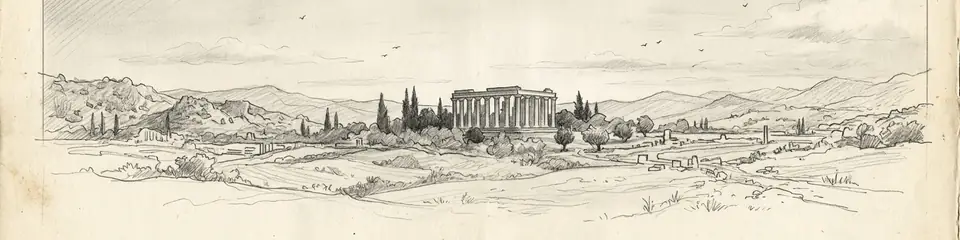
Graphite pencil sketch banner of Euromos

“The Temple of Zeus Lepsynos is an exceptional survival — few ancient temples anywhere in the Mediterranean remain standing to this degree.”

위키백과에서

Euromos is an ancient Carian city in southwestern Turkey, known for its remarkably well-preserved Temple of Zeus Lepsynos with 16 standing Corinthian columns.

위키백과에서 전체 기사 읽기 →

위치

개요

Euromos is an ancient Carian city whose Temple of Zeus Lepsynos ranks among the best-preserved classical temples in all of Anatolia. Sixteen of the original columns still stand with their Corinthian capitals and architrave largely intact, rising from a serene olive grove between Milas and the coast — one of the most photogenic archaeological sites in Turkey.

The temple was built in the 2nd century CE during the reign of Emperor Hadrian, though the cult of Zeus Lepsynos — a local Carian deity later assimilated to Greek Zeus — has roots stretching back centuries earlier. Dedicatory inscriptions on the column shafts record the names of individual donors who funded specific columns, providing a rare window into how temple construction was financed through civic patronage.

"Euromos, a city of the Mylasians, has a temple of Zeus Lepsynos."
— Strabo, c. 7 BCE - 23 CE

Beyond the temple, Euromos preserves the remains of a theatre, agora, Roman baths, and fortification walls, though these are less well excavated. The city's ancient name evolved through several forms — Kyromos, Euromos, Euromus — reflecting the complex linguistic landscape of Carian-speaking Anatolia.

The site lies along the ancient road connecting Mylasa (modern Milas, the capital of Caria) to the coast, explaining its importance as a waypoint between the interior and the Aegean harbors.
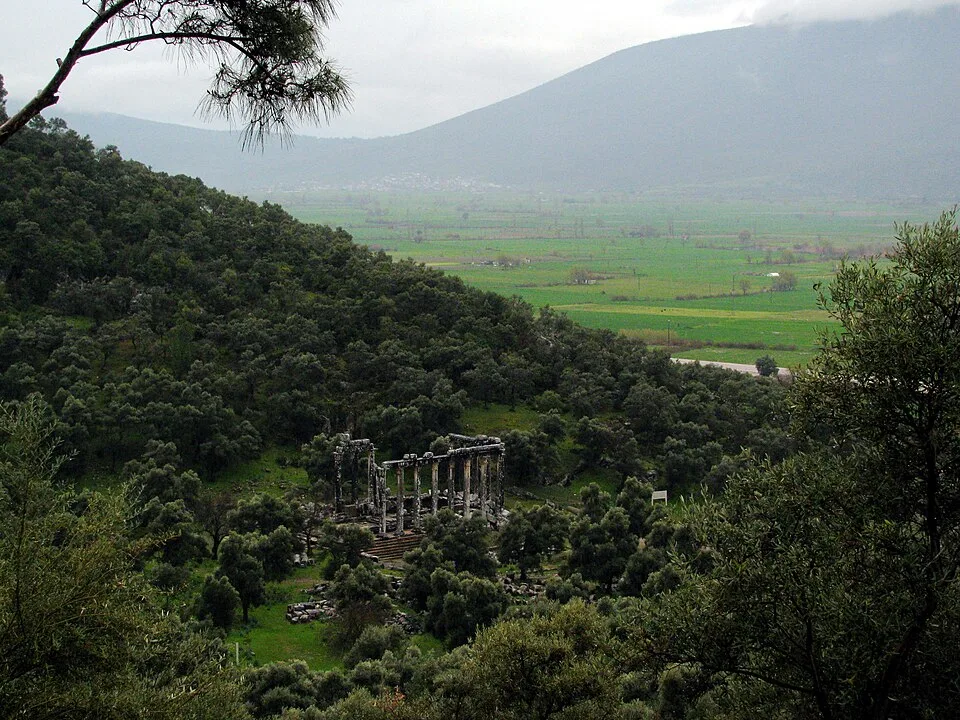
Euromus temple
Euromus temple | Pax:Vobiscum (CC BY-SA 3.0)

Beyond the temple, the city's extensive Hellenistic fortifications, with their distinctive isodomic masonry and towers, testify to its strategic importance. The lower city contained a well-defined agora, a theater, and bath complexes, indicating a thriving urban center. Euromos was a member of the Chrysaorian League, a federation of Carian cities, and its numerous inscribed decrees provide detailed insights into its civic administration and diplomatic relations during the Hellenistic period.

The city's economy was supported by the fertile Maeander River valley and its access to the Gulf of Iasos. This prosperity continued into the Roman Imperial era, as evidenced by the temple's construction and other public buildings. However, like many inland cities of the region, Euromos appears to have declined from the late Roman period onward, likely due to shifting trade routes and insecurity, eventually being abandoned by the early Byzantine era.

중요성

The Temple of Zeus Lepsynos is an exceptional survival — few ancient temples anywhere in the Mediterranean remain standing to this degree. The donor inscriptions on individual columns offer unusually direct evidence of how ancient communities funded monumental architecture through personal benefaction. The cult of Zeus Lepsynos illustrates the process of religious syncretism in Anatolia, where indigenous Carian deities were gradually identified with Greek Olympian gods while retaining distinctive local characteristics.

증거와 해석

확립된 사실과 논쟁 중인 사항을 구분합니다.

잘 확립된 사실

3
  • Dedicatory inscriptions on the temple columns name individual donors and confirm construction during the 2nd century CE under Hadrianic-era patronage.
  • The epithet "Lepsynos" attached to Zeus indicates a pre-Greek Carian deity who was later assimilated into the Greek pantheon.
  • Epigraphic evidence from the city, including decrees and honorific inscriptions, confirms Euromos was a member of the Chrysaorian League, a Carian political and religious federation.

학술적 추론

1
  • The incomplete state of several columns (some lack fluting) suggests the temple was never fully finished, a common occurrence in ancient construction.

논쟁 중인 해석

2
  • Whether the current Hadrianic temple replaced an earlier Carian sanctuary on the same site or was a new foundation remains uncertain due to limited excavation beneath the temple floor.
  • The precise function and architectural form of a large, vaulted subterranean structure near the temple, sometimes called a 'nymphaeum' or a cistern, remains unclear due to partial excavation.

발견과 발굴

1969–1975

Initial excavations

지휘 Ufuk Serin

Turkish archaeologists began systematic study of the temple and surrounding area.

2011–2020

University excavations

지휘 Abuzer Kizil

Abuzer Kizil of Mugla Sitki Kocman University led comprehensive excavations of the agora, theatre, and civic structures.

2018

Temple conservation

Structural conservation work on the standing columns and architrave blocks to prevent further deterioration.

2021

Theater and Agora Survey

지휘 Muğla Sıtkı Koçman University

A comprehensive architectural survey and cleaning of the Roman theater and the agora area was conducted to document their state and plan for future conservation.

커뮤니티 사진

당신의 경험을 공유하세요

이 유적지를 방문하셨나요? 다른 탐험가들을 위해 사진을 업로드해 보세요.

이 페이지 인용 방법

Atlas Anatolia. (500). Euromos. Atlas Anatolia. https://atlasanatolia.com/ko/site/euromos

콘텐츠는 CC BY-SA 4.0 라이선스에 따라 제공됩니다 — 재사용 시 출처 표시가 필요합니다.

출처

  • The Temple of Zeus at Euromos — Frank Rumscheid (1999)
  • Ancient Caria — Gary Reger (2010)
  • Wikipedia — Euromos링크

자주 묻는 질문

Euromos은(는) 어디에 위치해 있나요?

Euromos은(는) Mugla, Aegean, Türkiye에 위치해 있습니다.

Euromos의 연대는 언제인가요?

Euromos의 연대는 대략 500 기원전 – 400 서기로 거슬러 올라갑니다.

Euromos과(와) 관련된 고대 문명은 무엇인가요?

Euromos은(는) Carian, Greek, Roman 문명과 관련이 있습니다.

Euromos이(가) 중요한 이유는 무엇인가요?

The Temple of Zeus Lepsynos is an exceptional survival — few ancient temples anywhere in the Mediterranean remain standing to this degree.

Euromos은(는) 유네스코 세계유산인가요?

Euromos은(는) 현재 유네스코 세계유산 목록에 등재되어 있지 않습니다.