
콘텐츠로 건너뛰기
Atlas Anatolia
디그
뉴스술라웨시 빙하기 치아에서 빈랑 사용 25,000년 전까지 소급카스타모누 폼페이오폴리스 바실리카에서 로마 모자이크와 에로스 두상 발견
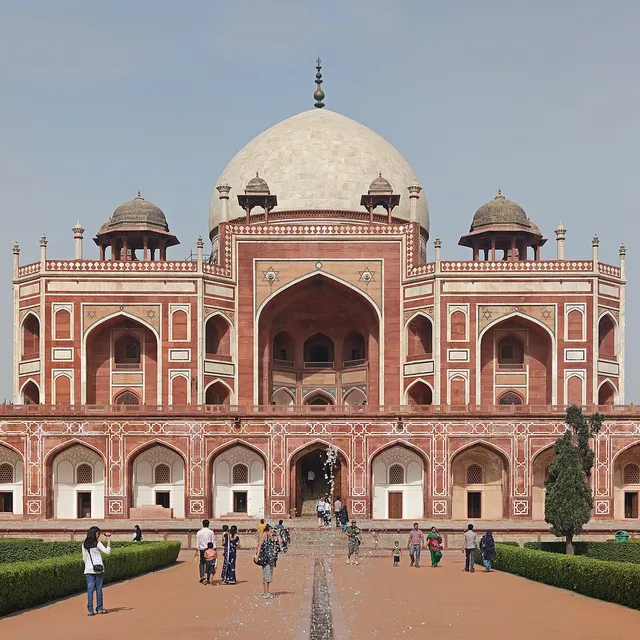
Humayun's Tomb and charbagh garden, Delhi

Wikimedia Commons

Country Record

Oldest Monument in India

유산기념물유네스코주요

Humayun's Tomb

Seyfi Cem Baskin

हुमायूँ का मकबरा1565 서기 – 1572 서기

The red-sandstone and white-marble garden tomb built in Delhi for the Mughal emperor Humayun (d. 1556) — a charbagh mausoleum whose double dome and symmetrical layout directly inspired the Taj Mahal and ranks among the most visited monuments in India.

21
관심 71

위치

인도

28.59°N · 77.25°E · 아시아

Built

c. 1565–1572 CE for Emperor Humayun

Patron

Bega Begum (Haji Begum), Humayun's widow

Layout

Charbagh garden tomb with double dome

UNESCO

World Heritage Site (1993)

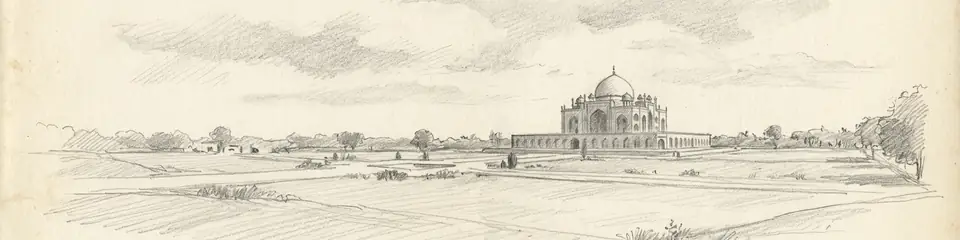
Graphite pencil sketch banner of Humayun's Tomb

“Humayun's Tomb is the structural prototype of the Taj Mahal — the first fully realised Mughal garden tomb on the Yamuna-Ganges plain.”

위치

개요

Humayun's Tomb stands in the Nizamuddin district of Delhi on a platform within a charbagh garden divided by water channels. The empress Bega Begum (Haji Begum) commissioned the mausoleum after Humayun's death in 1556; construction began about 1565 and was substantially complete by 1572. Mirak Mirza Ghiyas, a Persian architect, is traditionally credited with the design.

The building combines Timurid tomb typology — a high double dome, pishtaq entrance arches, chhatri kiosks — with Indian red sandstone and white marble inlay. The central chamber holds Humayun's cenotaph; over 150 Mughal family members were later buried in the complex, making it a dynastic necropolis. After the 1857 rebellion and British occupation, the gardens deteriorated until a major Aga Khan Trust restoration in the early 21st century.

UNESCO inscribed Humayun's Tomb in 1993 as an early masterpiece of Mughal architecture that prefigured the Taj Mahal. It anchors Delhi's "Mughal triangle" with the Red Fort and Qutb Minar on heritage itineraries.

중요성

Humayun's Tomb is the structural prototype of the Taj Mahal — the first fully realised Mughal garden tomb on the Yamuna-Ganges plain. Its restoration became a model for public–private heritage conservation in India and revived the charbagh landscape as integral to the monument.

증거와 해석

확립된 사실과 논쟁 중인 사항을 구분합니다.

잘 확립된 사실

2
  • Mughal chronicles and inscriptions name Humayun, Bega Begum, and the completion date in the 1570s.
  • Architectural comparison confirms Timurid tomb forms adapted to Delhi red sandstone–marble workshops.

학술적 추론

1
  • The tomb's design directly influenced Shah Jahan's Taj Mahal programme — inferred from formal precedent and court workshop continuity.

커뮤니티 사진

당신의 경험을 공유하세요

이 유적지를 방문하셨나요? 다른 탐험가들을 위해 사진을 업로드해 보세요.

이 페이지 인용 방법

Atlas Anatolia. (1565). Humayun's Tomb. Atlas Anatolia. https://atlasanatolia.com/ko/site/humayuns-tomb

콘텐츠는 CC BY-SA 4.0 라이선스에 따라 제공됩니다 — 재사용 시 출처 표시가 필요합니다.

출처

  • Mughal Architecture — Koch, Ebba (1991)
  • UNESCO — Humayun's Tomb링크

자주 묻는 질문

Humayun's Tomb은(는) 어디에 위치해 있나요?

Humayun's Tomb은(는) India에 위치해 있습니다.

Humayun's Tomb의 연대는 언제인가요?

Humayun's Tomb의 연대는 대략 1565 서기 – 1572 서기로 거슬러 올라갑니다.

Humayun's Tomb과(와) 관련된 고대 문명은 무엇인가요?

Humayun's Tomb은(는) Mughal 문명과 관련이 있습니다.

Humayun's Tomb이(가) 중요한 이유는 무엇인가요?

Humayun's Tomb is the structural prototype of the Taj Mahal — the first fully realised Mughal garden tomb on the Yamuna-Ganges plain.

Humayun's Tomb은(는) 유네스코 세계유산인가요?

예 — Humayun's Tomb은(는) 유네스코 세계유산으로 등재되어 있습니다.