
콘텐츠로 건너뛰기
Atlas Anatolia
디그
뉴스술라웨시 빙하기 치아에서 빈랑 사용 25,000년 전까지 소급카스타모누 폼페이오폴리스 바실리카에서 로마 모자이크와 에로스 두상 발견
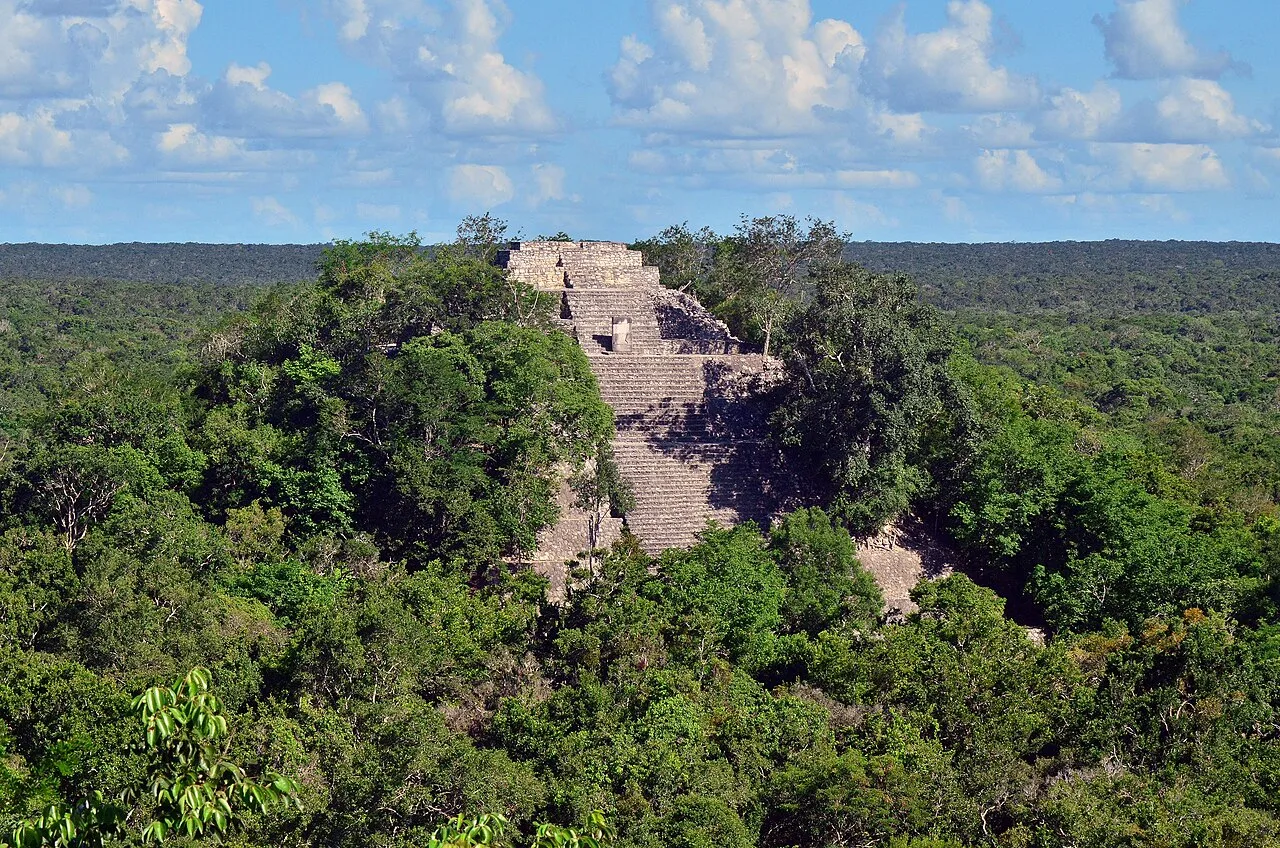
The great pyramids of Calakmul rising above the rainforest, Campeche, Mexico

Wikimedia Commons

Country Record

Oldest City in Mexico

도시유네스코

Calakmul

Seyfi Cem Baskin

300 기원전 – 900 서기

One of the two greatest Maya superpowers of the Classic period — the capital of the Snake (Kaan) dynasty, hidden deep in the rainforest of Campeche, Mexico. Its towering pyramids overlook a city that once held tens of thousands of people and waged a long struggle with rival Tikal for dominance over the Maya lowlands.

41
관심 66

위치

멕시코

18.11°N · 89.81°W · 북아메리카

Dynasty

Capital of the Kaan ("Snake") dynasty

Rivalry

Superpower struggle with Tikal (6th–7th c. CE)

Structure II

~45 m — among the most massive of all Maya pyramids

Stelae

Over 100 carved monuments — a major hieroglyphic archive

Turning point

Defeated by Tikal in 695 CE (king Yuknoom Yich'aak K'ahk')

UNESCO

World Heritage Site 2002; mixed site 2014

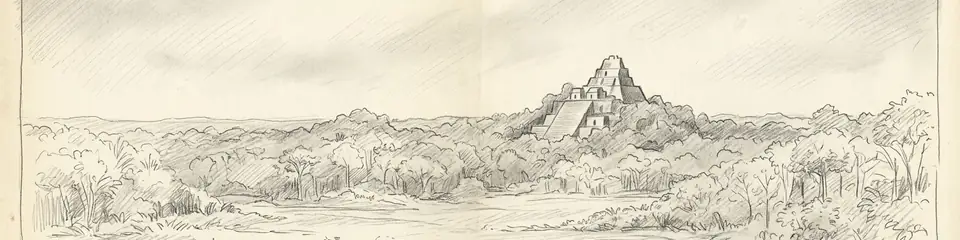
Graphite pencil sketch banner of Calakmul

“Calakmul was one of the two great superpowers of the Classic Maya world, and its long rivalry with Tikal was the central geopolitical drama of Maya civilisation at its height.”

위치

개요

Calakmul lies deep within the Calakmul Biosphere Reserve in the southern Mexican state of Campeche, only about 35 kilometres from the Guatemalan border, in one of the largest tracts of tropical forest remaining in Mesoamerica. Its modern name means "two adjacent mounds" in Yucatec Maya, after its two great pyramids; in antiquity the city was associated with the toponym Ox Te' Tuun and was the seat of the Kaan or "Snake" dynasty, whose royal emblem glyph was a serpent head.

Calakmul was one of the two most powerful Maya kingdoms of the Classic period, the other being Tikal in the Petén of Guatemala, roughly 100 kilometres to the south. For much of the 6th and 7th centuries CE the Snake kings of Calakmul built a far-reaching network of alliances and vassal states that encircled and repeatedly defeated Tikal, making Calakmul the dominant hegemon of the central Maya lowlands. The rivalry between the two superpowers — fought through proxy wars, dynastic marriages, and direct conflict — structured much of Classic Maya geopolitics. Tikal eventually turned the tables, defeating Calakmul's king Yuknoom Yich'aak K'ahk' in 695 CE, after which Calakmul's power waned.

The city is enormous. Surveys have mapped thousands of structures, and its largest pyramid, Structure II, rises about 45 metres and is among the most massive of all Maya buildings; from its summit, on a clear day, the distant pyramids of other cities can be seen above the forest canopy. Calakmul has yielded one of the greatest concentrations of carved stelae of any Maya site — well over a hundred — recording its rulers and their deeds, though many are badly eroded by the humid climate. Excavations have also uncovered elite tombs with jade masks and, remarkably, painted murals depicting ordinary people engaged in commerce and the consumption of food and drink, a rare glimpse of Maya daily life.

The peak population of the city and its surrounding territory has been estimated in the tens of thousands. Calakmul declined along with the rest of the southern lowland Maya cities during the 9th-century collapse and was swallowed by forest, rediscovered from the air in 1931.
중요성

Calakmul was one of the two great superpowers of the Classic Maya world, and its long rivalry with Tikal was the central geopolitical drama of Maya civilisation at its height. Reconstructing this "superpower" struggle from inscriptions transformed modern understanding of the Maya from a patchwork of isolated city-states into a world of large, competing political blocs. The site preserves one of the richest bodies of Maya hieroglyphic monuments anywhere, along with exceptionally informative painted murals of everyday economic life. Its setting in a vast biosphere reserve also makes it a rare mixed natural-and-cultural property: it was inscribed by UNESCO as a World Heritage Site in 2002 and extended as a mixed site in 2014.

증거와 해석

확립된 사실과 논쟁 중인 사항을 구분합니다.

잘 확립된 사실

4
  • Calakmul's rulers used the Kaan ("Snake") emblem glyph, read across its own monuments and on inscriptions at allied and rival sites, allowing its political network to be mapped.
  • Hieroglyphic texts at Tikal and other sites record the defeat of Calakmul's king Yuknoom Yich'aak K'ahk' by Tikal in 695 CE, a documented turning point in the rivalry.
  • Painted murals at the Chiik Nahb acropolis depict named individuals consuming and trading food and drink — a rare direct depiction of Maya commercial and everyday life.
  • Elite burials with jade mortuary masks and rich offerings have been excavated, confirming the wealth and status of Calakmul's ruling dynasty.

논쟁 중인 해석

1
  • Peak population estimates (commonly tens of thousands) and the full extent of Calakmul's hegemony are debated, as many of its 100-plus stelae are severely eroded and the site is only partly excavated.

커뮤니티 사진

당신의 경험을 공유하세요

이 유적지를 방문하셨나요? 다른 탐험가들을 위해 사진을 업로드해 보세요.

관련 이야기

이 페이지 인용 방법

Atlas Anatolia. (300). Calakmul. Atlas Anatolia. https://atlasanatolia.com/ko/site/calakmul

콘텐츠는 CC BY-SA 4.0 라이선스에 따라 제공됩니다 — 재사용 시 출처 표시가 필요합니다.

그래프

관련 유적지와 스토리로의 연결.

출처

  • Chronicle of the Maya Kings and Queens — Martin, Simon; Grube, Nikolai (2008)
  • Daily life of the ancient Maya recorded on murals at Calakmul — Carrasco Vargas, Ramón et al. (2009)

자주 묻는 질문

Calakmul은(는) 어디에 위치해 있나요?

Calakmul은(는) Mexico에 위치해 있습니다.

Calakmul의 연대는 언제인가요?

Calakmul의 연대는 대략 300 기원전 – 900 서기로 거슬러 올라갑니다.

Calakmul과(와) 관련된 고대 문명은 무엇인가요?

Calakmul은(는) Maya 문명과 관련이 있습니다.

Calakmul이(가) 중요한 이유는 무엇인가요?

Calakmul was one of the two great superpowers of the Classic Maya world, and its long rivalry with Tikal was the central geopolitical drama of Maya civilisation at its height.

Calakmul은(는) 유네스코 세계유산인가요?

예 — Calakmul은(는) 유네스코 세계유산으로 등재되어 있습니다.