
콘텐츠로 건너뛰기
Atlas Anatolia
디그
뉴스술라웨시 빙하기 치아에서 빈랑 사용 25,000년 전까지 소급카스타모누 폼페이오폴리스 바실리카에서 로마 모자이크와 에로스 두상 발견
Roman mosaic of Amphitrite in an underground villa at Bulla Regia, Tunisia

Wikimedia Commons

Country Record

Longest Continuously Occupied Site in Tunisia

도시

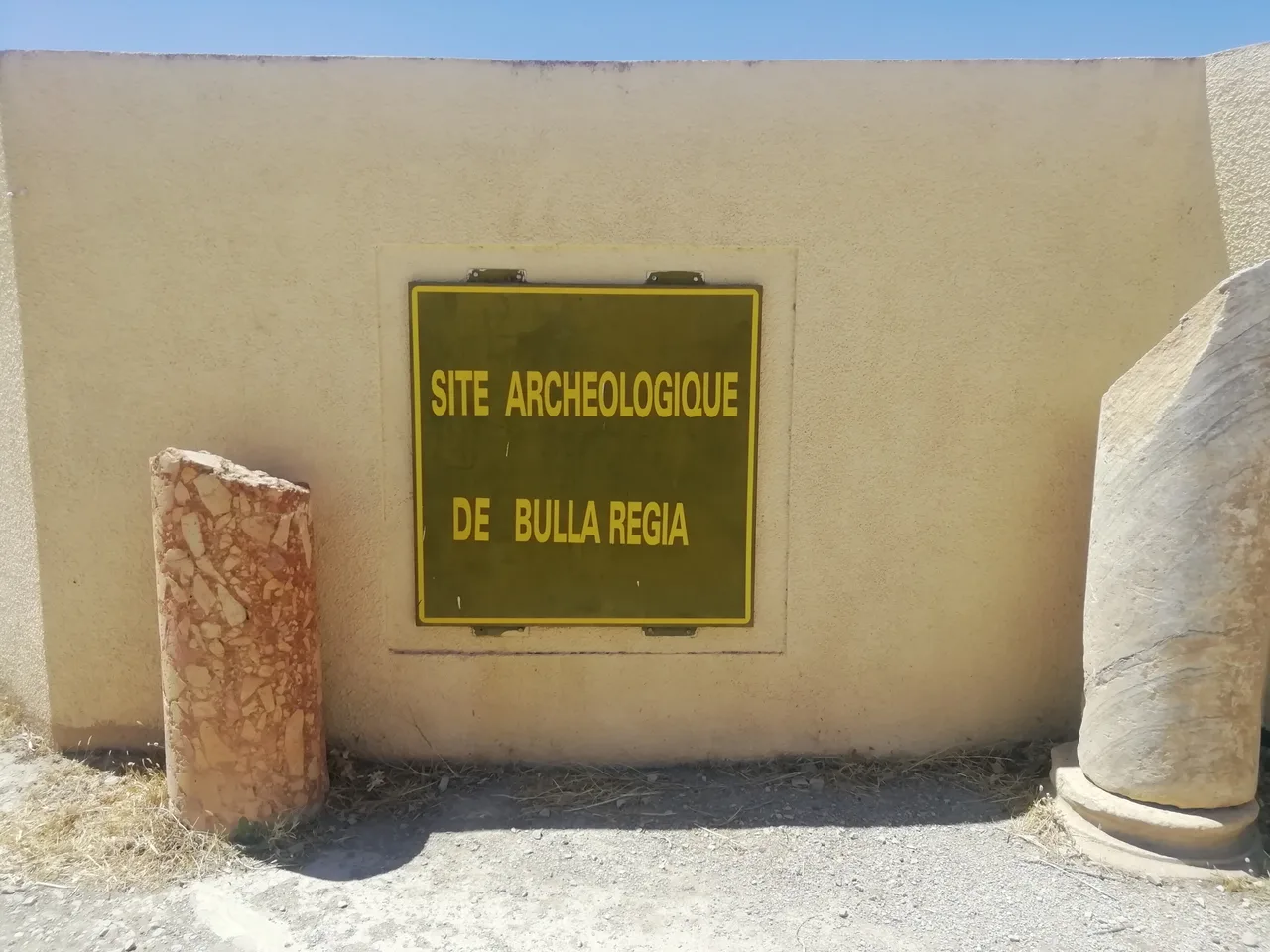
Bulla Regia

Seyfi Cem Baskin

200 기원전 – 600 서기

A Roman city in northern Tunisia uniquely famous for its underground villa complexes — entire domestic floors built below ground level to escape the heat, preserving mosaics in situ that would otherwise have been looted or destroyed. Bulla Regia offers the most complete picture of Roman domestic architecture anywhere in North Africa.

21
관심 46

위치

Jendouba Governorate · Northern Tunisia · 튀니지

36.57°N · 9.04°E · 아프리카

Distinctive feature

Underground Roman villa complexes with preserved mosaics

Roman status

Colonia under Emperor Hadrian, early 2nd century CE

Key mosaics

House of the Hunt; House of Amphitrite

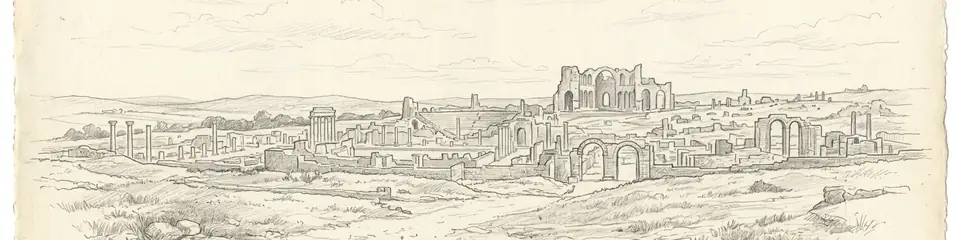
Graphite pencil sketch banner of Bulla Regia

“Bulla Regia's underground villas are unique in the Roman world — a practical response to North African climate that accidentally preserved mosaics and domestic plans better than almost any other site.”

위치

개요

Bulla Regia lies in the fertile Medjerda Valley of northern Tunisia, inland from the coast and roughly 160 kilometres southwest of Tunis. The site has deep Punic and Numidian roots before becoming a Roman colonia under Hadrian in the early 2nd century CE.

What makes Bulla Regia exceptional is its underground domestic architecture. Wealthy Roman citizens built villa complexes with entire lower floors sunk below ground — cool in summer, warm in winter — leaving upper structures largely destroyed but preserving mosaic pavements, peristyle courtyards, and bathing suites in remarkable condition. The "House of the Hunt" and "House of Amphitrite" contain mosaics among the finest in Roman Africa, including scenes of Diana hunting and Amphitrite in a chariot drawn by seahorses.
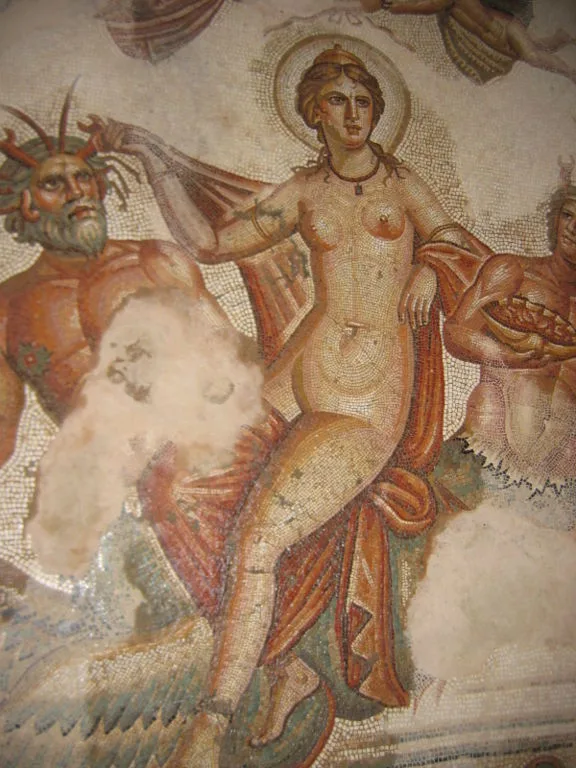
Venus marine dite Amphitrite Bulla Regia
Venus marine dite Amphitrite Bulla Regia | Wikimedia Commons (CC BY-SA 2.5)
"The underground houses of Bulla Regia preserve mosaics in a condition rarely found elsewhere in the Roman world."
— M. Blanchard-Lemée et al., Mosaics of Roman Africa (1996)

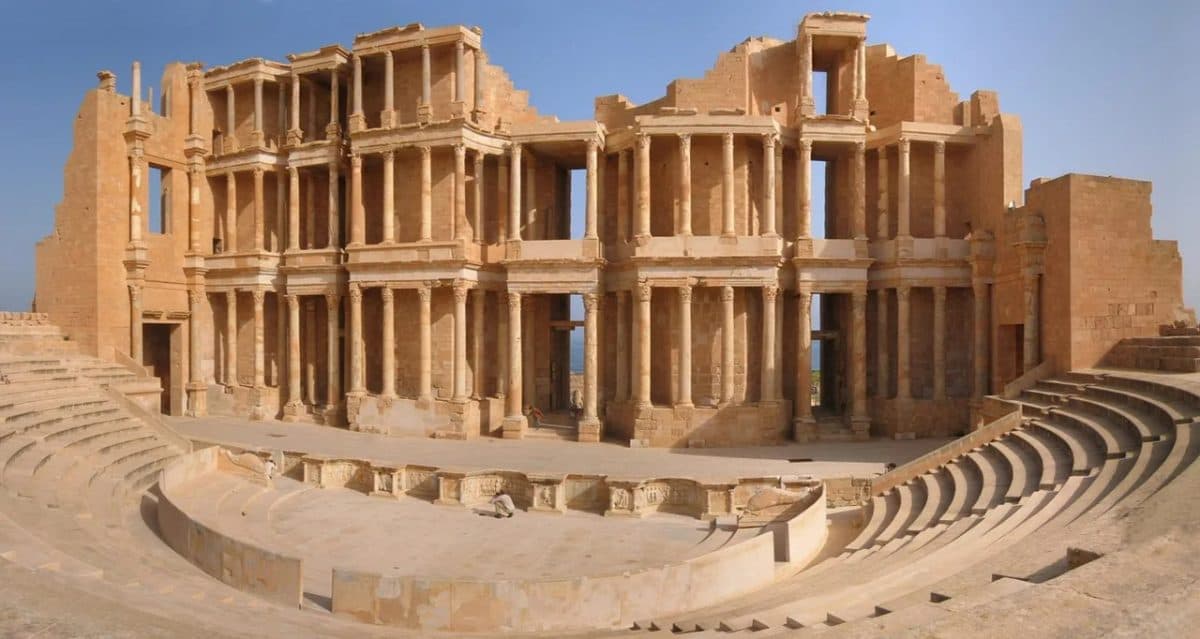
The city also preserves a theatre, Capitolium temple, forum, and public baths above ground. Bulla Regia flourished through the 3rd and 4th centuries CE before declining with Vandal and Byzantine rule. French and Tunisian archaeologists have excavated the site since the early 20th century.
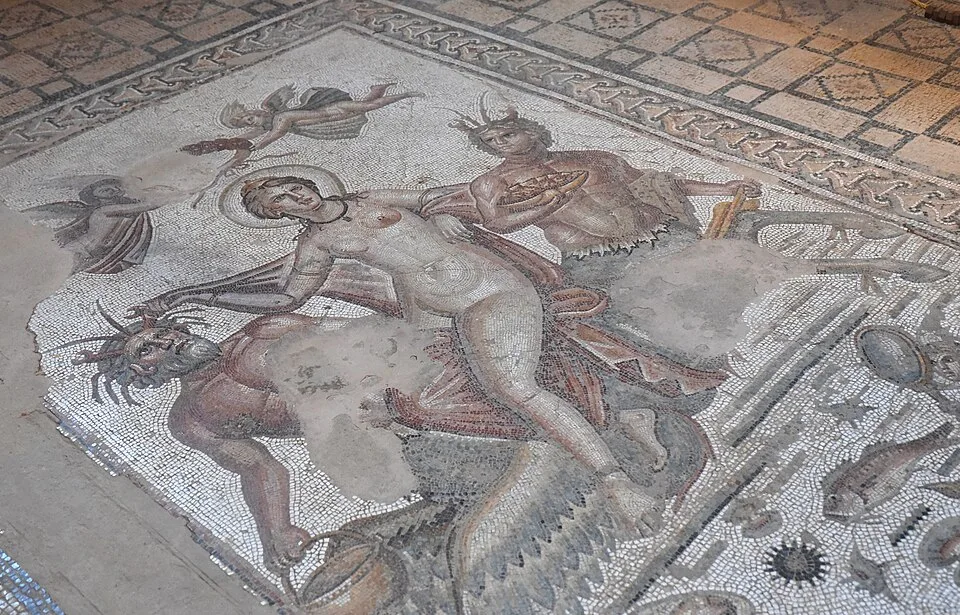
In situ mosaic depicting Venus being carried ashore by a pair of Ichthyocentaurs (fish-tailed centaurs) following her bi
In situ mosaic depicting Venus being carried ashore by a pair of Ichthyocentaurs (fish-tailed centaurs) following her bi | Carole Raddato from FRANKFURT, Germany (CC BY-SA 2.0)

The site is on Tunisia's national heritage list and is frequently cited alongside Carthage and Dougga as among the country's most important Roman ruins.
중요성

Bulla Regia's underground villas are unique in the Roman world — a practical response to North African climate that accidentally preserved mosaics and domestic plans better than almost any other site. The in situ mosaic assemblage ranks among the finest surviving from Roman Africa and is essential for understanding provincial elite culture, iconography, and domestic ritual. The site connects Punic, Numidian, and Roman layers of Tunisian history, showing how Rome absorbed and transformed pre-existing North African settlement patterns.

증거와 해석

확립된 사실과 논쟁 중인 사항을 구분합니다.

잘 확립된 사실

2
  • Multiple underground villa complexes with in situ mosaic floors are documented and open to study.
  • The site was elevated to Roman colonia status under Hadrian, attested epigraphically.

논쟁 중인 해석

1
  • The extent of Numidian versus Punic influence on the pre-Roman settlement remains less fully excavated.

커뮤니티 사진

당신의 경험을 공유하세요

이 유적지를 방문하셨나요? 다른 탐험가들을 위해 사진을 업로드해 보세요.

관련 이야기

이 페이지 인용 방법

Atlas Anatolia. (200). Bulla Regia. Atlas Anatolia. https://atlasanatolia.com/ko/site/bulla-regia

콘텐츠는 CC BY-SA 4.0 라이선스에 따라 제공됩니다 — 재사용 시 출처 표시가 필요합니다.

그래프

관련 유적지와 스토리로의 연결.

출처

  • Mosaics of Roman Africa: Floor Mosaics from Tunisia — Blanchard-Lemée, M. et al. (1996)
  • Bulla Regia — guide to the ruins — Foucher, L. (1967)

자주 묻는 질문

Bulla Regia은(는) 어디에 위치해 있나요?

Bulla Regia은(는) Jendouba Governorate, Northern Tunisia, Tunisia에 위치해 있습니다.

Bulla Regia의 연대는 언제인가요?

Bulla Regia의 연대는 대략 200 기원전 – 600 서기로 거슬러 올라갑니다.

Bulla Regia과(와) 관련된 고대 문명은 무엇인가요?

Bulla Regia은(는) Carthaginian / Phoenician, Roman 문명과 관련이 있습니다.

Bulla Regia이(가) 중요한 이유는 무엇인가요?

Bulla Regia's underground villas are unique in the Roman world — a practical response to North African climate that accidentally preserved mosaics and domestic plans better than almost any other site.

Bulla Regia은(는) 유네스코 세계유산인가요?

Bulla Regia은(는) 현재 유네스코 세계유산 목록에 등재되어 있지 않습니다.