
콘텐츠로 건너뛰기
Atlas Anatolia
디그
뉴스술라웨시 빙하기 치아에서 빈랑 사용 25,000년 전까지 소급카스타모누 폼페이오폴리스 바실리카에서 로마 모자이크와 에로스 두상 발견
Castle of St. Peter in Bodrum (ancient Halicarnassus)

Wikimedia Commons (CC BY-SA)

도시주요

Bodrum (Halicarnassus)

Seyfi Cem Baskin

Bodrum1000 기원전 – 400 서기

Home to the Mausoleum at Halicarnassus — one of the Seven Wonders of the Ancient World — and birthplace of Herodotus, the "Father of History," this Carian-Greek city remains one of the most storied places on the Aegean coast.

411
관심 62

위치

Muğla · Aegean · 튀르키예

37.04°N · 27.43°E · 아시아

Wonder

Mausoleum at Halicarnassus — one of the Seven Wonders of the Ancient World

Herodotus

Birthplace of the "Father of History" (c. 484 BCE)

Mausolus

Carian dynast who made Halicarnassus his capital (r. 377–353 BCE)

Sculptors

Mausoleum decorated by Scopas, Bryaxis, Timotheus, Leochares

Castle

Crusader Castle of St. Peter built with Mausoleum stones (1402)

Museum

Museum of Underwater Archaeology in the Crusader castle

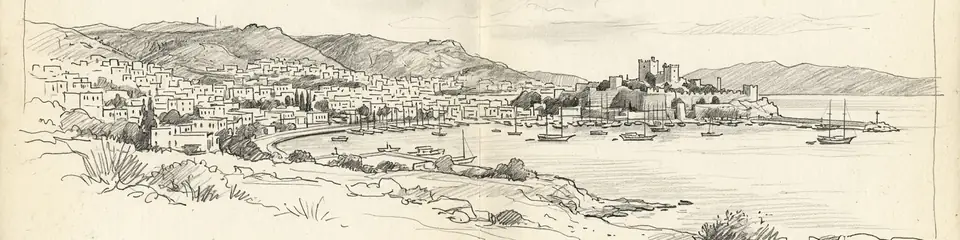
Graphite pencil sketch banner of Bodrum (Halicarnassus)

“Halicarnassus gave the world two gifts of incalculable value: history as a discipline, through Herodotus, and the concept of the monumental tomb as memorial, through the Mausoleum.”

위키백과에서

Halicarnassus (modern Bodrum) was home to the Mausoleum, one of the Seven Wonders of the Ancient World, and the birthplace of Herodotus, the Father of History.

위키백과에서 전체 기사 읽기 →

위치

개요

Bodrum, ancient Halicarnassus, occupies a commanding position on a peninsula jutting into the turquoise Aegean waters of southwestern Turkey. The city's fame rests on two extraordinary legacies: the birth of Herodotus, the world's first historian, and the Mausoleum — the monumental tomb of King Mausolus of Caria that became one of the Seven Wonders of the Ancient World and gave the English language the word "mausoleum."

Founded by Dorian Greeks but deeply influenced by its Carian population, Halicarnassus embodied the cultural fusion that characterized southwestern Anatolia. The city reached its zenith under Mausolus (ruled 377-353 BCE), the Carian dynast who governed as a semi-independent satrap of the Persian Empire. Mausolus moved the Carian capital from Mylasa to Halicarnassus and embarked on an ambitious building program that transformed the city into one of the most splendid in the Greek world.

"Halicarnassus is the royal seat of the Carians, and the birthplace of Herodotus the historian."
— Strabo, Geography (c. 7 BCE - 23 CE)

The Mausoleum, begun during Mausolus's lifetime and completed after his death by his wife-sister Artemisia II, was a towering structure combining Greek, Near Eastern, and Egyptian architectural elements. Ancient sources describe it as rising approximately 45 meters high on a massive rectangular podium, crowned by a pyramid of 24 steps bearing a marble chariot. The greatest Greek sculptors of the era — Scopas, Bryaxis, Timotheus, and Leochares — carved the sculptural frieze that adorned its base. Though the building was destroyed by successive earthquakes between the 12th and 15th centuries, fragments of its sculptures now in the British Museum attest to their extraordinary quality.

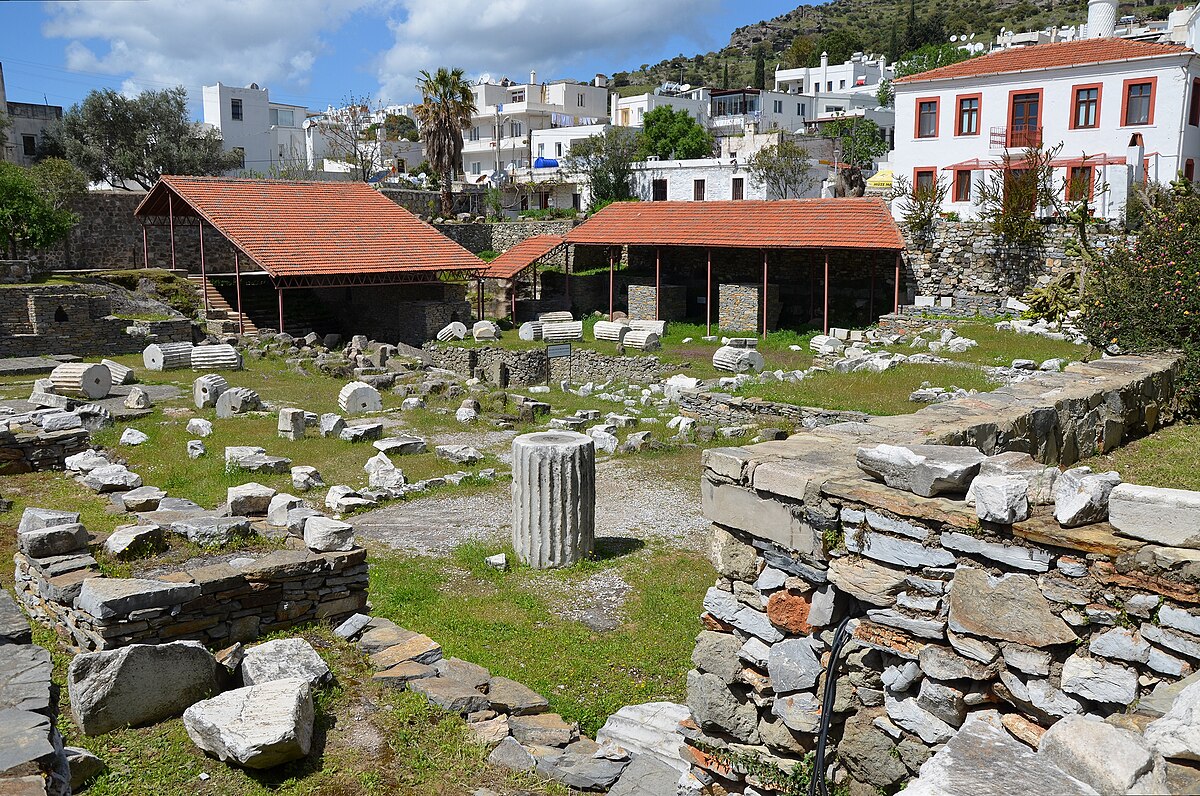
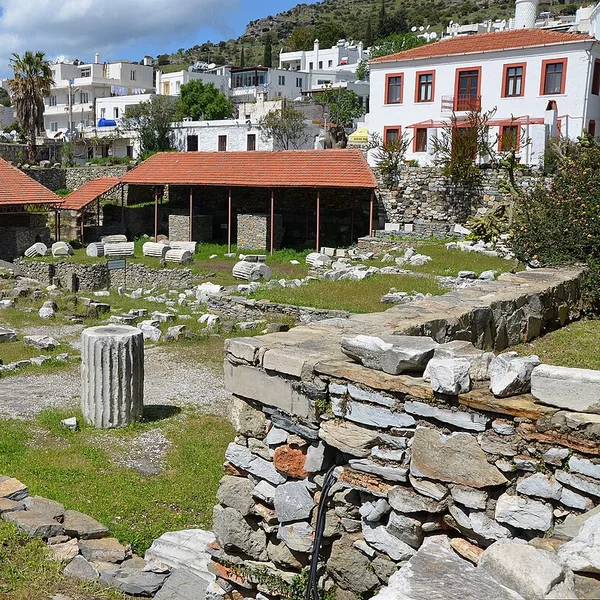
The site of the Mausoleum, excavated by Charles Thomas Newton in 1857, remains visible in the city center as a partially reconstructed foundation with an explanatory museum. The Crusader-era Castle of St. Peter, built by the Knights Hospitaller in the 15th century using stones from the ruined Mausoleum, now houses the Museum of Underwater Archaeology — one of the finest maritime museums in the world, with reconstructed ancient shipwrecks and artifacts recovered from the Aegean seabed.
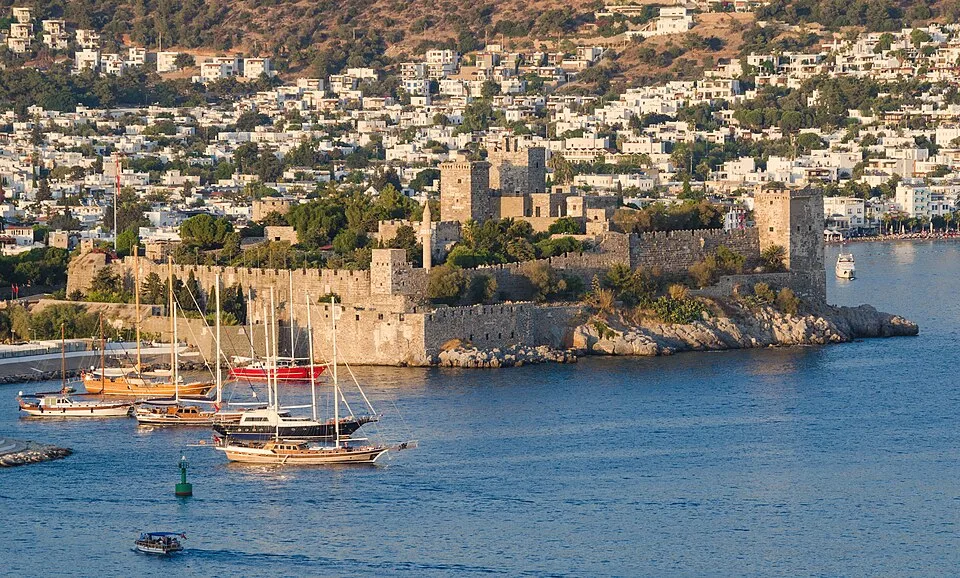
Bodrum Castle (2017)
Bodrum Castle (2017) | Serhio Magpie (CC BY 4.0)

Herodotus, born in Halicarnassus around 484 BCE, traveled the ancient world from Egypt to Babylon gathering the material for his Histories — the first systematic attempt to record and explain human events, and the foundation of the Western historical tradition. Though he spent most of his adult life abroad, his Carian-Greek heritage informed his uniquely cosmopolitan perspective on the ancient world.

중요성

Halicarnassus gave the world two gifts of incalculable value: history as a discipline, through Herodotus, and the concept of the monumental tomb as memorial, through the Mausoleum. The word "mausoleum" itself testifies to the lasting impact of Mausolus's funerary monument on Western culture. The Mausoleum's unique blend of Greek, Near Eastern, and Egyptian elements exemplifies the cultural synthesis that made Caria a creative laboratory of the ancient world. As one of the Seven Wonders, Halicarnassus belongs to the canon of sites that have defined humanity's architectural ambition across millennia.

증거와 해석

확립된 사실과 논쟁 중인 사항을 구분합니다.

잘 확립된 사실

4
  • Pliny the Elder (Natural History 36.30-31) describes the Mausoleum in detail, including its dimensions, sculptors, and the chariot group crowning the pyramid, corroborated by excavated foundations and fragments.
  • Sculptural fragments from the Mausoleum, including portions of the Amazon frieze and chariot horses, are preserved in the British Museum and match ancient descriptions of the monument.
  • Herodotus identifies himself as a native of Halicarnassus in the opening of his Histories (1.1), and his detailed knowledge of Carian customs confirms his local origins.
  • Stones from the ruined Mausoleum were documented by the Knights Hospitaller as having been reused in the construction of the Castle of St. Peter beginning in 1402.

학술적 추론

1
  • The eclectic architectural style of the Mausoleum — combining Greek columns, a Near Eastern podium, and an Egyptian pyramid — reflects the multicultural identity of the Hecatomnid dynasty ruling a Carian-Greek population under Persian suzerainty.

논쟁 중인 해석

1
  • The exact height and detailed proportions of the Mausoleum remain debated, with various reconstructions ranging from 40 to 50 meters based on different interpretations of the ancient literary evidence and excavated remains.

발견과 발굴

1857

Newton's Mausoleum excavation

지휘 Charles Thomas Newton

Charles Thomas Newton excavated the site of the Mausoleum for the British Museum, recovering sculptural fragments, architectural elements, and the foundation plan of the ancient Wonder.

1966–1977

Danish Mausoleum project

지휘 Kristian Jeppesen

Kristian Jeppesen led comprehensive re-excavation and architectural analysis that produced the definitive reconstruction of the Mausoleum's original form.

1990–2010

Underwater archaeology

Excavations of ancient shipwrecks in Bodrum harbor and the surrounding coast recovered thousands of artifacts now displayed in the Museum of Underwater Archaeology.

2010

City wall investigations

Archaeological work documented the Mausolus-era city fortifications, confirming the ambitious scale of his urban rebuilding program.

2017

Mausoleum site conservation

Major conservation and interpretation project improved the presentation of the Mausoleum foundation remains and updated the site museum.

커뮤니티 사진

당신의 경험을 공유하세요

이 유적지를 방문하셨나요? 다른 탐험가들을 위해 사진을 업로드해 보세요.

이 페이지 인용 방법

Atlas Anatolia. (1000). Bodrum (Halicarnassus). Atlas Anatolia. https://atlasanatolia.com/ko/site/bodrum

콘텐츠는 CC BY-SA 4.0 라이선스에 따라 제공됩니다 — 재사용 시 출처 표시가 필요합니다.

World History Encyclopedia에서 전체 기사 읽기
World History Encyclopedia · CC BY-NC-SA

출처

  • The Mausoleum at Halicarnassus: Reports of the Danish Archaeological Expedition — Kristian Jeppesen (2000)
  • Halicarnassus: From the 5th Century BC to Byzantium — Poul Pedersen (2013)
  • Wikipedia — Halicarnassus링크

자주 묻는 질문

Bodrum (Halicarnassus)은(는) 어디에 위치해 있나요?

Bodrum (Halicarnassus)은(는) Muğla, Aegean, Türkiye에 위치해 있습니다.

Bodrum (Halicarnassus)의 연대는 언제인가요?

Bodrum (Halicarnassus)의 연대는 대략 1000 기원전 – 400 서기로 거슬러 올라갑니다.

Bodrum (Halicarnassus)과(와) 관련된 고대 문명은 무엇인가요?

Bodrum (Halicarnassus)은(는) Carian, Greek 문명과 관련이 있습니다.

Bodrum (Halicarnassus)이(가) 중요한 이유는 무엇인가요?

Halicarnassus gave the world two gifts of incalculable value: history as a discipline, through Herodotus, and the concept of the monumental tomb as memorial, through the Mausoleum.

Bodrum (Halicarnassus)은(는) 유네스코 세계유산인가요?

Bodrum (Halicarnassus)은(는) 현재 유네스코 세계유산 목록에 등재되어 있지 않습니다.