
콘텐츠로 건너뛰기
Atlas Anatolia
디그
뉴스술라웨시 빙하기 치아에서 빈랑 사용 25,000년 전까지 소급카스타모누 폼페이오폴리스 바실리카에서 로마 모자이크와 에로스 두상 발견
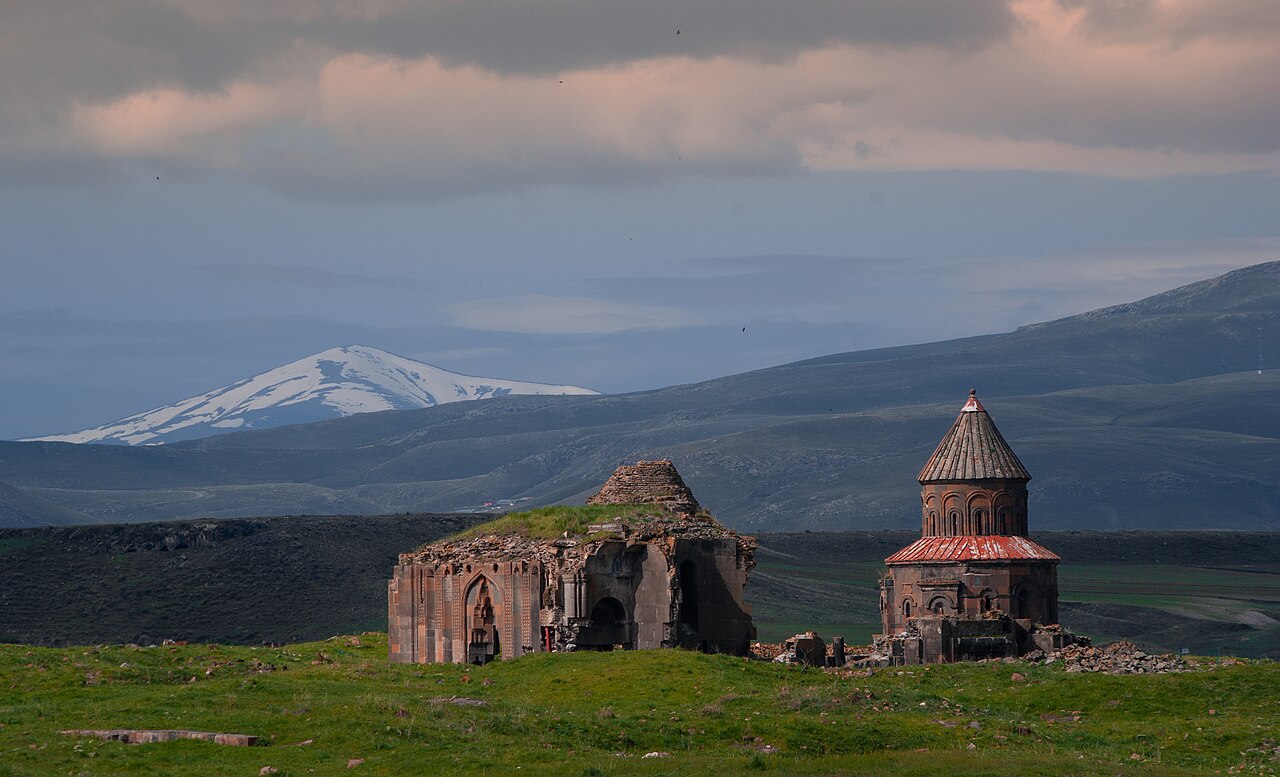
Ruins of the medieval city of Ani

Wikimedia Commons (CC BY-SA)

도시유네스코주요

Ani

Seyfi Cem Baskin

500 서기 – 1400 서기

A medieval Armenian capital on the Turkish-Armenian border, once home to over 100,000 people. Its ruins include magnificent churches, mosques, and fortifications spanning centuries of multicultural history.

312
관심 72

위치

Kars · Eastern Anatolia · 튀르키예

40.51°N · 43.57°E · 아시아

Peak Population

~100,000+

Known As

City of 1001 Churches

UNESCO Status

World Heritage Site (2016)

Date Range

c. 500–1400 CE

Primary Construction Material

Local volcanic basalt and tuff stone

Major Historical Event

Sack of Ani by the Mongols under Ilkhanate commander Tamerlane in 1239 CE

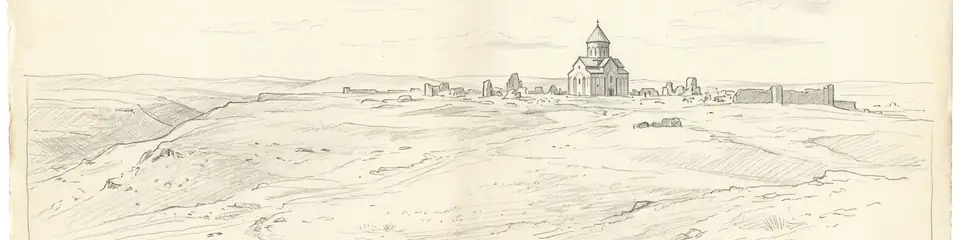
Graphite pencil sketch banner of Ani

“Ani represents a remarkable example of medieval urban planning, religious architecture, and cultural exchange.”

위키백과에서

Ani is a ruined medieval Armenian city situated in Turkey's province of Kars, next to the closed border with Armenia. At its height around 1050 CE, the city may have had a population exceeding 100,000, rivaling Constantinople. It was known as the "City of 1001 Churches."

위키백과에서 전체 기사 읽기 →

위치

개요

Ani is located in Kars Province, on a triangular plateau above the Akhurian River gorge that now forms part of the Turkish-Armenian border. In the 10th and 11th centuries, Ani was the capital of the Bagratid Armenian Kingdom and one of the most prosperous cities in the world.

At its height around 1050 CE, Ani may have had a population exceeding 100,000, rivaling the size of Constantinople. The city was known as the "City of 1001 Churches" and was a major center of Armenian culture, architecture, and commerce along the Silk Road.

"Ani is a great city, the capital of Armenia, with impregnable walls and a thousand churches."
— Ibn al-Athir (c. 1160–1233), Arab historian

The site contains the ruins of numerous churches (including the Cathedral of Ani, built 989–1001), mosques, a Seljuk palace, defensive walls, and a citadel. The Church of the Redeemer (1035) and the Church of St. Gregory of Tigran Honents (1215), with its remarkable frescoes, are among the most notable structures.

Ani changed hands between Armenian, Byzantine, Seljuk, Georgian, and Ottoman rulers before being largely abandoned after Tamerlane's invasion in 1319 and a devastating earthquake in 1319.
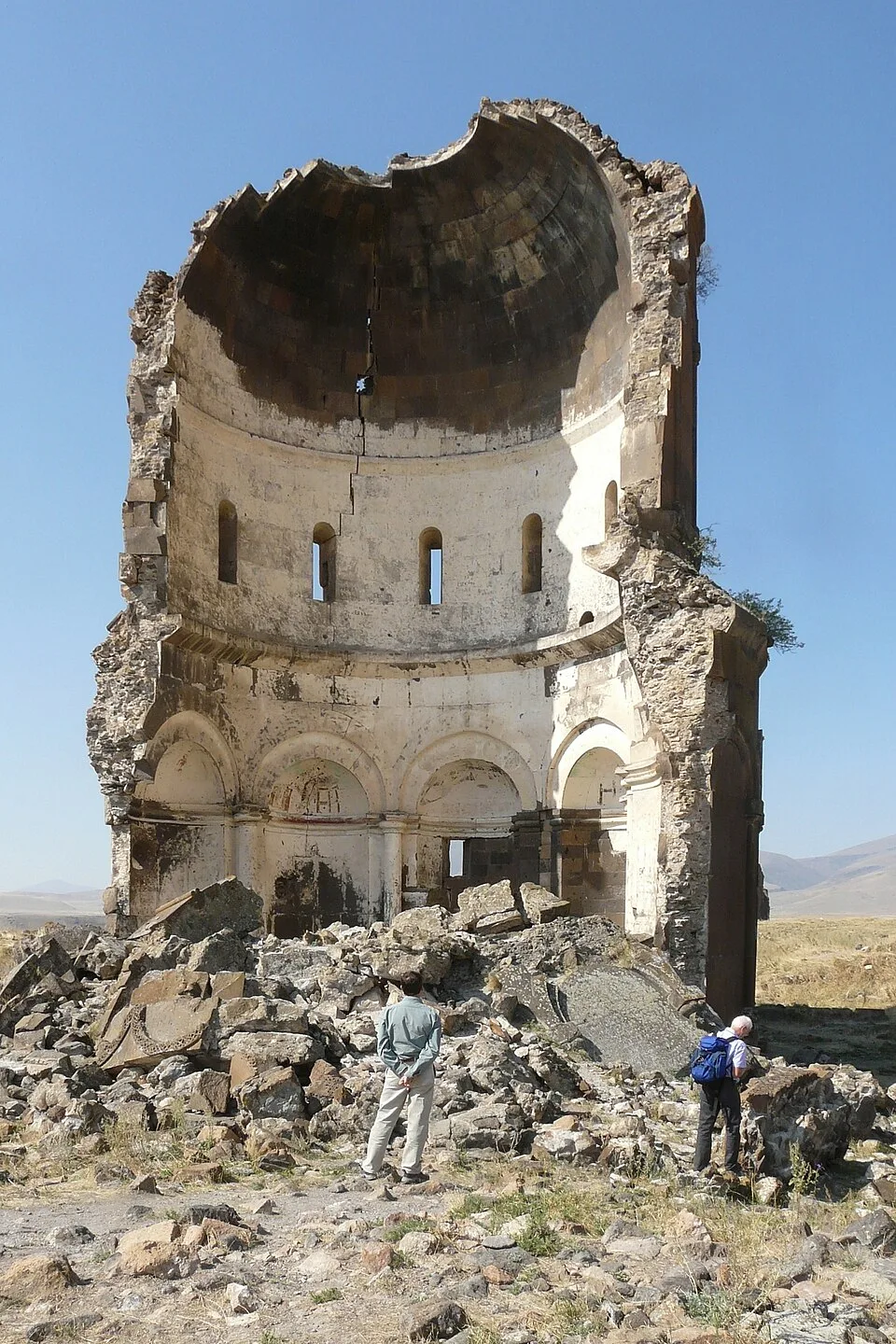
Türkei, historische Stadt Ani, Erlöserkirche
Türkei, historische Stadt Ani, Erlöserkirche | Feldstein (CC BY-SA 4.0)

The city's formidable double walls, constructed under King Smbat II (977–989 CE), featured numerous semicircular towers and elaborate gates, demonstrating advanced military engineering. Within these defenses, archaeological evidence points to a thriving urban economy. Excavations have revealed workshops for metalworking, pottery, and glass production, alongside caravanserais that serviced Ani's role as a key node on east-west trade routes linking the Byzantine Empire, the Caucasus, and Persia.

Ani's decline was a protracted process. Following its capture by the Seljuk Turks in 1064 CE, it remained an important center but suffered from successive changes in rule, including the Georgian Kingdom, local Kurdish emirs, and the Mongols. The devastating sack by Tamerlane's forces in 1386, combined with a major earthquake in 1319 and the gradual shift of trade routes, led to the city's abandonment by the 18th century. Its ruins, preserved by the remote location, offer a poignant snapshot of a vanished medieval metropolis.
중요성

Ani represents a remarkable example of medieval urban planning, religious architecture, and cultural exchange. Its churches demonstrate the sophistication of Armenian architecture, which influenced both Byzantine and later European building traditions. The city's multicultural history — with Armenian, Seljuk, Georgian, and Ottoman layers — makes it a powerful symbol of Anatolia's diverse heritage. UNESCO inscribed Ani as a World Heritage Site in 2016.

증거와 해석

확립된 사실과 논쟁 중인 사항을 구분합니다.

잘 확립된 사실

3
  • The Cathedral of Ani was completed in 1001 CE by architect Trdat, who also repaired the Hagia Sophia dome.
  • The city served as the capital of the Bagratid Armenian Kingdom in the 10th–11th centuries.
  • The Church of St. Gregory of Tigran Honents (1215) retains extensive interior frescoes.

학술적 추론

1
  • Ani's population may have reached or exceeded 100,000 at its peak, based on the extent of its ruins and historical sources.

논쟁 중인 해석

2
  • The relative contributions of earthquake damage versus deliberate destruction to Ani's decline are debated.
  • The original function of the structure known as the 'Church of the Shepherd' (Çoban Kilisesi) is debated, with some scholars suggesting it may have been a palace or civic building.

발견과 발굴

1892

First excavations

지휘 Nikolai Marr

Nikolai Marr began systematic archaeological study of Ani.

1904–1917

Major Russian excavations

지휘 Nikolai Marr

Extensive excavations during the Russian imperial period.

1965

Turkish Survey and Excavations

지휘 Kemal Balkan and the Turkish Historical Society

A series of surveys and limited excavations were conducted by a Turkish team, focusing on documentation and clearing of major monuments.

2012

Turkish conservation project

지휘 Turkish Ministry of Culture

Turkey began a major conservation and restoration program at the site.

커뮤니티 사진

당신의 경험을 공유하세요

이 유적지를 방문하셨나요? 다른 탐험가들을 위해 사진을 업로드해 보세요.

관련 이야기

이 페이지 인용 방법

Atlas Anatolia. (500). Ani. Atlas Anatolia. https://atlasanatolia.com/ko/site/ani

콘텐츠는 CC BY-SA 4.0 라이선스에 따라 제공됩니다 — 재사용 시 출처 표시가 필요합니다.

그래프

관련 유적지와 스토리로의 연결.

World History Encyclopedia에서 전체 기사 읽기
World History Encyclopedia · CC BY-NC-SA

출처

  • Ani: World Architectural Heritage of a Medieval Armenian Capital — Seta Dadoyan (2015)
  • UNESCO World Heritage — Ani링크

자주 묻는 질문

Ani은(는) 어디에 위치해 있나요?

Ani은(는) Kars, Eastern Anatolia, Türkiye에 위치해 있습니다.

Ani의 연대는 언제인가요?

Ani의 연대는 대략 500 서기 – 1400 서기로 거슬러 올라갑니다.

Ani과(와) 관련된 고대 문명은 무엇인가요?

Ani은(는) Byzantine, Armenian, Seljuk 문명과 관련이 있습니다.

Ani이(가) 중요한 이유는 무엇인가요?

Ani represents a remarkable example of medieval urban planning, religious architecture, and cultural exchange.

Ani은(는) 유네스코 세계유산인가요?

예 — Ani은(는) 유네스코 세계유산으로 등재되어 있습니다.