
콘텐츠로 건너뛰기
Atlas Anatolia
디그
뉴스술라웨시 빙하기 치아에서 빈랑 사용 25,000년 전까지 소급카스타모누 폼페이오폴리스 바실리카에서 로마 모자이크와 에로스 두상 발견
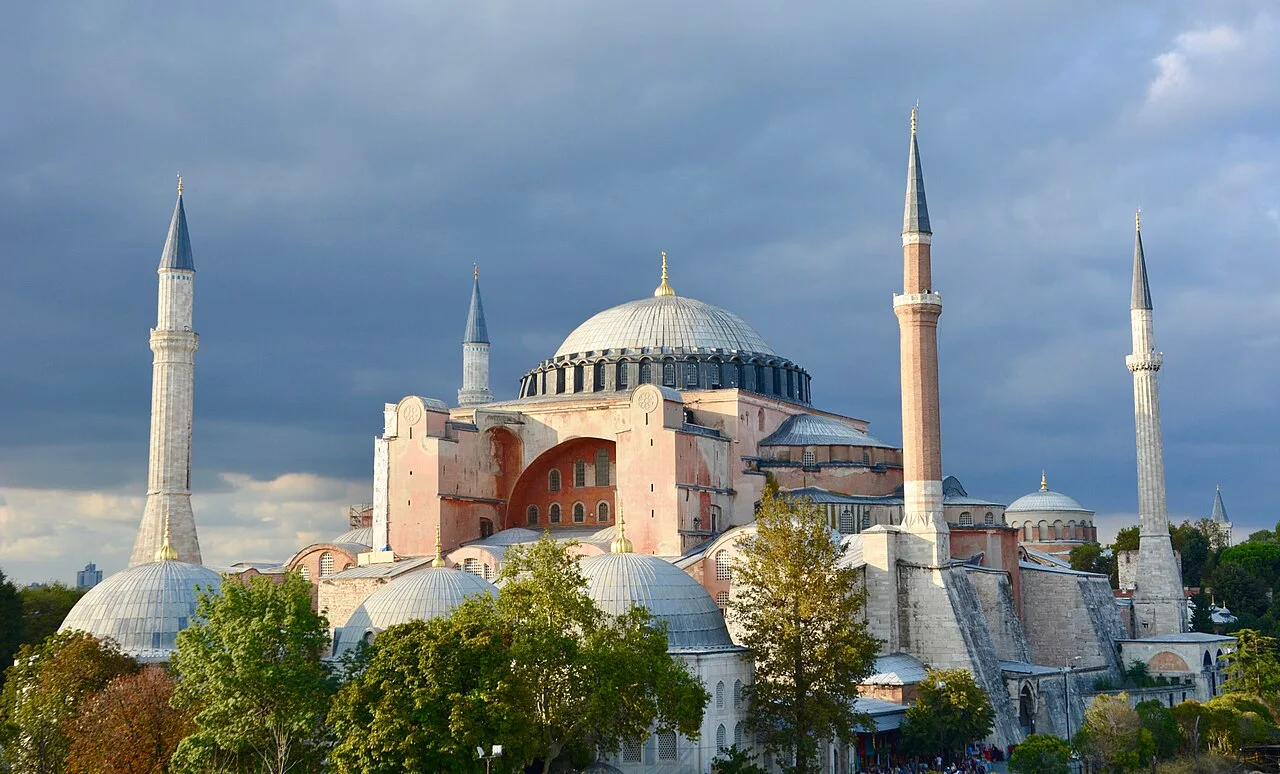
The domed exterior of Hagia Sophia with its Ottoman minarets, Istanbul, Turkey

Wikimedia Commons

Country Record

Known by the Most Names in Türkiye

The Floating Dome — Hagia Sophia Collectible Enamel Pin
🔒
유산🎖️The Floating Dome(Collectible)기념물유네스코주요

Hagia Sophia

Seyfi Cem Baskin

Ἁγία Σοφία / Ayasofya532 서기 – 1453 서기

The supreme achievement of Byzantine architecture — a vast domed basilica built by the emperor Justinian in Constantinople in just five years and completed in 537 CE, its 31-metre dome seeming to float on a ring of windows. For nearly a thousand years it was the largest enclosed space and greatest cathedral in the Christian world, before becoming a mosque, a museum, and a mosque again.

311
관심 88

위치

튀르키예

41.01°N · 28.98°E · 유럽

Completed

537 CE, under Emperor Justinian I (built in under 6 years)

Architects

Anthemius of Tralles and Isidore of Miletus (mathematicians)

Dome

31 m diameter, 55 m high; ringed by 40 windows

Converted to mosque

1453 (Mehmed II); museum 1934; mosque again 2020

Status held

World's largest cathedral for ~900 years

UNESCO

Part of "Historic Areas of Istanbul" (1985)

Graphite pencil sketch banner of Hagia Sophia

“Hagia Sophia is the defining monument of Byzantine civilization and one of the most important buildings ever constructed.”

위치

개요

Hagia Sophia stands on the first hill of historic Constantinople (modern Istanbul), overlooking the Bosphorus where it meets the Sea of Marmara and the Golden Horn. The present building is the third church on the site. The first, dedicated under Constantius II in 360, and the second, under Theodosius II in 415, were both destroyed by fire during civil unrest — the second burned in the Nika riots of 532. Within weeks of those riots, the emperor Justinian I commissioned a replacement on a scale never before attempted.

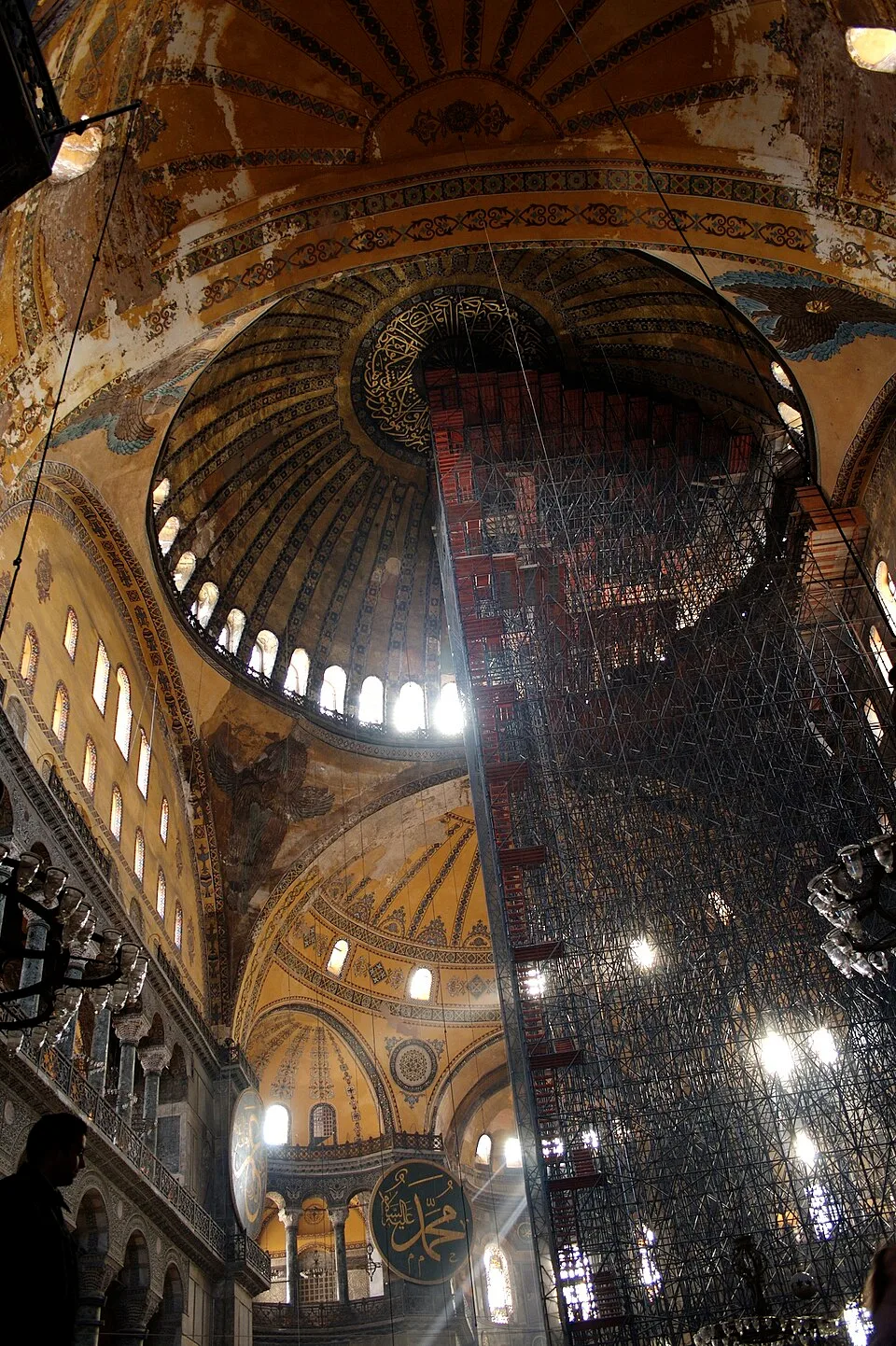
Justinian entrusted the design not to working architects but to two mathematicians: Anthemius of Tralles and Isidore of Miletus. Their solution to roofing an enormous square space with a dome — the pendentive, a curved triangular vault that transitions from a square base to a circular rim — became one of the most influential structural innovations in architectural history. The central dome, 31 metres in diameter and rising 55 metres above the floor, is pierced at its base by 40 windows, so that light pours in at the springing line and the dome appears, in the words of the contemporary historian Procopius, "to be suspended from heaven by a golden chain." The building was completed in an astonishingly short five years, ten months, and was consecrated on 27 December 537.

"Whenever one enters this church to pray, he understands at once that it is not by human power or skill, but by the influence of God, that this work has been perfected."
— Procopius, On Buildings I.1, on Hagia Sophia (c. 560 CE)

The original dome was too shallow and exerted too much outward thrust; it partially collapsed in 558 after earthquakes, and Isidore the Younger rebuilt it steeper and slightly higher. The interior was sheathed in polychrome marble revetment quarried from across the empire and, over subsequent centuries, decorated with gold-ground mosaics depicting Christ, the Virgin, emperors, and saints — many added after the end of the Iconoclasm controversy in 843. For 900 years Hagia Sophia was the cathedral of Constantinople and the ceremonial centre of the Eastern Orthodox world, the setting for imperial coronations.
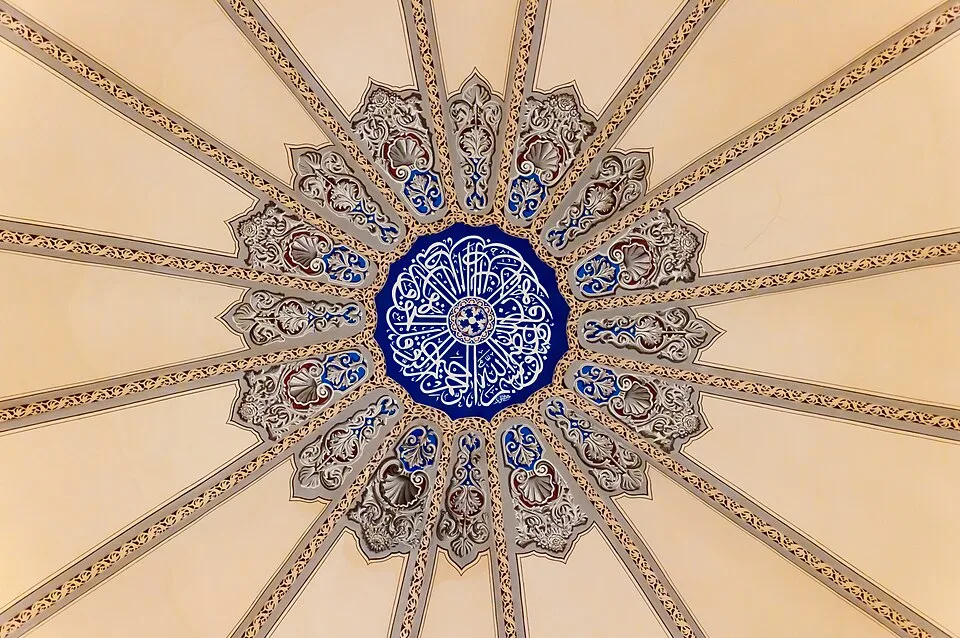
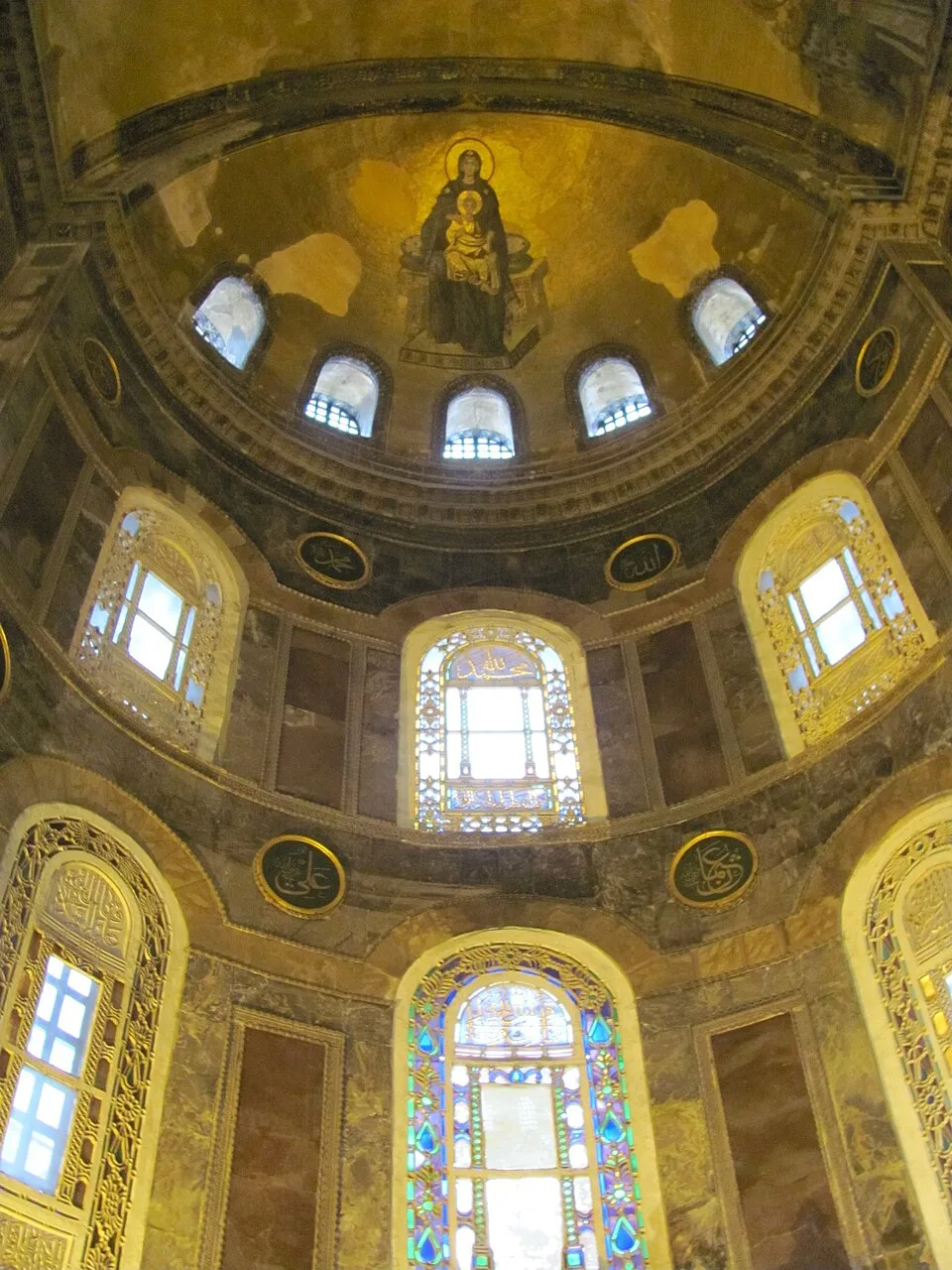
Kuppel Kleine Hagia Sophia
Kuppel Kleine Hagia Sophia | H005 (Public domain)
Dome of Hagia Sophia 2
Dome of Hagia Sophia 2 | Slyronit (CC BY-SA 4.0)
Hagia Sophia Interior Dome
Hagia Sophia Interior Dome | Matthew Badger bad_germ (CC BY-SA 3.0)

After the Ottoman conquest of Constantinople in 1453, Sultan Mehmed II converted the church into a mosque. Four minarets were added over the following century, the figural mosaics were gradually plastered over, and great calligraphic roundels were hung in the nave. The Ottoman architect Mimar Sinan reinforced the structure with buttresses, ensuring its survival through later earthquakes. In 1934 the secular Turkish republic converted the building into a museum, and conservators uncovered many of the hidden Byzantine mosaics. In 2020 it was reconverted to a working mosque, with the mosaics now veiled during prayer.
중요성

Hagia Sophia is the defining monument of Byzantine civilization and one of the most important buildings ever constructed. Its pendentive-supported dome solved a structural problem that had defeated Roman builders and established the template for monumental domed architecture that runs through Ottoman mosque design — Sinan spent his career responding to it — to St Peter's in Rome and beyond. For almost a millennium it held the record as the world's largest cathedral, and its scale and luminous interior were understood by contemporaries as a deliberate image of heaven on earth. The building is also a unique palimpsest of the religious history of the eastern Mediterranean: a Christian cathedral, an imperial mosque, a secular museum, and a mosque again, with Byzantine gold mosaics and monumental Arabic calligraphy sharing the same space. It is the centrepiece of the "Historic Areas of Istanbul," inscribed by UNESCO as a World Heritage Site in 1985.

증거와 해석

확립된 사실과 논쟁 중인 사항을 구분합니다.

잘 확립된 사실

3
  • The construction and consecration of the present building are documented in detail by the contemporary historian Procopius of Caesarea in his work "On Buildings" (De Aedificiis), written within Justinian's lifetime. The consecration date of 27 December 537 is securely recorded in Byzantine sources.
  • The partial collapse of the original dome in 558, following earthquakes, and its reconstruction in steeper form by Isidore the Younger, are documented and confirmed by structural analysis of the surviving fabric, which shows the rebuilt dome rises about 6 metres higher than the original.
  • Byzantine figural mosaics — including the Deësis, the Virgin and Child in the apse, and imperial portrait panels — were plastered over after 1453 and rediscovered during museum-era conservation from 1934 onward, led by the Byzantine Institute of America under Thomas Whittemore.

학술적 추론

1
  • The marble revetment was quarried from across the empire — green from Thessaly, porphyry from Egypt, white from Proconnesus — and arranged in matched "book-matched" panels. The deliberate sourcing of stone from every corner of the empire is read by scholars as a symbolic assertion of imperial universality.

논쟁 중인 해석

1
  • The precise original form and height of the first (537) dome remain debated, since it was replaced after 558. Estimates of how much shallower it was, and whether design error or seismic activity was the primary cause of collapse, vary among structural historians.

커뮤니티 사진

당신의 경험을 공유하세요

이 유적지를 방문하셨나요? 다른 탐험가들을 위해 사진을 업로드해 보세요.

관련 이야기

이 페이지 인용 방법

Atlas Anatolia. (532). Hagia Sophia. Atlas Anatolia. https://atlasanatolia.com/ko/site/hagia-sophia

콘텐츠는 CC BY-SA 4.0 라이선스에 따라 제공됩니다 — 재사용 시 출처 표시가 필요합니다.

그래프

관련 유적지와 스토리로의 연결.

출처

  • Hagia Sophia: Architecture, Structure and Liturgy of Justinian's Great Church — Mainstone, Rowland J. (1988)
  • Byzantine Architecture — Mango, Cyril (1976)
  • On Buildings (De Aedificiis) — Procopius (555)

자주 묻는 질문

Hagia Sophia은(는) 어디에 위치해 있나요?

Hagia Sophia은(는) Türkiye에 위치해 있습니다.

Hagia Sophia의 연대는 언제인가요?

Hagia Sophia의 연대는 대략 532 서기 – 1453 서기로 거슬러 올라갑니다.

Hagia Sophia과(와) 관련된 고대 문명은 무엇인가요?

Hagia Sophia은(는) Byzantine, Ottoman 문명과 관련이 있습니다.

Hagia Sophia이(가) 중요한 이유는 무엇인가요?

Hagia Sophia is the defining monument of Byzantine civilization and one of the most important buildings ever constructed.

Hagia Sophia은(는) 유네스코 세계유산인가요?

예 — Hagia Sophia은(는) 유네스코 세계유산으로 등재되어 있습니다.