
콘텐츠로 건너뛰기
Atlas Anatolia
디그
뉴스술라웨시 빙하기 치아에서 빈랑 사용 25,000년 전까지 소급카스타모누 폼페이오폴리스 바실리카에서 로마 모자이크와 에로스 두상 발견
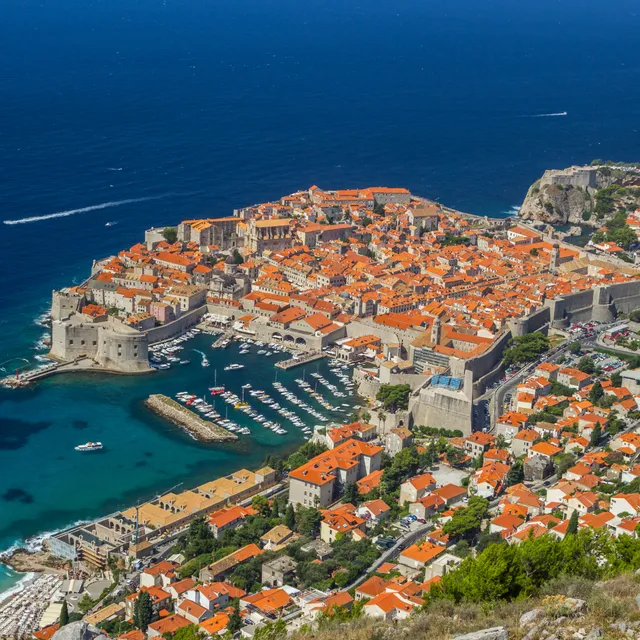
Walled old town and harbour of Dubrovnik on the Adriatic Sea

Wikimedia Commons

Country Record

Longest Continuously Occupied Site in Croatia

도시유네스코

Dubrovnik Old Town

Seyfi Cem Baskin

Dubrovnik600 서기 – 1808 서기

The walled marble city on the Adriatic — capital of the maritime Republic of Ragusa for centuries — whose intact ramparts, Stradun, and Renaissance palaces make it one of Europe's most visited historic cities and a UNESCO masterpiece of late-medieval urban design.

21
관심 84

위치

크로아티아

42.65°N · 18.09°E · 유럽

Republic

Independent Republic of Ragusa 1358–1808

Walls

~2 km circuit; largely 12th–17th centuries

1667 earthquake

Devastated city; major rebuild in baroque forms

UNESCO

Old City of Dubrovnik (1979)

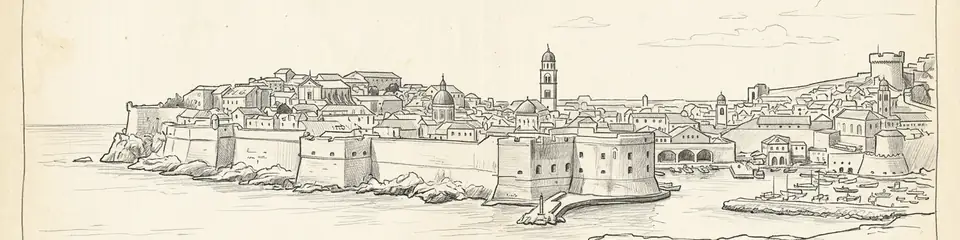
Graphite pencil sketch banner of Dubrovnik Old Town

“Dubrovnik preserves an exceptionally complete late-medieval and Renaissance walled city — rare proof of how a small republic projected power through trade rather than territory.”

위치

개요

Dubrovnik (historical Ragusa) occupies a rocky promontory on the Dalmatian coast of Croatia, facing the Adriatic Sea. Founded or refounded by refugees from Epidaurum (Cavtat) after Slavic and Avar incursions, the city grew as a Byzantine-then-independent maritime republic from the 7th century onward. By the 15th and 16th centuries Ragusa was a wealthy trading state balancing Ottoman, Venetian, and Habsburg spheres, famed for diplomacy, shipbuilding, and its 1272 Statute.

The present circuit of walls — roughly 2 kilometres, up to 25 metres high — largely dates to the 12th–17th centuries, withstood the 1667 earthquake, and was repaired after the 1990s siege of Dubrovnik. Inside, the Stradun (Placa) limestone artery links the Pile and Ploče Gates; the Rector's Palace, Sponza, and Franciscan monastery exemplify Gothic and Renaissance Adriatic architecture.

UNESCO listed the Old City of Dubrovnik in 1979; damage during the 1991–1992 shelling led to major international restoration. Tourism now ranks among the highest in the Mediterranean, with cruise and heritage visitors crowding the walls each summer.

중요성

Dubrovnik preserves an exceptionally complete late-medieval and Renaissance walled city — rare proof of how a small republic projected power through trade rather than territory. Its 1990s war damage and restoration became a landmark case in heritage protection under conflict (ICTY prosecutions cited shelling of the old town).

증거와 해석

확립된 사실과 논쟁 중인 사항을 구분합니다.

잘 확립된 사실

2
  • The 1272 Statute of Ragusa and later municipal archives document governance, trade privileges, and building regulations.
  • Architectural survey confirms Gothic–Renaissance palaces, wall phases, and post-1667 baroque reconstruction within the historic fabric.

논쟁 중인 해석

1
  • The precise date and circumstances of Ragusa's foundation remain debated between medieval chronicles and limited early archaeological evidence.

커뮤니티 사진

당신의 경험을 공유하세요

이 유적지를 방문하셨나요? 다른 탐험가들을 위해 사진을 업로드해 보세요.

이 페이지 인용 방법

Atlas Anatolia. (600). Dubrovnik Old Town. Atlas Anatolia. https://atlasanatolia.com/ko/site/dubrovnik

콘텐츠는 CC BY-SA 4.0 라이선스에 따라 제공됩니다 — 재사용 시 출처 표시가 필요합니다.

출처

  • Dubrovnik: A History — Harris, Robin (2003)
  • UNESCO — Old City of Dubrovnik링크

자주 묻는 질문

Dubrovnik Old Town은(는) 어디에 위치해 있나요?

Dubrovnik Old Town은(는) Croatia에 위치해 있습니다.

Dubrovnik Old Town의 연대는 언제인가요?

Dubrovnik Old Town의 연대는 대략 600 서기 – 1808 서기로 거슬러 올라갑니다.

Dubrovnik Old Town과(와) 관련된 고대 문명은 무엇인가요?

Dubrovnik Old Town은(는) Byzantine, Republic of Ragusa 문명과 관련이 있습니다.

Dubrovnik Old Town이(가) 중요한 이유는 무엇인가요?

Dubrovnik preserves an exceptionally complete late-medieval and Renaissance walled city — rare proof of how a small republic projected power through trade rather than territory.

Dubrovnik Old Town은(는) 유네스코 세계유산인가요?

예 — Dubrovnik Old Town은(는) 유네스코 세계유산으로 등재되어 있습니다.