
콘텐츠로 건너뛰기
Atlas Anatolia
디그
뉴스술라웨시 빙하기 치아에서 빈랑 사용 25,000년 전까지 소급카스타모누 폼페이오폴리스 바실리카에서 로마 모자이크와 에로스 두상 발견
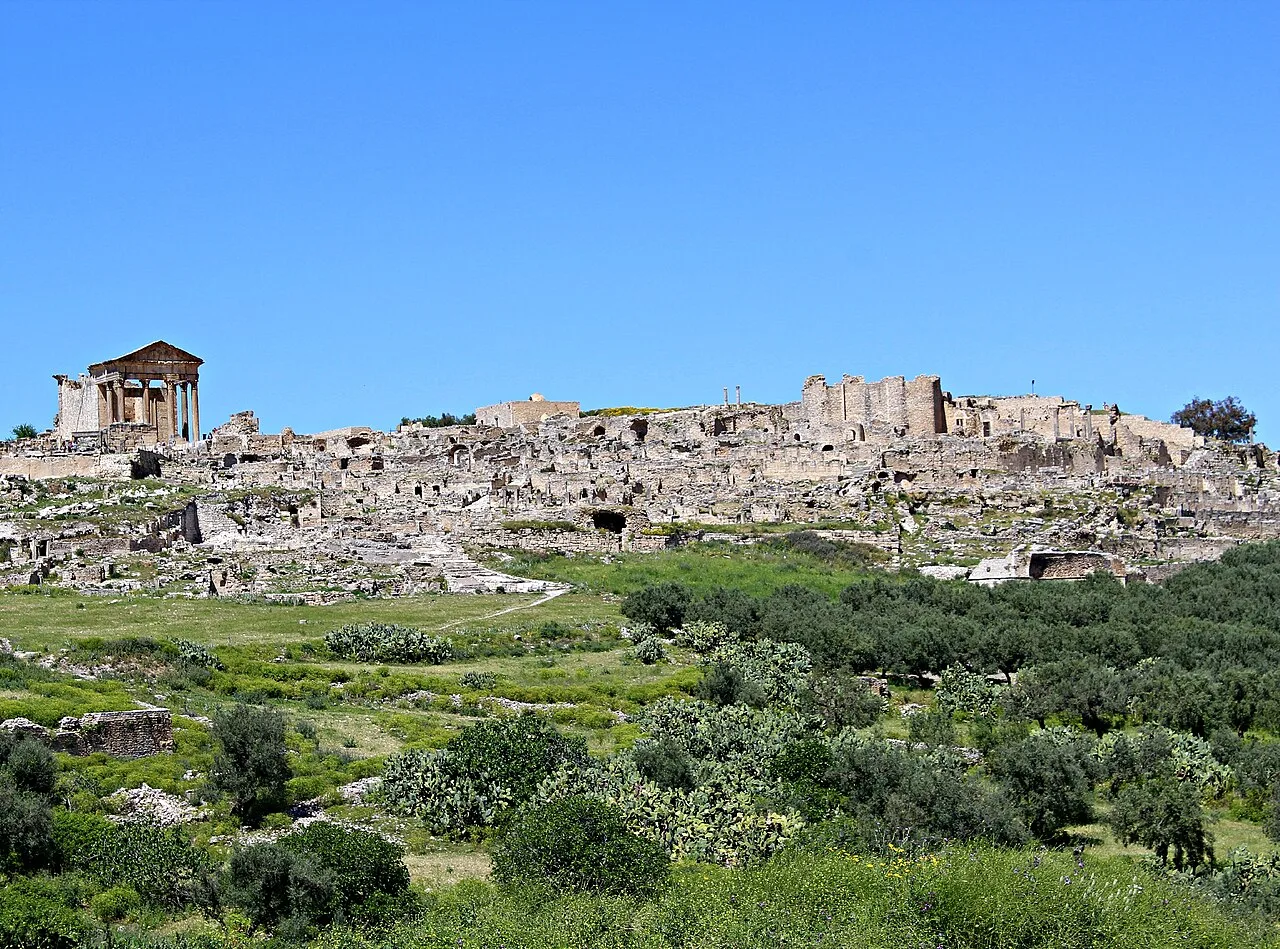
The Capitol and ruins of the Roman town of Dougga (Thugga), Tunisia

Wikimedia Commons

Country Record

Oldest City in Tunisia

도시유네스코

Dougga

Seyfi Cem Baskin

دڨة / Thugga300 기원전 – 600 서기

The best-preserved Roman town in North Africa — a small city spread across a hilltop in northern Tunisia, with a near-complete theatre, the elegant Capitol temple, baths, and forum, all overlooking olive-covered countryside. Its Numidian roots also survive in the rare Libyco-Punic Mausoleum, a key monument of pre-Roman Africa.

311
관심 54

위치

튀니지

36.42°N · 9.22°E · 아프리카

Ancient name

Thugga; Numidian then Roman town

Preservation

Best-preserved Roman town in North Africa (~65 ha)

Theatre

Built 168–169 CE, seats ~3,500; still in use

Capitol

Temple of Jupiter, Juno, Minerva — standing Corinthian portico

Libyco-Punic Mausoleum

2nd c. BCE; its bilingual text helped decipher Libyan script

UNESCO

World Heritage Site (1997)

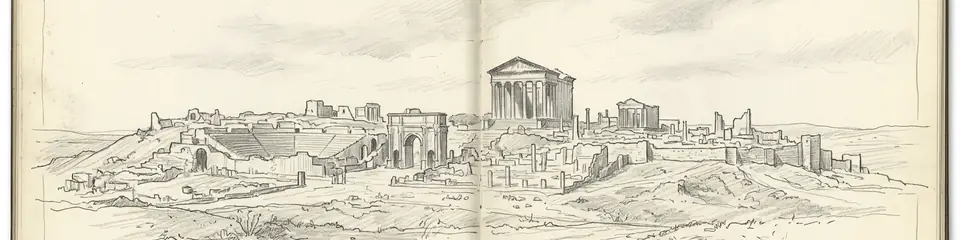
Graphite pencil sketch banner of Dougga

“Dougga is the finest and most complete Roman town surviving in North Africa, offering an almost intact picture of how a modest provincial African city looked and functioned — its theatre, Capitol, baths, forum, temples, and houses all preserved together in their landscape.”

위치

개요

Dougga, ancient Thugga, occupies a hilltop site about 100 kilometres southwest of Tunis in northern Tunisia, commanding wide views over the fertile valley of the Oued Khalled. It is the most complete and best-preserved Roman town in North Africa, spread over some 65 hectares, and uniquely it preserves not only its Roman monuments but also substantial traces of the Numidian (Berber) and Punic settlement that preceded Roman rule.

The town existed as a Numidian settlement well before the Romans, and was for a time a royal seat of the Numidian kingdom. Its most important pre-Roman monument is the Libyco-Punic Mausoleum, a tall tower-tomb of the 2nd century BCE that once bore a bilingual inscription in Punic and the Libyan (Numidian) language. That inscription, removed in the 19th century and now in the British Museum, was a key to the decipherment of the Libyan script — making Dougga important far beyond its size.

Under Roman rule, especially in the 2nd and 3rd centuries CE, Thugga was monumentalised by wealthy local benefactors. Because it grew on a hill from an older irregular street plan rather than being laid out on a fresh Roman grid, its streets wind and its public buildings are fitted to the terrain, giving it an unusually organic, intimate character. Its theatre, built in 168–169 CE and seating around 3,500, is remarkably well preserved and still used for performances. The Capitol, dedicated to the triad of Jupiter, Juno, and Minerva, is one of the finest in Africa, its tall Corinthian portico still standing. The site also preserves a forum, the Square of the Winds (with a compass rose naming the twelve winds inscribed in the pavement), temples to numerous gods, public baths with underground service passages, latrines, cisterns, markets, and private houses with mosaics.

The town continued into the Byzantine period, when a fortress was built reusing earlier stone, and gradually contracted thereafter. Its rural isolation spared it from being built over, leaving the ancient townscape exceptionally intact.

중요성

Dougga is the finest and most complete Roman town surviving in North Africa, offering an almost intact picture of how a modest provincial African city looked and functioned — its theatre, Capitol, baths, forum, temples, and houses all preserved together in their landscape. Because it grew organically on a hilltop rather than on a standardised grid, it conveys the texture of a real, lived-in ancient town better than many more famous sites. Its pre-Roman monuments, above all the Libyco-Punic Mausoleum whose bilingual inscription helped decipher the ancient Libyan script, also make it a key site for the indigenous Numidian civilisation of North Africa. It was inscribed as a UNESCO World Heritage Site in 1997.

증거와 해석

확립된 사실과 논쟁 중인 사항을 구분합니다.

잘 확립된 사실

3
  • The theatre carries a dedicatory inscription dating it to 168–169 CE and naming its benefactor, P. Marcius Quadratus — a documented act of local euergetism (civic gift-giving).
  • The Libyco-Punic Mausoleum's bilingual Punic–Libyan inscription (removed to the British Museum in 1842) was instrumental in deciphering the ancient Libyan/Numidian script.
  • The standing Capitol, forum, Square of the Winds with its inscribed wind-rose, baths, and numerous temples survive in situ, documenting a full Roman civic centre.

학술적 추론

1
  • The town's irregular, terrain-following street plan is interpreted as the result of Roman monuments being grafted onto a pre-existing Numidian settlement rather than a planned colonial grid.

논쟁 중인 해석

1
  • The early history and exact status of Numidian Thugga — including the extent of its role as a royal seat under kings such as Massinissa — is only partly understood, given limited pre-Roman textual evidence.

커뮤니티 사진

당신의 경험을 공유하세요

이 유적지를 방문하셨나요? 다른 탐험가들을 위해 사진을 업로드해 보세요.

이 페이지 인용 방법

Atlas Anatolia. (300). Dougga. Atlas Anatolia. https://atlasanatolia.com/ko/site/dougga

콘텐츠는 CC BY-SA 4.0 라이선스에 따라 제공됩니다 — 재사용 시 출처 표시가 필요합니다.

출처

  • Les ruines de Dougga — Poinssot, Claude (1983)
  • Dougga (Thugga) — Khanoussi, Mustapha (2008)

자주 묻는 질문

Dougga은(는) 어디에 위치해 있나요?

Dougga은(는) Tunisia에 위치해 있습니다.

Dougga의 연대는 언제인가요?

Dougga의 연대는 대략 300 기원전 – 600 서기로 거슬러 올라갑니다.

Dougga과(와) 관련된 고대 문명은 무엇인가요?

Dougga은(는) Carthaginian / Phoenician, Roman 문명과 관련이 있습니다.

Dougga이(가) 중요한 이유는 무엇인가요?

Dougga is the finest and most complete Roman town surviving in North Africa, offering an almost intact picture of how a modest provincial African city looked and functioned — its theatre, Capitol, baths, forum, temples, and houses all preserved together in their landscape.

Dougga은(는) 유네스코 세계유산인가요?

예 — Dougga은(는) 유네스코 세계유산으로 등재되어 있습니다.