
In late August 2026, Anadolu Agency carried photographs of small limestone animals from a cave above the Sakarya in Bilecik. The headline wrote itself: 25 turtle figurines, some said to be 16,500 years old. The place is Gedikkaya Cave (İn Cave) at İnhisar. The excavator is Prof. Dr. Deniz Sarı of Bilecik Şeyh Edebali University. The dates in the trench are 14,500-11,200 BCE, Epipaleolithic, not a Neolithic temple on the Şanlıurfa plateau.
That is the Atlas habit. Treat the count as news. Treat "cult" as a test.
Turkey
Gedikkaya Cave
A north-facing limestone cave above the Sakarya Valley near İnhisar, Bilecik, occupied from the Epipaleolithic
Turkey
Göbekli Tepe
The world's oldest known monumental sanctuary, predating Stonehenge by roughly 6,000 years. Massive carved T-s
Turkey
Karahan Tepe
Karahan Tepe is a Pre-Pottery Neolithic settlement in southeastern Türkiye, contemporaneous with Göbekli Tepe,
What the 2026 season actually recovered
Sarı's 14-member team worked 18 May to 18 July 2026 for the Ministry of Culture and Tourism. They recovered about 25 turtle-shaped objects, mostly limestone, some with a clay coating. The largest is about 30 cm long and 20 cm wide. Many are unfinished or quickly shaped, not polished portable sculpture.
The important sentence is about where they sat. Sarı described a circular architectural arrangement. Around it, the figurines were inserted upright in the soil. She compared the act, for a Turkish audience, to burying a wish at Hıdırellez: an offering placed into the ground, not a figurine left on a shelf.
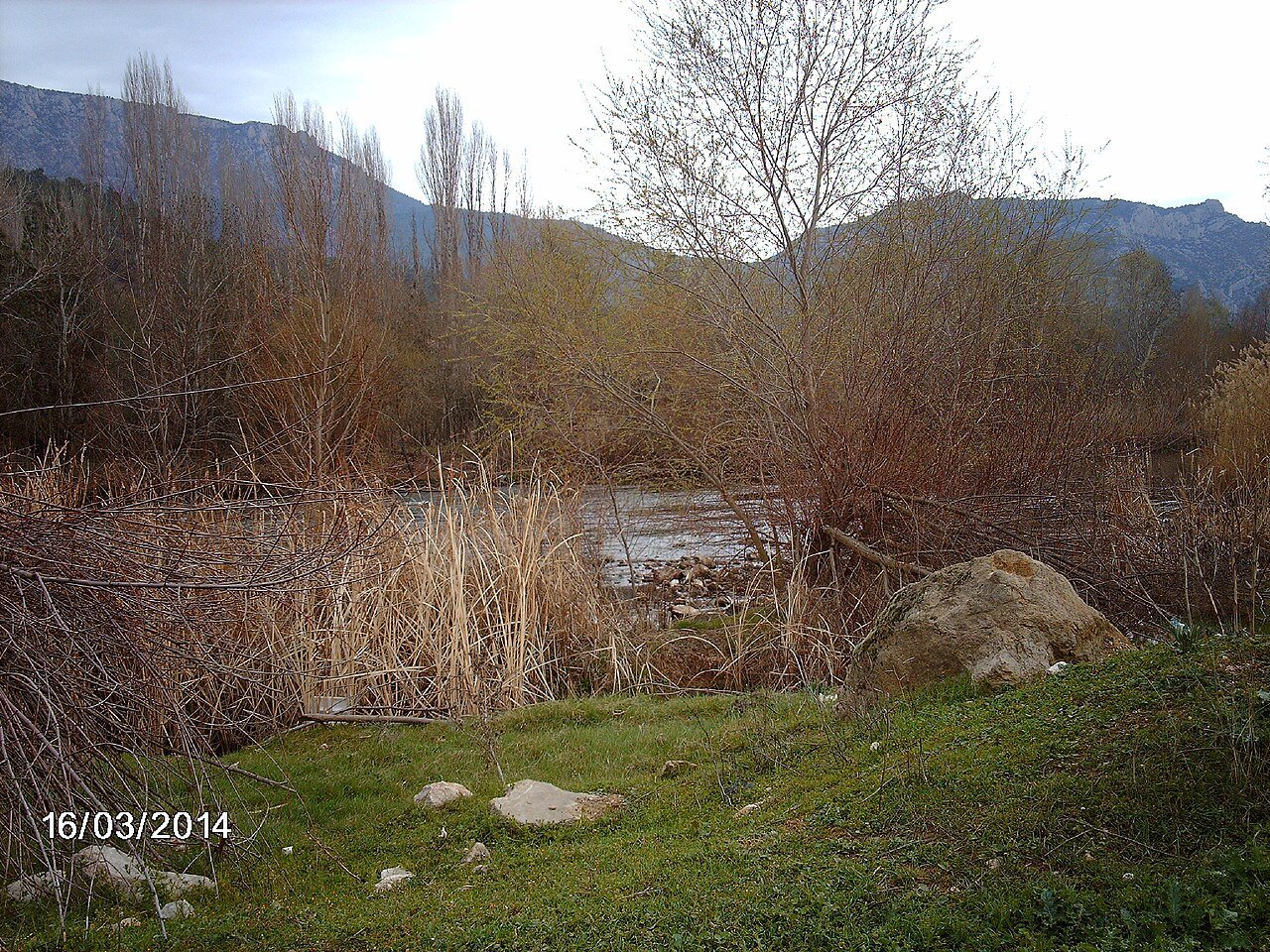
The pieces are now at Bilecik Museum and the university for conservation. Anadolu Agency photographs of the objects are not free to reuse. This page uses Commons landscapes of the Sakarya corridor instead, and says so.
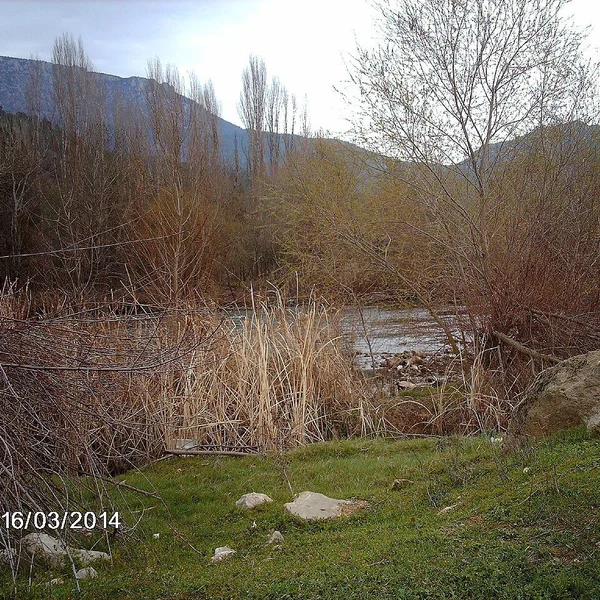
!The Sakarya River, the valley corridor below Gedikkaya Cave. Not the cave mouth.
The Sakarya River, the valley corridor below Gedikkaya Cave. Not the cave mouth. | Wikimedia Commons (CC BY-SA 4.0)
Gedikkaya Hill overlooks this river system. The cave mouth itself is not in the photograph. No verified Commons image of the 2026 turtles exists yet.
The cave was already a ritual address
The turtles are new. The ritual reading is not a 2026 invention.
Sarı's 2024 Belleten paper had already laid out occupation from c. 14,500 BCE to 4,500 BCE. About 40 m inside the entrance, two nested crescent stone rings enclose a stalagmite whose top was flattened: an offering pit, in her terms. Niches held animal bone, including tortoise shell, knapped stone, and a fallen stylised animal statue on a stone pavement. A 2025 paper in Anatolian Research dates that symbolic layer to 13,166-11,200 cal BCE.
So 2026 adds a repeated turtle form around circular rings. It does not discover that Epipaleolithic people used this cave for more than sleeping.
About 25 limestone turtle figurines were recovered in the 2026 season
The associated layers date to 14,500-11,200 BCE (Epipaleolithic)
Some figurines were inserted upright around circular stone architecture
The objects were made for ritual deposition
Gedikkaya Hill was worshipped as a turtle-shaped mountain
The site is a mountain cult in the ethnographic sense
Do not drag this onto Göbekli Tepe
Göbekli Tepe and Karahan Tepe are Pre-Pottery Neolithic sanctuaries in Şanlıurfa, thousands of years later and hundreds of kilometres southeast. T-pillars and a Bilecik cave are not the same culture. The useful comparison is narrower: hunter-gatherers in Anatolia already invested labour in placed objects and special architecture long before the Stone Hills.
Sarı has been explicit about another overreach. It is too early to name a mountain cult. Some small figurines may echo the silhouette of Gedikkaya Hill. That is a suggestion, not a proven landscape sculpture.
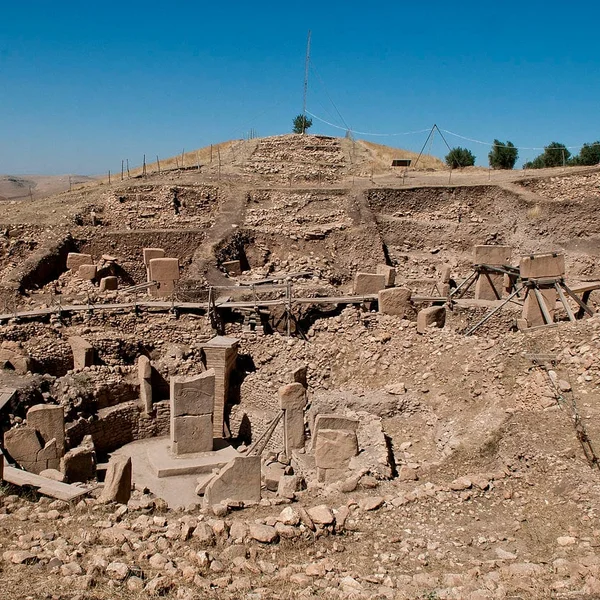
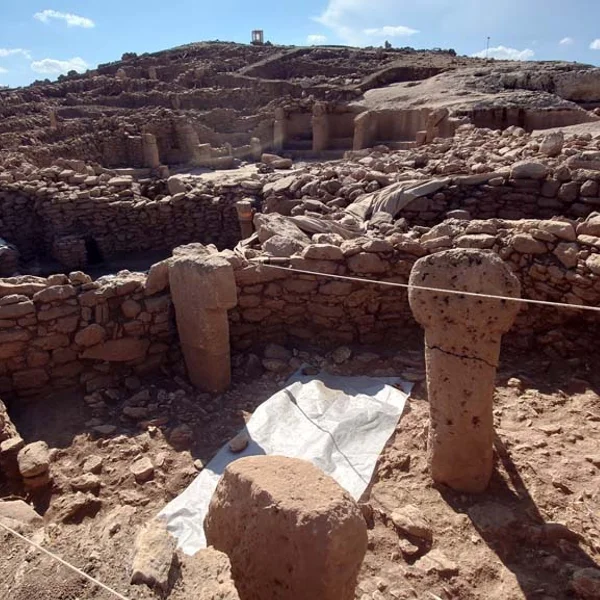
!Göbekli Tepe in Şanlıurfa: later Pre-Pottery Neolithic monuments, not the Bilecik cave
Göbekli Tepe in Şanlıurfa: later Pre-Pottery Neolithic monuments, not the Bilecik cave | Wikimedia Commons (CC BY-SA 4.0)
The image is the UNESCO hill most readers already know. Use it as a date contrast, not as a second findspot for the turtles.
How old is "16,500 years"?
Wire copy counts back from 2026 and rounds the early end of 14,500 BCE. That is journalism, not a single dated turtle. What is dated is the archaeological context: Epipaleolithic layers whose radiocarbon span Sarı gives as 14,500-11,200 BCE. Individual figurines are not each sitting on their own AMS ticket in the press packet.
The cave's full occupation, in the 2024 paper, runs on to the Middle Chalcolithic (c. 4,500 BCE). Do not collapse that later use into the turtle headline.
!Karahan Tepe, a Taş Tepeler neighbour of Göbekli Tepe
Karahan Tepe, a Taş Tepeler neighbour of Göbekli Tepe | Frantisek Trampota via Wikimedia Commons (CC BY-SA 4.0)
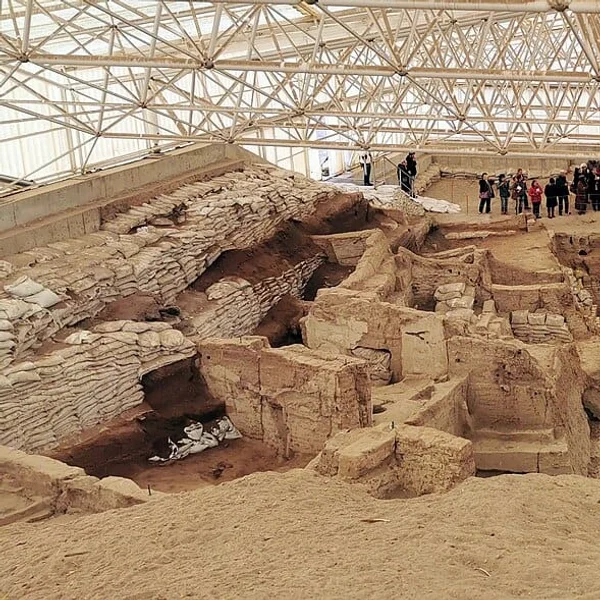
Çatalhöyük is later still (7th millennium BCE, Konya plain): packed houses, different economy, different images. It is on this atlas so you can walk the chronology, not because a house shrine there explains a Bilecik turtle.
Sources for the 2026 turtles
Press (Anadolu Agency, mid-to-late August 2026):
Site monograph and ritual context (pre-2026 turtles, still the scholarly frame):
- Sarı, D. 2024. "Anadolu Tarih Öncesi Dönemlerine Yeni Katkılar: İnhisar Gedikkaya Mağarası (MÖ 14500-4500)." Belleten 88(311): 1-43. DOI 10.37879/belleten.2024.001
- Sarı, D. 2025. "Epipalaeolithic Ritual Practices at Gedikkaya Cave, Northwestern Türkiye." Anatolian Research 31: 1-16. DOI 10.26650/anar.2024.31.1563883
Keep exploring
- Gedikkaya Cave dossier
- Göbekli Tepe 2026 rectangular buildings (different site, same year)
- Ancient Anatolia archaeological guide
- Explore map and Türkiye sites
The turtles are why the wire moved. The cave's offering pit is why the wire should not be the only page you read.
Last updated: August 2026


