
コンテンツへスキップ
Atlas Anatolia
ニュースIce Age teeth in Sulawesi push betel-nut use back as far as 25,000 yearsRoman mosaic and Eros head uncovered in the basilica at Pompeiopolis, Kastamonu
Reconstructed Sutton Hoo helmet with face mask, British Museum

Wikimedia Commons

Country Record

Earliest Known Site in United Kingdom

ネクロポリス注目

Sutton Hoo

Seyfi Cem Baskin

575 西暦 – 650 西暦

The most spectacular archaeological discovery in British history — a royal Anglo-Saxon ship burial in Suffolk dating to around 625 CE whose treasure, including a magnificent iron helmet and gold regalia, transformed understanding of the so-called Dark Ages and may mark the grave of the king who inspired Beowulf.

31
関心 76

所在地

イギリス

52.09°N · 1.34°E · ヨーロッパ

Burial date

c. 625 CE

Ship

27-metre clinker-built vessel; only rivet pattern survives

Helmet

Iron face-mask helmet with gilded bronze; most iconic Anglo-Saxon object

Probable occupant

Raedwald of East Anglia (d. c. 625), most powerful English king of his era

Discovery

1939 by Basil Brown, on the eve of the Second World War

Treasures held

British Museum, London

Graphite pencil sketch banner of Sutton Hoo

“Sutton Hoo demolished the idea that early medieval England was a barbaric interregnum between Roman civilization and the Normans.”

所在地

概要

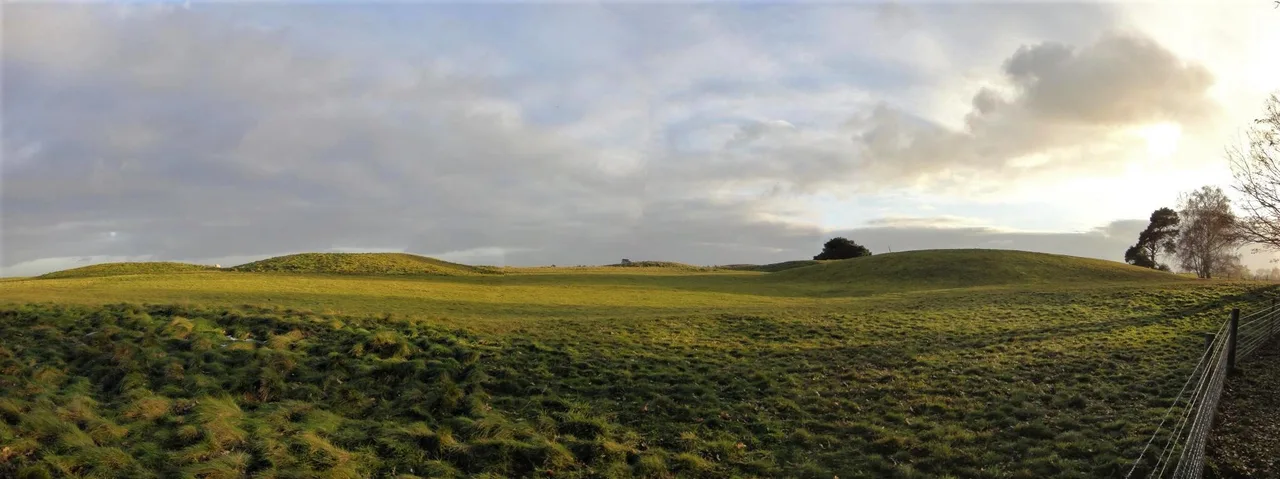
Sutton Hoo is a complex of burial mounds on a promontory above the River Deben in Suffolk, eastern England. In 1939 the landowner Edith Pretty commissioned excavation of the largest mound, and archaeologist Basil Brown uncovered the impression left by a 27-metre-long clinker-built ship that had been dragged inland and buried with a treasure chamber at its centre. The timbers had long since rotted, but the iron rivets marking their positions preserved the ghost of the entire vessel in the sand.

Within the burial chamber lay the richest assemblage of Anglo-Saxon treasure ever found: a distinctive iron helmet with a face mask of bronze decorated with gilded animals; a great gold belt buckle weighing 412 grams; shoulder clasps, purse lid, and sword fittings all in cloisonne goldwork with garnets from Sri Lanka; a ceremonial whetstone (sceptre); silver plate from Byzantium; and drinking horns and cauldrons for feasting. The extraordinary quality and the mixture of local craftsmanship with imports from Byzantium, Scandinavia, and the Near East reveal a ruler deeply enmeshed in the networks of early medieval Europe.

No body was found — dissolved by the acidic Suffolk sand — but the scale and contents of the burial strongly suggest a king, and the most persuasive candidate is Raedwald of East Anglia, who died around 625 CE and was described by Bede as the most powerful king in England. The connection to Beowulf — the Old English poem set in the same milieu of Scandinavian-influenced royal burial, ship funerals, and hall culture — has made Sutton Hoo one of the most discussed sites in medieval studies. The site is managed by the National Trust; the treasures are held by the British Museum.

重要性

Sutton Hoo demolished the idea that early medieval England was a barbaric interregnum between Roman civilization and the Normans. The treasures show Anglo-Saxon kings operating in a sophisticated international world, commissioning goldsmiths of supreme skill, receiving Byzantine silverware as diplomatic gifts, and presiding over a hall culture that matches the world described in Beowulf almost exactly. The site also transformed the archaeology of early medieval Europe: it proved that ship burial — previously known mainly from Scandinavia — was practiced in England, confirmed the extraordinary level of Anglo-Saxon metalworking, and showed that the period 400-700 CE was not a dark age but an era of remarkable artistic and political achievement. The Sutton Hoo helmet has become the most recognisable symbol of Anglo-Saxon England.

証拠と解釈

確立された事実と議論が続く事柄を区別する。

確立された事実

3
  • The iron rivets marking the hull of a 27-metre clinker-built ship were found intact in the sand; the ship type and construction are consistent with East Anglian vessels of the early 7th century CE.
  • The treasure assemblage includes Byzantine silver dated by hallmarks to the late 6th century, Swedish Vendel-period style parallels, and Sri Lankan garnets in the cloisonne goldwork — confirming long-distance exchange networks.
  • Coins in the purse — 37 Merovingian tremisses from different mints — provide a terminus post quem of c. 610-625 CE for the burial.

学術的推論

1
  • The identity of the buried individual is inferred from the royal scale of the deposit and Bede's description of Raedwald as the most powerful English king; no inscription names the occupant and no body survived.

コミュニティ写真

あなたの体験を共有する

この遺跡を訪れたことがありますか?写真をアップロードして魅力を共有しましょう。

このページの引用方法

Atlas Anatolia. (575). Sutton Hoo. Atlas Anatolia. https://atlasanatolia.com/ja/site/sutton-hoo

コンテンツはCC BY-SA 4.0ライセンスの下で提供されています — 再利用の際は出典表示が必要です。

出典

  • The Sutton Hoo Ship Burial (3 vols) — Bruce-Mitford, Rupert (1975)
  • Sutton Hoo: A Seventh-Century Princely Burial Ground and Its Context — Carver, Martin (2005)

よくある質問

Sutton Hooはどこにありますか?

Sutton HooはUnited Kingdomに位置しています。

Sutton Hooの年代はいつ頃ですか?

Sutton Hooはおよそ575 西暦 – 650 西暦のものとされています。

Sutton Hooはどの文明に関連していますか?

Sutton HooはAnglo-Saxon文明に関連しています。

Sutton Hooが重要な理由は何ですか?

Sutton Hoo demolished the idea that early medieval England was a barbaric interregnum between Roman civilization and the Normans.

Sutton Hooはユネスコ世界遺産ですか?

Sutton Hooは現在ユネスコ世界遺産には登録されていません。