
コンテンツへスキップ
Atlas Anatolia
ニュースIce Age teeth in Sulawesi push betel-nut use back as far as 25,000 yearsRoman mosaic and Eros head uncovered in the basilica at Pompeiopolis, Kastamonu
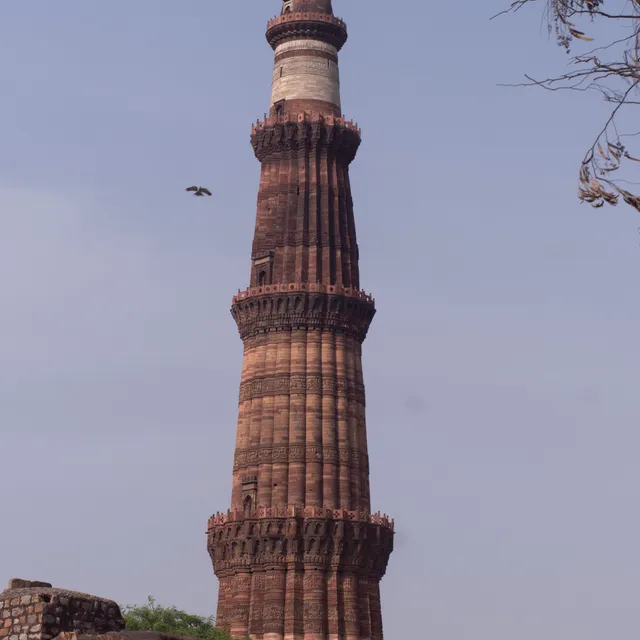
The Qutb Minar tower and Quwwat-ul-Islam mosque ruins, Delhi

Wikimedia Commons

遺産複合体UNESCO注目

Qutb Minar

Seyfi Cem Baskin

क़ुतुब मीनार1192 西暦 – 1316 西暦

The 72-metre tapering victory tower and mosque complex at Mehrauli, Delhi — begun by Qutb al-Din Aibak after 1192 — marking the arrival of Indo-Islamic architecture in northern India and among the most visited ASI monuments in the country.

21
関心 77

所在地

インド

28.52°N · 77.19°E · アジア

Minar height

~72.5 m; five storeys of sandstone and marble

Begun

1192 CE after Tarain; mosque by Qutb al-Din Aibak

Iron Pillar

Gupta-era pillar (~402 CE) with Sanskrit inscription

UNESCO

Qutb Minar and its Monuments (1993)

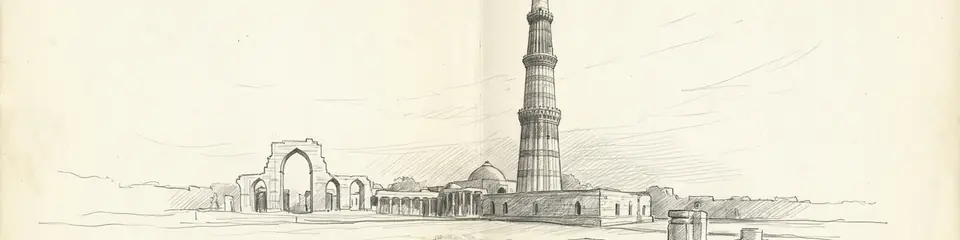
Graphite pencil sketch banner of Qutb Minar

“The Qutb Minar is the earliest major Indo-Islamic monument in India — the physical beginning of Sultanate and Mughal Delhi.”

所在地

概要

The Qutb Minar complex occupies Mehrauli in south Delhi, the site of Lal Kot, an earlier Hindu and Jain city. After Muhammad of Ghor's victory at Tarain (1192), his general Qutb al-Din Aibak established Delhi Sultanate power and began the Quwwat-ul-Islam mosque (1192–1193) using spolia from demolished temples — visible in carved columns in the courtyard. The minar itself was started by Aibak and completed by Iltutmish and later rulers; the five-storey red sandstone and marble tower rises about 72.5 metres with projecting balconies.

The complex includes the Alai Darwaza gate (1311), Alai Minar (unfinished), the Iron Pillar of Chandragupta II (Gupta, 4th century CE, moved here), and tombs of Iltutmish and Imam Zamin. Earthquakes and lightning damaged upper storeys; Firoz Shah Tughlaq and the British restored sections in the 14th and 19th centuries.

UNESCO listed the Qutb Minar and its Monuments, Delhi in 1993 alongside Humayun's Tomb. The tower is the defining silhouette of early Sultanate Delhi and a mandatory stop on India's Golden Triangle route.

重要性

The Qutb Minar is the earliest major Indo-Islamic monument in India — the physical beginning of Sultanate and Mughal Delhi. Its reuse of temple spolia documents both destruction and creative adaptation at the moment of political transition in the Ganges plain.

証拠と解釈

確立された事実と議論が続く事柄を区別する。

確立された事実

2
  • Inscriptions name Qutb al-Din Aibak, Iltutmish, and later sultans as builders and restorers of the minar and mosque.
  • Architectural analysis confirms reused Hindu–Jain carved columns in the mosque courtyard and Sultanate arcuate forms.

議論のある解釈

1
  • Whether the minar was primarily a victory tower, call to prayer, or solar observatory remains discussed in art-historical literature.

コミュニティ写真

あなたの体験を共有する

この遺跡を訪れたことがありますか?写真をアップロードして魅力を共有しましょう。

このページの引用方法

Atlas Anatolia. (1192). Qutb Minar. Atlas Anatolia. https://atlasanatolia.com/ja/site/qutb-minar

コンテンツはCC BY-SA 4.0ライセンスの下で提供されています — 再利用の際は出典表示が必要です。

出典

  • Architecture of Mughal India — Asher, Catherine B. (1992)
  • UNESCO — Qutb Minarリンク

よくある質問

Qutb Minarはどこにありますか?

Qutb MinarはIndiaに位置しています。

Qutb Minarの年代はいつ頃ですか?

Qutb Minarはおよそ1192 西暦 – 1316 西暦のものとされています。

Qutb Minarはどの文明に関連していますか?

Qutb MinarはIslamic / Medieval, Delhi Sultanate文明に関連しています。

Qutb Minarが重要な理由は何ですか?

The Qutb Minar is the earliest major Indo-Islamic monument in India — the physical beginning of Sultanate and Mughal Delhi.

Qutb Minarはユネスコ世界遺産ですか?

はい — Qutb Minarはユネスコ世界遺産に登録されています。