
コンテンツへスキップ
Atlas Anatolia
ニュースIce Age teeth in Sulawesi push betel-nut use back as far as 25,000 yearsRoman mosaic and Eros head uncovered in the basilica at Pompeiopolis, Kastamonu
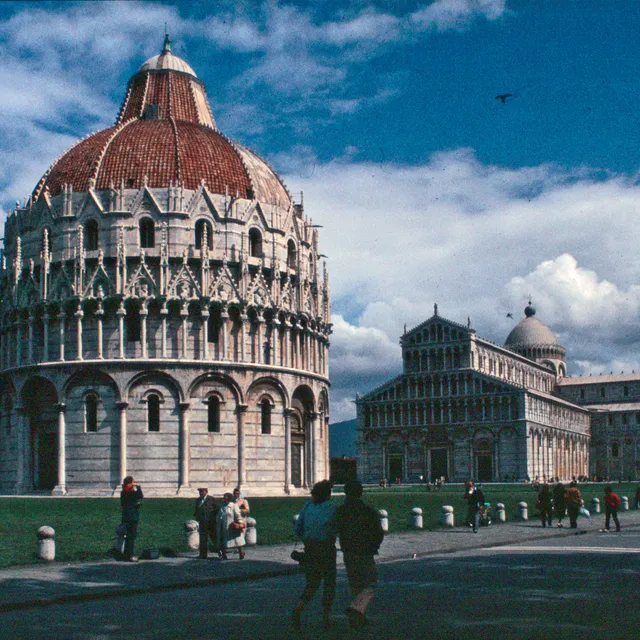
The Leaning Tower of Pisa with the cathedral and baptistery behind

Wikimedia Commons

Country Record

Known by the Most Names in Italy

遺産複合体UNESCO注目

Piazza dei Miracoli

Seyfi Cem Baskin

Piazza del Duomo1063 西暦 – 1400 西暦

The UNESCO cathedral square at Pisa — Romanesque cathedral, baptistery, camposanto, and the famous leaning campanile — one of Italy's most visited monuments and a defining ensemble of medieval Tuscan architecture and engineering.

21
関心 68

所在地

イタリア

43.72°N · 10.40°E · ヨーロッパ

Cathedral

Begun 1063 CE; Pisan Romanesque with spolia columns

Leaning Tower

Campanile begun 1173; ~56 m high, ~4° lean after stabilisation

Baptistery

Largest in Italy; construction 1152–1363

UNESCO

Piazza del Duomo, Pisa (1987)

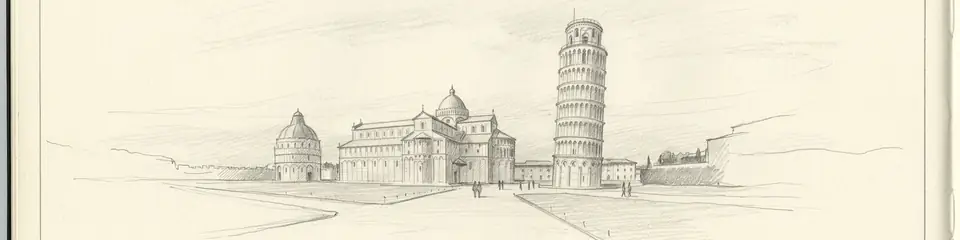
Graphite pencil sketch banner of Piazza dei Miracoli

“The Pisa ensemble documents the wealth and cosmopolitan taste of a medieval maritime republic — Romanesque architecture enriched by Mediterranean booty and trade.”

所在地

概要

The Piazza del Duomo — popularly the Piazza dei Miracoli ("Field of Miracles") — occupies the northwest edge of historic Pisa, Tuscany, Italy. The cathedral (Duomo di Pisa), begun in 1063 after a naval victory at Palermo, displays Pisan Romanesque architecture with Byzantine and Islamic influences in its bronze doors and granite columns spolia. The freestanding baptistery (1152–1363) is the largest in Italy; the camposanto (monumental cemetery) retains medieval fresco cycles damaged in 1944.

The campanile — the Leaning Tower of Pisa — began in 1173 and started tilting during construction due to soft subsoil on the south side. Work paused and resumed over centuries; the 8-storey white marble cylinder reaches about 56 metres at a roughly 4-degree lean (reduced after 1990s–2000s stabilisation). Galileo's legendary gravity experiments are apocryphal but cement the tower in scientific folklore.

UNESCO inscribed the Piazza del Duomo in 1987. The ensemble draws millions of visitors annually and anchors Pisa's identity alongside its former maritime republic history.

重要性

The Pisa ensemble documents the wealth and cosmopolitan taste of a medieval maritime republic — Romanesque architecture enriched by Mediterranean booty and trade. The leaning campanile is a global icon of engineering failure turned heritage triumph, after modern stabilisation saved it for future centuries.

証拠と解釈

確立された事実と議論が続く事柄を区別する。

確立された事実

2
  • Foundation inscriptions and donor records document cathedral and campanile construction phases from the 11th–14th centuries.
  • Geotechnical studies confirm tilt caused by compressible alluvial soil and asymmetric loading; stabilisation works 1990–2001 reduced lean.

学術的推論

1
  • Byzantine and Islamic decorative elements reflect Pisa's 11th–12th-century Mediterranean trade and booty; exact provenance of many spolia pieces is not always documented.

コミュニティ写真

あなたの体験を共有する

この遺跡を訪れたことがありますか?写真をアップロードして魅力を共有しましょう。

このページの引用方法

Atlas Anatolia. (1063). Piazza dei Miracoli. Atlas Anatolia. https://atlasanatolia.com/ja/site/pisa-cathedral

コンテンツはCC BY-SA 4.0ライセンスの下で提供されています — 再利用の際は出典表示が必要です。

出典

  • Coins and Coinage of the Pisa Republic — Travaini, Lucia (2009)
  • UNESCO — Piazza del Duomo, Pisaリンク

よくある質問

Piazza dei Miracoliはどこにありますか?

Piazza dei MiracoliはItalyに位置しています。

Piazza dei Miracoliの年代はいつ頃ですか?

Piazza dei Miracoliはおよそ1063 西暦 – 1400 西暦のものとされています。

Piazza dei Miracoliはどの文明に関連していますか?

Piazza dei MiracoliはRoman文明に関連しています。

Piazza dei Miracoliが重要な理由は何ですか?

The Pisa ensemble documents the wealth and cosmopolitan taste of a medieval maritime republic — Romanesque architecture enriched by Mediterranean booty and trade.

Piazza dei Miracoliはユネスコ世界遺産ですか?

はい — Piazza dei Miracoliはユネスコ世界遺産に登録されています。