
コンテンツへスキップ
Atlas Anatolia
ニュースIce Age teeth in Sulawesi push betel-nut use back as far as 25,000 yearsRoman mosaic and Eros head uncovered in the basilica at Pompeiopolis, Kastamonu
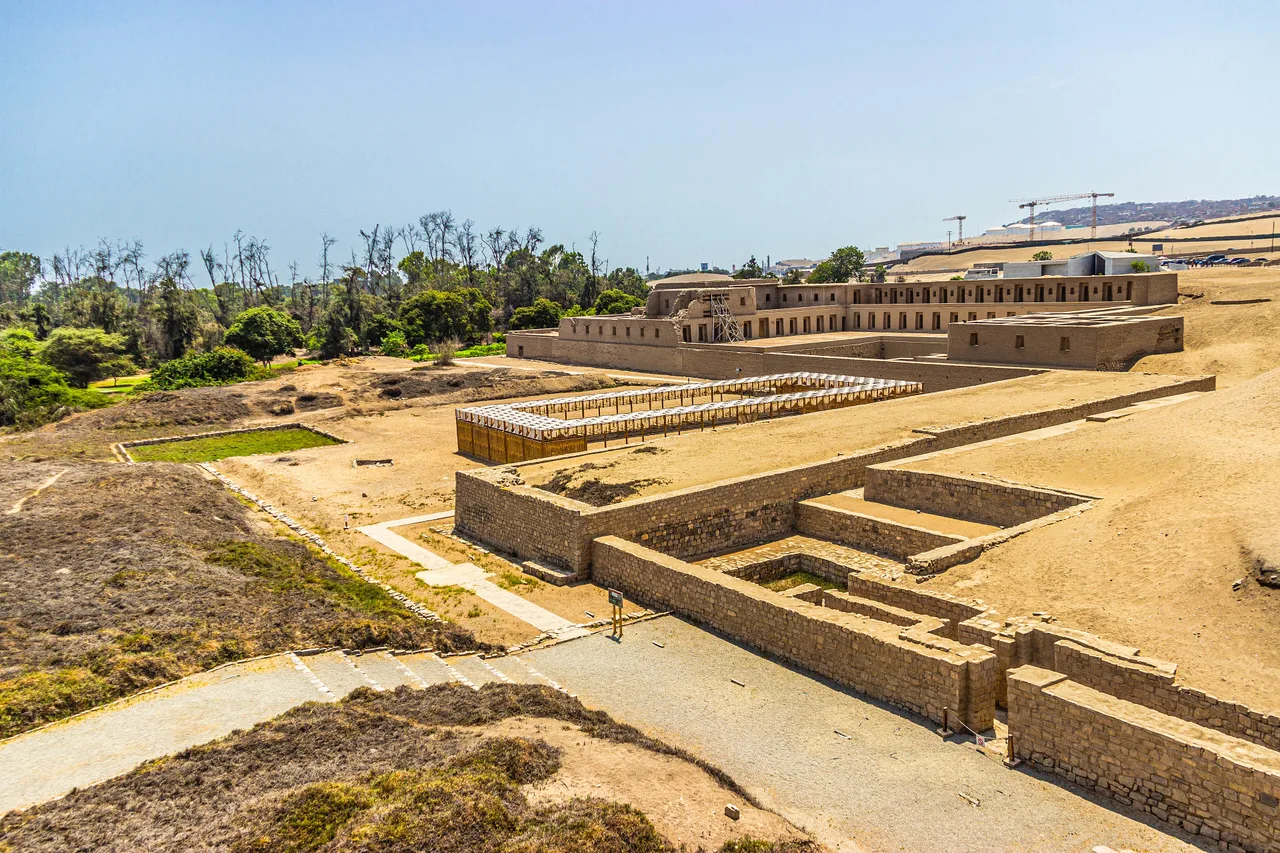
Stepped adobe pyramid-temples of the ancient pilgrimage city of Pachacamac on the Peruvian coast

Wikimedia Commons

Country Record

Oldest Complex in Peru

複合体

Pachacamac

Seyfi Cem Baskin

200 西暦 – 1533 西暦

The most important pilgrimage and oracle centre on the pre-Hispanic Peruvian coast — a sprawling city of temples and pyramids on the shores of the Pacific south of Lima, built up over thirteen centuries by successive cultures who all recognised its central deity, Pachacamac, as a supreme creator god. So powerful was Pachacamac's religious authority that the Inca, upon conquering the region, chose to incorporate rather than suppress its cult, building their own Temple of the Sun directly alongside the older oracle.

31
関心 54

所在地

Lima · ペルー

12.26°S · 76.90°W · 南アメリカ

Deity

Pacha Kamaq — creator god associated with earthquakes and life

Span

c. 200–1533 CE — occupied by Lima, Wari, Ychsma, and Inca cultures in succession

Inca incorporation

Conquered c. 1470s; Inca built a Temple of the Sun and Acllahuasi rather than suppressing the cult

Pizarro expedition

Hernando Pizarro sent specifically to Pachacamac in 1533, drawn by reports of its wealth

Archaeology

Max Uhle's 1896 excavations helped found scientific Andean archaeology

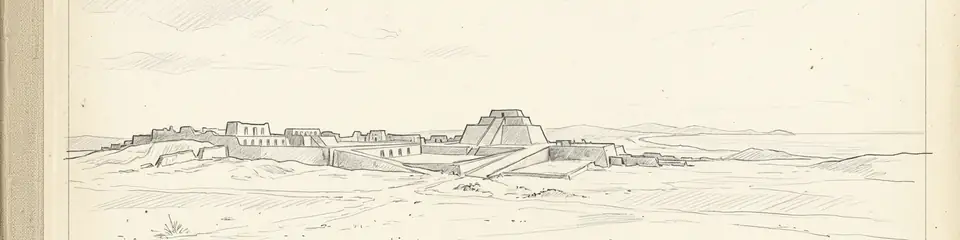
Graphite pencil sketch banner of Pachacamac

“Pachacamac is one of the clearest examples anywhere in the ancient world of a religious institution outlasting and even shaping the political powers that controlled it.”

所在地

概要

Pachacamac lies on the Pacific coast roughly 40 kilometres south of modern Lima, at the mouth of the Lurín Valley. It takes its name from Pacha Kamaq, a creator deity worshipped across the central Andean coast believed to control earthquakes and be responsible for the creation and continuation of life. For more than 1,300 years, from roughly 200 CE until the Spanish conquest in the 1530s, Pachacamac functioned as one of the most important religious and pilgrimage centres in the Andean world, drawing worshippers and offerings from across a vast region regardless of which political power controlled the coast at any given time.

The earliest major construction phase is attributed to the Lima culture (c. 200–600 CE), who built the Old Temple (Templo Viejo), a stepped adobe pyramid that remains the oldest identified structure at the site. During the Middle Horizon (c. 600–1000 CE), the expanding Wari state incorporated Pachacamac into its network of religious and administrative centres, and the site's oracle cult appears to have grown significantly in prestige and reach during this period. Following the Wari's decline, the local Ychsma (or Ichma) culture rose to prominence in the Lurín and Rímac valleys from roughly 1000–1470 CE, and it was under Ychsma patronage that Pachacamac reached its greatest architectural extent, with numerous stepped pyramid-temples constructed by different lineage groups or communities who each maintained their own shrine within the wider sacred complex.

When the Inca Empire conquered the central coast in the 1470s under Topa Inca Yupanqui, they made a striking political and religious choice: rather than suppressing the powerful and already-ancient Pachacamac oracle, they formally incorporated it into the state religion, elevating it to one of the most important shrines in the empire, second in prestige perhaps only to the Coricancha in Cusco. The Inca built their own major structures at the site, including a Temple of the Sun on a hilltop overlooking the ocean and an Acllahuasi ("House of the Chosen Women") to house women dedicated to state and religious service. The Inca oracle at Pachacamac was consulted on matters of state importance, and pilgrims travelled from across the empire to seek its counsel or leave offerings.

When Francisco Pizarro's expedition reached Peru in 1533, Hernando Pizarro was dispatched specifically to Pachacamac, drawn by reports of its fabulous wealth; he found the temple's idol housed in a dark inner sanctum but was reportedly disappointed to find much of its treasure already removed. The site was gradually abandoned as a religious centre following the conquest but was never fully forgotten, and has been the subject of major archaeological investigation since the early 20th century, including pioneering excavations by German archaeologist Max Uhle in 1896, which helped establish the basic chronological framework for coastal Peruvian archaeology still used today.

重要性

Pachacamac is one of the clearest examples anywhere in the ancient world of a religious institution outlasting and even shaping the political powers that controlled it. Across four distinct political regimes spanning 1,300 years — Lima, Wari, Ychsma, and finally Inca — each successive power chose to build onto and legitimise itself through Pachacamac's existing sacred authority rather than replace it, a pattern of religious continuity remarkably rare in the archaeological record of conquest societies. The Inca decision to formally adopt a conquered people's oracle cult, rather than impose the state sun-god Inti exclusively, reveals a pragmatic and often underappreciated dimension of Inca imperial strategy: legitimacy through incorporation rather than pure replacement. This strategy of religious syncretism at Pachacamac offers historians a detailed case study in how the Inca actually managed their vast, culturally diverse empire in practice. Max Uhle's 1896 excavations at Pachacamac were foundational to the development of Andean archaeology as a scientific discipline, establishing stratigraphic excavation methods and a relative chronology for coastal Peruvian cultures that, though refined since, still underpins the field's basic framework today.

証拠と解釈

確立された事実と議論が続く事柄を区別する。

確立された事実

3
  • Stratigraphic excavation and ceramic seriation, beginning with Max Uhle's 1896 work, established four successive occupation phases at Pachacamac: Lima, Wari, Ychsma, and Inca.
  • Spanish colonial chronicles, including accounts by Hernando Pizarro and Pedro Cieza de León, directly document the Inca-era oracle cult and the 1533 Spanish expedition to the site.
  • Architectural and stylistic analysis confirms the Temple of the Sun and Acllahuasi were built in characteristic Inca imperial style, distinct from and later than the surrounding Ychsma-period pyramid-temples.

学術的推論

1
  • The continuity of Pachacamac's religious importance across four different ruling cultures is inferred from continued monumental construction and offerings at the site through each political transition, rather than from a single continuous documentary record.

発見と発掘調査

1896

Max Uhle excavations

Pioneering stratigraphic excavation establishing the site's multi-period chronology and founding modern Andean archaeological method.

1938–1941

Julio C. Tello and Peruvian state excavations

Extensive excavation and site mapping by Peru's leading indigenous archaeologist, expanding understanding of the Ychsma-period pyramid-temples.

1999

Ychsma Project

Ongoing Belgian-Peruvian archaeological project (led by Peter Eeckhout) focused on the pyramid-with-ramp structures and Ychsma-period urbanism.

コミュニティ写真

あなたの体験を共有する

この遺跡を訪れたことがありますか?写真をアップロードして魅力を共有しましょう。

このページの引用方法

Atlas Anatolia. (200). Pachacamac. Atlas Anatolia. https://atlasanatolia.com/ja/site/pachacamac

コンテンツはCC BY-SA 4.0ライセンスの下で提供されています — 再利用の際は出典表示が必要です。

出典

  • Pachacamac: Report of the William Pepper, M.D., LL.D., Peruvian Expedition of 1896 — Uhle, Max (1903)
  • The Palaces of the Lords of Ychsma: An Archaeological Reappraisal of the Function of Pyramids with Ramps at Pachacamac — Eeckhout, Peter (1999)
  • Pachacamac Archaeology: Retrospect and Prospect — Shimada, Izumi (ed.) (1991)

よくある質問

Pachacamacはどこにありますか?

PachacamacはLima, Peruに位置しています。

Pachacamacの年代はいつ頃ですか?

Pachacamacはおよそ200 西暦 – 1533 西暦のものとされています。

Pachacamacはどの文明に関連していますか?

PachacamacはInca, Ichma文明に関連しています。

Pachacamacが重要な理由は何ですか?

Pachacamac is one of the clearest examples anywhere in the ancient world of a religious institution outlasting and even shaping the political powers that controlled it.

Pachacamacはユネスコ世界遺産ですか?

Pachacamacは現在ユネスコ世界遺産には登録されていません。