
コンテンツへスキップ
Atlas Anatolia
ニュースIce Age teeth in Sulawesi push betel-nut use back as far as 25,000 yearsRoman mosaic and Eros head uncovered in the basilica at Pompeiopolis, Kastamonu
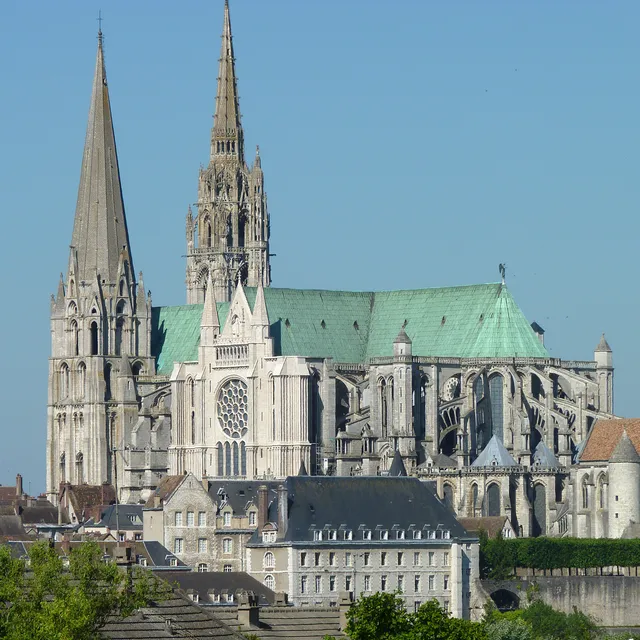
The west façade and spires of Chartres Cathedral, France

Wikimedia Commons

Country Record

Earliest Known Site in France

遺産記念碑UNESCO注目

Chartres Cathedral

Seyfi Cem Baskin

Cathédrale Notre-Dame de Chartres1194 西暦 – 1250 西暦

The High Gothic cathedral southwest of Paris — largely rebuilt after 1194 with twin spires, a labyrinth, and 176 stained-glass windows — a UNESCO masterpiece whose geometry, relic cult, and blue "Chartres" glass make it among the most studied and visited churches in Europe.

21
関心 77

所在地

フランス

48.45°N · 1.49°E · ヨーロッパ

Rebuilt

1194 fire; Gothic reconstruction c. 1194–1250

Spires

Romanesque south (349 ft) and Gothic north (377 ft)

Glass

~176 stained-glass windows; much 13th-century original

UNESCO

World Heritage Site (1979)

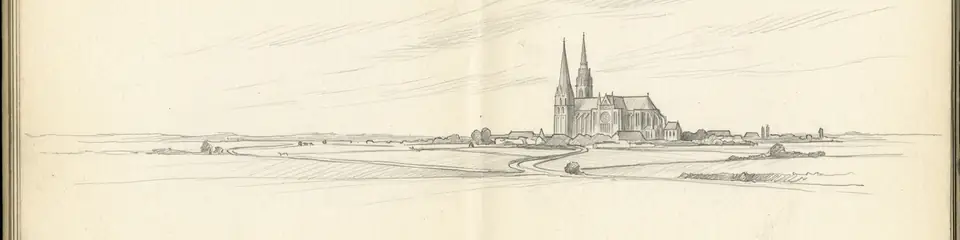
Graphite pencil sketch banner of Chartres Cathedral

“Chartres is the best-preserved High Gothic cathedral ensemble — architecture, glass, and sculpture from a single building campaign.”

所在地

概要

Chartres Cathedral stands on a hill above the Eure River in Chartres, Centre-Val de Loire, France. A bishopric from the Roman period, the site attracted Marian pilgrimage; a fire in 1194 destroyed much of the earlier Romanesque church while the western façade and towers survived. Reconstruction in the new Gothic style proceeded with unusual speed — the choir by 1221, the whole church by about 1250 — producing one of the most coherent High Gothic interiors in existence.

The cathedral houses the Sancta Camisa, a relic believed to be the tunic Mary wore at the Nativity, which fueled medieval pilgrimage. The stone floor labyrinth (c. 1200) survives for ritual walking. Stained-glass windows — including three great rose windows and the "Blue Virgin" window — retain extensive 13th-century glass, rare among European cathedrals after wars and iconoclasm.

UNESCO inscribed Chartres in 1979. The cathedral remains an active Catholic church and a touchstone for Gothic architecture studies from Viollet-le-Duc to modern sacred-geometry theories.
重要性

Chartres is the best-preserved High Gothic cathedral ensemble — architecture, glass, and sculpture from a single building campaign. Its labyrinth, relic cult, and scholastic school linked medieval theology, pilgrimage, and urban identity in one monument.

証拠と解釈

確立された事実と議論が続く事柄を区別する。

確立された事実

2
  • Building accounts, bishopric records, and stylistic analysis date the post-1194 campaign to the early–mid 13th century.
  • Dendrochronology and glass chemistry support extensive survival of original 13th-century stained glass.

議論のある解釈

1
  • Sacred-geometry theories claiming the plan encodes medieval cosmological ratios are popular but contested among architectural historians.

コミュニティ写真

あなたの体験を共有する

この遺跡を訪れたことがありますか?写真をアップロードして魅力を共有しましょう。

関連記事

このページの引用方法

Atlas Anatolia. (1194). Chartres Cathedral. Atlas Anatolia. https://atlasanatolia.com/ja/site/chartres-cathedral

コンテンツはCC BY-SA 4.0ライセンスの下で提供されています — 再利用の際は出典表示が必要です。

グラフ

関連する遺跡やストーリーへのつながり。

出典

  • Chartres Cathedral — Miller, Malcolm (1996)
  • UNESCO — Chartres Cathedralリンク

よくある質問

Chartres Cathedralはどこにありますか?

Chartres CathedralはFranceに位置しています。

Chartres Cathedralの年代はいつ頃ですか?

Chartres Cathedralはおよそ1194 西暦 – 1250 西暦のものとされています。

Chartres Cathedralはどの文明に関連していますか?

Chartres CathedralはMedieval French文明に関連しています。

Chartres Cathedralが重要な理由は何ですか?

Chartres is the best-preserved High Gothic cathedral ensemble — architecture, glass, and sculpture from a single building campaign.

Chartres Cathedralはユネスコ世界遺産ですか?

はい — Chartres Cathedralはユネスコ世界遺産に登録されています。