
Vai al contenuto
Atlas Anatolia
NotizieIce Age teeth in Sulawesi push betel-nut use back as far as 25,000 yearsRoman mosaic and Eros head uncovered in the basilica at Pompeiopolis, Kastamonu
The brick vault of Taq Kasra, the great ayvān of Ctesiphon, Iraq

Wikimedia Commons (CC BY-SA 4.0)

Record nazionale

Known by the Most Names in Iraq

CittàIn evidenza

Ctesiphon

Seyfi Cem Baskin

قطيسفون129 a.C. – 637 d.C.

The Parthian and Sasanian capital on the Tigris south of Baghdad — celebrated for the colossal brick vault of Taq Kasra — is among the most searched late-antique archaeological sites and the administrative twin of Seleucia on the opposite bank.

21
Interesse 62

Posizione

Iraq

33.09°N · 44.58°E · Asia

Capitals

Parthian winter seat; Sasanian imperial capital

Taq Kasra

~30 m high brick vault (ayvān)

Fall

Taken by Arab armies, 637 CE

Location

East bank of Tigris, ~35 km SE of Baghdad

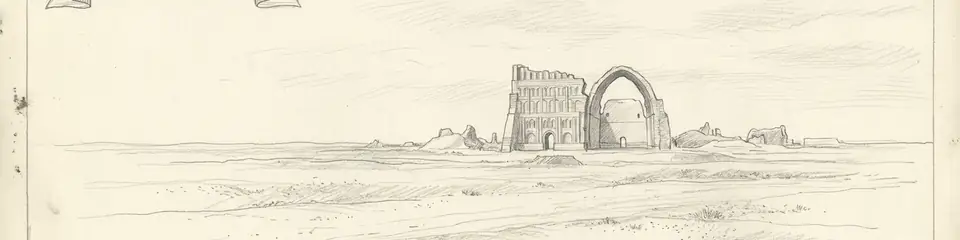
Graphite pencil sketch banner of Ctesiphon

Ctesiphon was the primary capital of the last pre-Islamic Iranian empire and the eastern pole opposite Constantinople in late antique geopolitics.”

Posizione

Panoramica

Ctesiphon developed on the east bank of the Tigris opposite Hellenistic Seleucia, consolidating into the twin cities later called al-Mada’in. Parthian kings wintered here; Sasanian shahanshahs made it the ceremonial and administrative heart of Erānshahr from Ardashir I through Khosrow II. Arab armies captured the city in 637 CE after the Battle of al-Qādisiyyah; much of the palace quarter decayed as Baghdad rose.

What remains most dramatically visible is Taq Kasra (the Arch of Khosrow / ayvān of al-Madāʾin): a free-standing baked-brick vault roughly 30 metres high spanning about 25 metres — one of the largest unreinforced brick arches ever built. Excavations and early travellers documented palace complexes, residential mounds, and canalised floodplains; modern damage, flood, and conflict have thinned standing fabric beyond the arch.

The site anchors debates on Sasanian court culture, silk-road diplomacy with Byzantium, and the transfer of imperial capitalship from Mesopotamian to Islamic Iraq. Pair with Hatra and Persepolis for complementary Iranian imperial landscapes, and with Palmyra for late antique caravan politics.

Perché è importante

Ctesiphon was the primary capital of the last pre-Islamic Iranian empire and the eastern pole opposite Constantinople in late antique geopolitics. Taq Kasra remains the clearest standing monument of Sasanian brick technology and royal architecture.

Evidenze e interpretazione

Distinguere ciò che è ben consolidato da ciò che rimane dibattuto.

Fatti ben consolidati

2
  • Classical, Syriac, and early Islamic sources identify Ctesiphon as the Sasanian capital opposite Seleucia.
  • Structural surveys of Taq Kasra document brick bonding and span unique among surviving Sasanian vaults.

Interpretazioni dibattute

1
  • Exact royal builders and phases of the standing vault (Shapur I vs later Khosrows) are still argued from sparse building inscriptions.

Foto della comunità

Condividi la tua esperienza

Hai visitato questo sito? Carica le tue foto per aiutare gli altri a scoprirlo.

Come citare questa pagina

Atlas Anatolia. (129). Ctesiphon. Atlas Anatolia. https://atlasanatolia.com/it/site/ctesiphon

Contenuto con licenza CC BY-SA 4.0 — è richiesta l'attribuzione in caso di riutilizzo.

Fonti

  • CtesiphonKeall, Edward J. (1975)
  • Sasanian Persia: The Rise and Fall of an EmpireDaryaee, Touraj (2009)

Domande frequenti

Dove si trova Ctesiphon?

Ctesiphon si trova in Iraq.

A quando risale Ctesiphon?

Ctesiphon risale all'incirca al 129 a.C. – 637 d.C..

Quali civiltà sono associate a Ctesiphon?

Ctesiphon è associato alla civiltà Parthian, Sasanian.

Perché Ctesiphon è importante?

Ctesiphon was the primary capital of the last pre-Islamic Iranian empire and the eastern pole opposite Constantinople in late antique geopolitics.

Ctesiphon è un sito Patrimonio Mondiale dell'UNESCO?

Ctesiphon non è attualmente iscritto nella lista del Patrimonio Mondiale dell'UNESCO.