
Aller au contenu
Atlas Anatolia
ActualitésIce Age teeth in Sulawesi push betel-nut use back as far as 25,000 yearsRoman mosaic and Eros head uncovered in the basilica at Pompeiopolis, Kastamonu
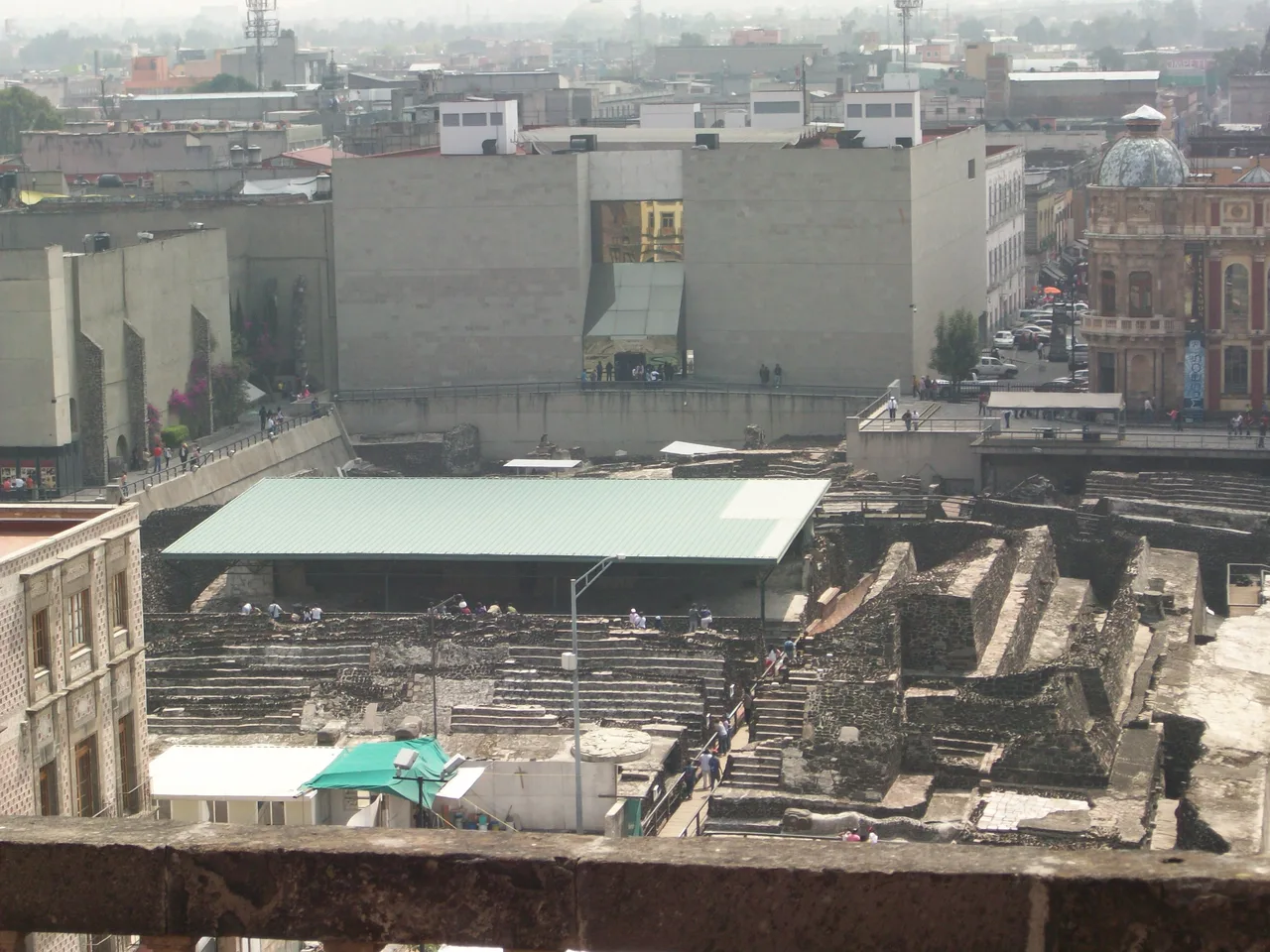
The excavated remains of Templo Mayor in central Mexico City

Wikimedia Commons

Continent Record

Oldest Temple in North America

Temple

Templo Mayor

Seyfi Cem Baskin

1325 apr. J.-C. – 1521 apr. J.-C.

The principal temple of the Aztec capital Tenochtitlan, rebuilt seven times and now excavated beneath Mexico City's historic center — its discovery in 1978 transformed understanding of Aztec religious life.

3
Intérêt 70

Localisation

Mexique

19.44°N · 99.13°W · Amérique du Nord

Construction period

c. 1325–1521 CE (rebuilt 7 times)

Coyolxauhqui Stone discovered

25 February 1978

Offerings found

7,000+ objects in 200 offering caches

Depth below Zócalo

2–3 m

Dedication

Twin shrines: Huitzilopochtli (sun/war) and Tlaloc (rain)

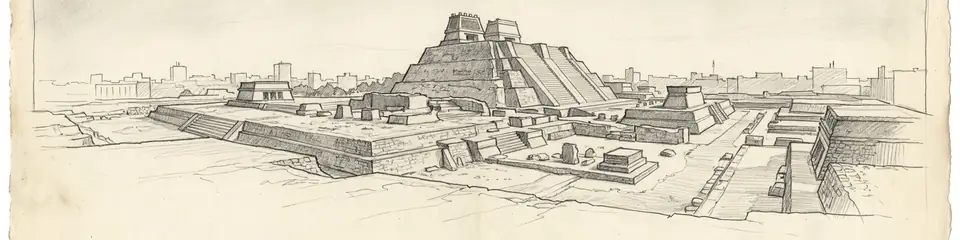
Graphite pencil sketch banner of Templo Mayor

“The Coyolxauhqui Stone is one of the most significant archaeological finds of the twentieth century in the Americas: it transformed Templo Mayor from a historical abstraction into an active excavation site in the center of a living city of 9 million.”

Localisation

Aperçu

Templo Mayor (Huey Teocalli, "Great Temple") was the religious and symbolic heart of Tenochtitlan, the Aztec capital founded c. 1325 CE on an island in Lake Texcoco. The city, with a population of 200,000–400,000 at its height in the early sixteenth century, was larger than any contemporary European city. The temple stood at the exact center of the Aztec universe as understood by its builders: oriented precisely to the cardinal directions, its summit level with the horizon when viewed from the lake. The structure was rebuilt at least seven times on top of itself, each new version encasing the previous one — a pattern driven by the Aztec calendrical cycle. Twin staircases rose to twin shrines at the summit: one dedicated to Huitzilopochtli (the sun and war god) and one to Tlaloc (rain and agriculture). The temple was demolished by the Spanish in 1521 and its stones used to build Mexico City's colonial center. Its existence under the Zócalo was suspected but unconfirmed until February 1978, when electrical workers excavating a trench struck the Coyolxauhqui Stone — a 3.25-meter monolithic disc weighing 8.5 tonnes, carved with the dismembered body of the moon goddess. The find triggered a decade of excavations directed by Eduardo Matos Moctezuma, uncovering more than 7,000 offerings deposited in sealed caches.
Pourquoi c'est important

The Coyolxauhqui Stone is one of the most significant archaeological finds of the twentieth century in the Americas: it transformed Templo Mayor from a historical abstraction into an active excavation site in the center of a living city of 9 million. The 7,000+ offerings found in the temple's deposits — jaguar skeletons, coral from the Gulf of Mexico, Olmec masks 2,000 years older than the Aztec period, obsidian blades, and copal incense burners — constitute the largest and most varied ritual deposit from pre-Columbian North America. Recent excavations (2021–2023) have uncovered a circular temple directly below the Templo Mayor that may be associated with the mythical island of Aztlan, a find still under analysis. Templo Mayor demonstrates the continuous occupation of the same urban site from the Aztec foundation to the present: the ruins lie 2–3 meters below the Zócalo, the main plaza of modern Mexico City.

Preuves et interprétation

Distinguer ce qui est bien établi de ce qui reste débattu.

Faits bien établis

3
  • The Coyolxauhqui Stone, found in 1978, weighs 8.5 tonnes and measures 3.25 m in diameter. Iconographic analysis confirms it depicts the dismembered moon goddess Coyolxauhqui at the base of Templo Mayor, consistent with the myth in which Huitzilopochtli kills her.
  • Offering caches have yielded more than 7,000 objects, including Olmec greenstone masks dating to 900–400 BCE — 1,000–1,500 years before the Aztec period — demonstrating deliberate collection of ancient objects as ritual items of prestige.
  • The temple was oriented to true east on its Tlaloc side and slightly off true east on its Huitzilopochtli side, such that the sun rose directly over the stairs of Huitzilopochtli on two equinox-adjacent dates significant to the Aztec ritual calendar.

Photos de la communauté

Partagez votre expérience

Avez-vous visité ce site ? Téléchargez vos photos pour aider les autres à le découvrir.

Récits liés

Comment citer cette page

Atlas Anatolia. (1325). Templo Mayor. Atlas Anatolia. https://atlasanatolia.com/fr/site/templo-mayor

Contenu sous licence CC BY-SA 4.0 — attribution requise en cas de réutilisation.

Graphique

Connexions avec des sites et récits associés.

Sources

  • The Great Temple of the Aztecs — Eduardo Matos Moctezuma (1988)
  • Proyecto Templo Mayor — INAHLien

Questions fréquentes

Où se trouve Templo Mayor ?

Templo Mayor est situé à/en Mexico.

De quand date Templo Mayor ?

Templo Mayor remonte approximativement à 1325 apr. J.-C. – 1521 apr. J.-C..

Quelles civilisations sont associées à Templo Mayor ?

Templo Mayor est associé à la civilisation Aztec / Mexica.

Pourquoi Templo Mayor est-il important ?

The Coyolxauhqui Stone is one of the most significant archaeological finds of the twentieth century in the Americas: it transformed Templo Mayor from a historical abstraction into an active excavation site in the center of a living city of 9 million.

Templo Mayor est-il inscrit au patrimoine mondial de l'UNESCO ?

Templo Mayor n'est pas actuellement inscrit sur la liste du patrimoine mondial de l'UNESCO.