
Aller au contenu
Atlas Anatolia
ActualitésIce Age teeth in Sulawesi push betel-nut use back as far as 25,000 yearsRoman mosaic and Eros head uncovered in the basilica at Pompeiopolis, Kastamonu
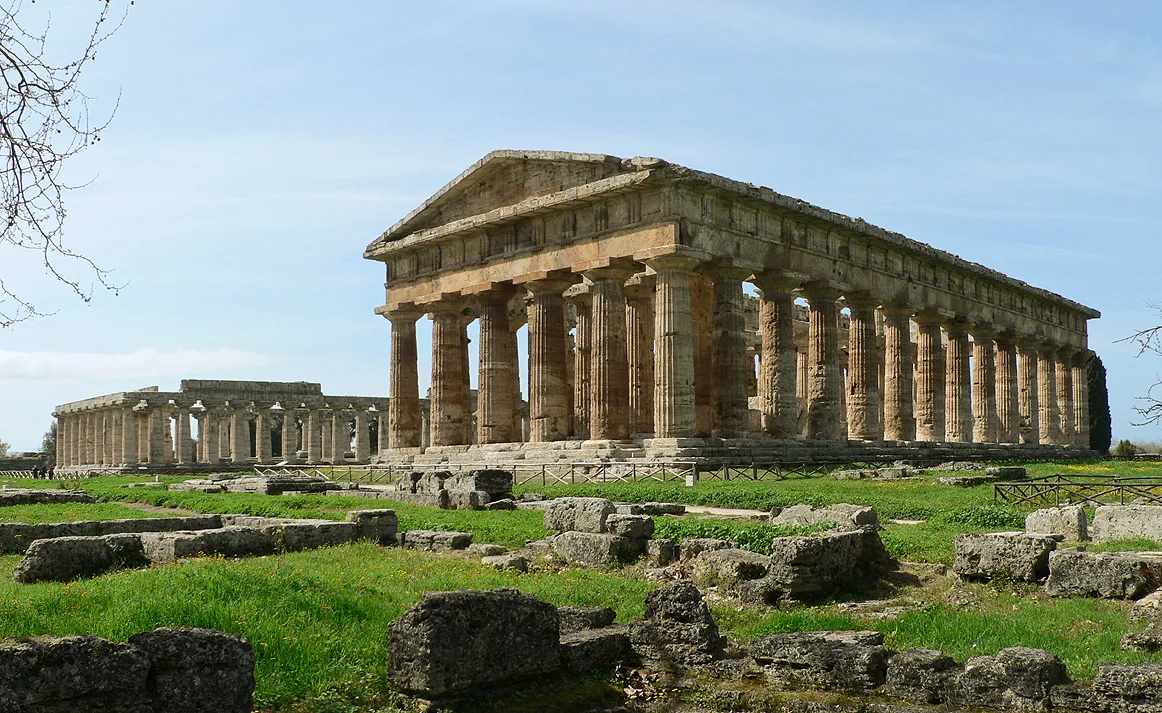
The three Greek temples at Paestum, with the Temple of Hera II in the foreground

Wikimedia Commons

Country Record

Longest Continuously Occupied Site in Italy

CitéUNESCOEn vedette

Paestum

Seyfi Cem Baskin

600 av. J.-C. – 700 apr. J.-C.

A Greek colonial city on the Tyrrhenian coast of southern Italy (Campania) containing three of the best-preserved ancient Greek temples in the world — older and more complete than most surviving temples in Greece itself.

21
Intérêt 66

Localisation

Italie

40.42°N · 15.00°E · Europe

Founded

c. 600 BCE by Greek settlers from Sybaris

Temple of Hera II date

c. 460 BCE (finest surviving Doric temple)

Tomb of the Diver

Found 1968; only complete Greek narrative mural from Classical period

Rediscovered

1746, during road survey

Distance from Naples

85 km south

UNESCO

World Heritage Site (with Cilento) since 1998

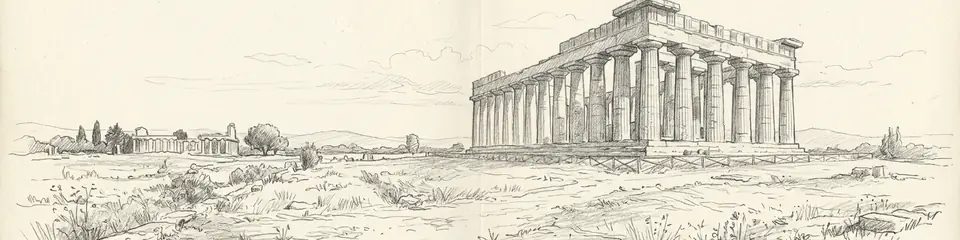
Graphite pencil sketch banner of Paestum

“Paestum provides what Greece itself rarely does: temples that survive above the level of the column capital, so that the proportions, entablature, and spatial experience intended by their architects can be directly experienced.”

Localisation

Aperçu

Paestum (originally Poseidonia) lies on a flat coastal plain in the Cilento region of Campania, 85 km south of Naples, 1.5 km from the Tyrrhenian Sea. It was founded by Greek settlers from Sybaris around 600 BCE and retained its Greek character until its conquest by the Lucanians c. 400 BCE and later incorporation into the Roman world c. 273 BCE. Three temples survive in extraordinary condition: the Temple of Hera I (commonly called the "Basilica"), c. 550 BCE, the oldest and largest, with its original 50 squat Doric columns still standing; the Temple of Hera II (commonly misidentified as the Temple of Neptune), c. 460 BCE, the best-preserved Doric temple in the world, with entablature complete to the cornice; and the Temple of Athena (misidentified as "Ceres"), c. 500 BCE, preserving its original painted terracotta roof decorations. The reason for the survival is the region's depopulation: Paestum declined sharply in the late Roman period following the silting of its harbor and the spread of malaria, and the site was gradually covered by vegetation and forgotten. Medieval travelers avoided the area; the temples stood undisturbed. The site was rediscovered by engineers surveying for the Salerno-Reggio Calabria road in 1746.
Pourquoi c'est important

Paestum provides what Greece itself rarely does: temples that survive above the level of the column capital, so that the proportions, entablature, and spatial experience intended by their architects can be directly experienced. The Temple of Hera II is, technically, the finest surviving example of the mature Doric order anywhere. Paestum also produced one of the most important single archaeological finds of the twentieth century: the Tomb of the Diver (1968), a fifth-century BCE painted tomb with a complete cycle of banquet and symposium scenes on four walls and a ceiling showing a youth diving into a sea — the only complete Greek narrative mural painting to survive from the Classical period, and the only one of its kind found in the Western Greek world. The paintings transformed understanding of Greek mural traditions, of which almost nothing else survived.

Preuves et interprétation

Distinguer ce qui est bien établi de ce qui reste débattu.

Faits bien établis

2
  • The Temple of Hera II (c. 460 BCE) survives with its complete Doric colonnade, frieze, and most of the entablature intact — the most complete example of Greek Doric architecture above column-height surviving anywhere in the world.
  • The Tomb of the Diver, excavated in 1968, is a painted limestone chamber dated to c. 480–470 BCE. Its five slabs (four walls and a lid) retain vivid red and black figure paintings unique in the Greek world: the only complete Greek figural mural cycle from the Classical period.

Inférences savantes

1
  • The three temples have traditionally been misnamed since their rediscovery (the "Temple of Neptune" is almost certainly dedicated to Hera; the "Temple of Ceres" to Athena). Correct identification comes from ceramic deposits, sculptural fragments, and the spatial relationship of the temples to the city's sanctuary zones.

Photos de la communauté

Partagez votre expérience

Avez-vous visité ce site ? Téléchargez vos photos pour aider les autres à le découvrir.

Récits liés

Comment citer cette page

Atlas Anatolia. (600). Paestum. Atlas Anatolia. https://atlasanatolia.com/fr/site/paestum

Contenu sous licence CC BY-SA 4.0 — attribution requise en cas de réutilisation.

Graphique

Connexions avec des sites et récits associés.

Sources

  • Paestum: Greek and Roman Architecture — Giovanni Pugliese Carratelli (ed.) (1996)
  • The Tomb of the Diver at Paestum — Mario Napoli (1970)

Questions fréquentes

Où se trouve Paestum ?

Paestum est situé à/en Italy.

De quand date Paestum ?

Paestum remonte approximativement à 600 av. J.-C. – 700 apr. J.-C..

Quelles civilisations sont associées à Paestum ?

Paestum est associé à la civilisation Greek, Roman.

Pourquoi Paestum est-il important ?

Paestum provides what Greece itself rarely does: temples that survive above the level of the column capital, so that the proportions, entablature, and spatial experience intended by their architects can be directly experienced.

Paestum est-il inscrit au patrimoine mondial de l'UNESCO ?

Oui — Paestum est inscrit sur la liste du patrimoine mondial de l'UNESCO.