
Aller au contenu
Atlas Anatolia
ActualitésIce Age teeth in Sulawesi push betel-nut use back as far as 25,000 yearsRoman mosaic and Eros head uncovered in the basilica at Pompeiopolis, Kastamonu
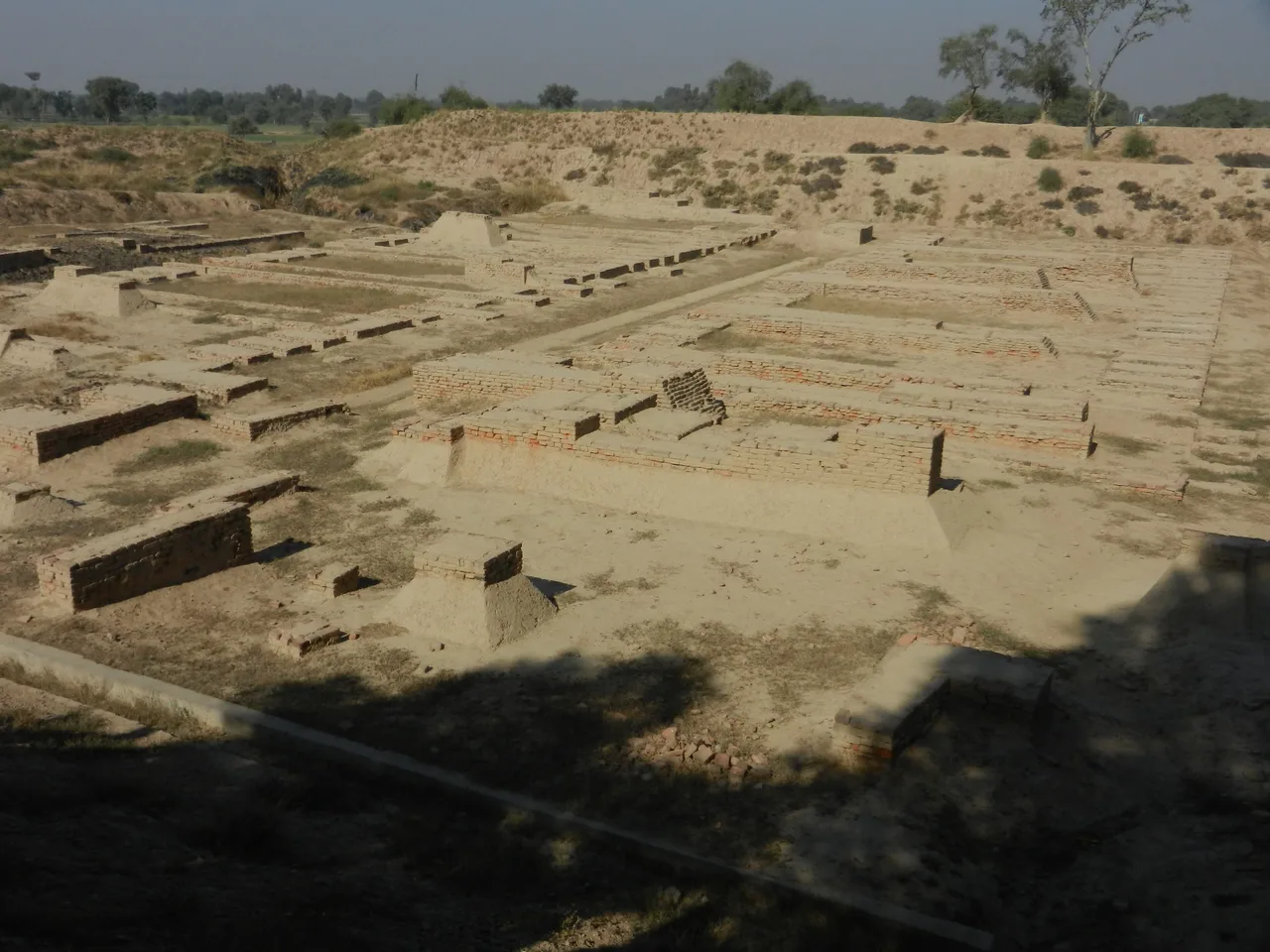
Archaeological remains of the granary and great hall at Harappa, Pakistan

Wikimedia Commons

Country Record

Known by the Most Names in Pakistan

ÉtablissementEn vedette

Harappa

Seyfi Cem Baskin

ہڑپہ2600 av. J.-C. – 1900 av. J.-C.

The city that gave the Indus Valley Civilisation its name — a planned Bronze Age metropolis in what is now Pakistan that housed up to 50,000 people, featured the ancient world's most sophisticated sanitation system, and remained virtually unknown until its rediscovery in 1921.

31
Intérêt 65

Localisation

Pakistan

30.63°N · 72.86°E · Asie

Period

c. 2600-1900 BCE (Mature Harappan phase)

Population

Estimated 23,000-50,000 inhabitants

Urban planning

Grid-plan streets with the ancient world's most advanced sewage system

Script

Indus script (~400 signs); undeciphered

Trade

Standardised weights and measures used from Afghanistan to Gujarat

Rediscovery

1829; systematic excavation from 1921

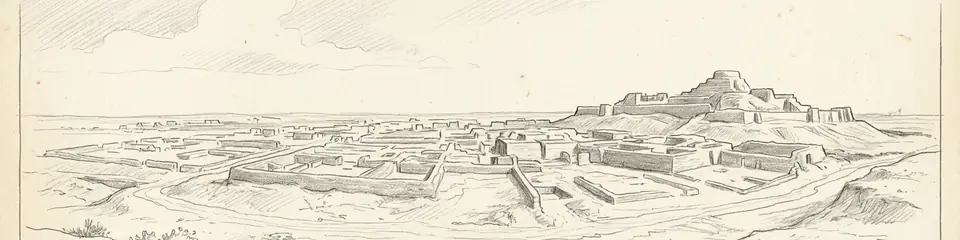
Graphite pencil sketch banner of Harappa

“Harappa and its civilisation represent one of the great enigmas of world history: a highly organised, literate, technologically sophisticated urban society covering a territory larger than Egypt and Mesopotamia combined — yet almost completely unknown until a century ago and still largely unreadable because its script has not been deciphered.”

Localisation

Aperçu

Harappa stands beside the Ravi River in the Punjab region of modern Pakistan. It was one of the two great urban centres — alongside Mohenjo-daro — of the Indus Valley Civilisation, which flourished between approximately 2600 and 1900 BCE across a territory spanning modern Pakistan and northwestern India that was, by area, the largest of all Bronze Age civilisations.

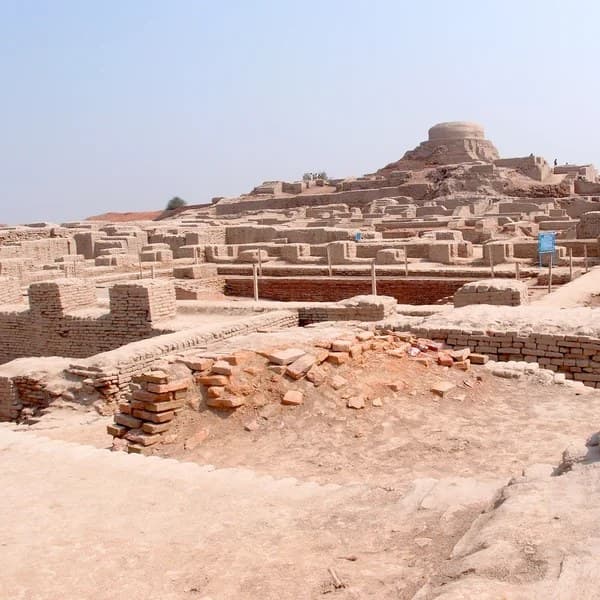
At its peak Harappa covered at least 150 hectares and housed an estimated 23,000 to 50,000 inhabitants. The city was laid out on a grid plan with streets aligned to the cardinal directions, brick-built houses with private bathrooms draining into a city-wide sewage system — the most sophisticated urban sanitation network in the ancient world, far surpassing anything in contemporary Egypt or Mesopotamia. A large citadel mound dominated the western part of the city, and massive granaries indicate organised food storage and redistribution.

The Indus script found on Harappan seals — small carved stones used to stamp goods in trade — remains one of the great unsolved puzzles in linguistics. No bilingual text has been found, and the script (comprising about 400 signs) has not been deciphered, meaning we cannot read the language of this civilisation. Despite this, the material culture is extraordinarily rich: standardised weights and measures (used from Afghanistan to Gujarat), distinctive pottery, bronze tools, terracotta figurines, and carved seals of remarkable artistry.

Harappa declined around 1900 BCE, possibly due to climate change (a prolonged drought), shifts in the course of the Ravi River, and the collapse of long-distance trade networks. The site was rediscovered in 1829 and extensively excavated from 1921 onward.
Pourquoi c'est important

Harappa and its civilisation represent one of the great enigmas of world history: a highly organised, literate, technologically sophisticated urban society covering a territory larger than Egypt and Mesopotamia combined — yet almost completely unknown until a century ago and still largely unreadable because its script has not been deciphered. The Indus Valley Civilisation's urban planning, standardised weights, and sewage systems demonstrate that complex, peaceful urban life was possible without the monumental warfare, pyramids, or god-kings characteristic of other Bronze Age civilisations. Harappa's relative anonymity — despite its scale and sophistication — raises profound questions about what we value in the archaeological record and why civilisations that built in brick and left no deciphered texts remain understudied compared to their contemporaries.

Preuves et interprétation

Distinguer ce qui est bien établi de ce qui reste débattu.

Faits bien établis

3
  • Archaeological excavation has confirmed a grid-plan city with standardised kiln-fired bricks, streets aligned to the compass, and a city-wide covered brick drainage system connecting private bathrooms to main sewers — unparalleled in the ancient world.
  • Over 2,000 stamped seals in the Indus script have been found at Harappa and related sites; standardised weights in a binary-decimal system have been recovered across the Indus civilisation's entire geographic range.
  • Radiocarbon dating from multiple contexts places the city's main occupation between approximately 2600 and 1900 BCE, with earlier settlement (Ravi phase) from c. 3300 BCE.

Inférences savantes

1
  • The cause of the civilisation's decline around 1900 BCE is debated; current evidence points to a prolonged aridification event (weakening of the South Asian monsoon), but river migration, disease, and political fragmentation likely played compound roles.

Photos de la communauté

Partagez votre expérience

Avez-vous visité ce site ? Téléchargez vos photos pour aider les autres à le découvrir.

Récits liés

Comment citer cette page

Atlas Anatolia. (2600). Harappa. Atlas Anatolia. https://atlasanatolia.com/fr/site/harappa

Contenu sous licence CC BY-SA 4.0 — attribution requise en cas de réutilisation.

Graphique

Connexions avec des sites et récits associés.

Sources

  • Ancient Cities of the Indus Valley Civilisation — Kenoyer, Jonathan Mark (1998)
  • The Indus Civilisation: A Contemporary Perspective — Possehl, Gregory L. (2002)

Questions fréquentes

Où se trouve Harappa ?

Harappa est situé à/en Pakistan.

De quand date Harappa ?

Harappa remonte approximativement à 2600 av. J.-C. – 1900 av. J.-C..

Quelles civilisations sont associées à Harappa ?

Harappa est associé à la civilisation Indus Valley.

Pourquoi Harappa est-il important ?

Harappa and its civilisation represent one of the great enigmas of world history: a highly organised, literate, technologically sophisticated urban society covering a territory larger than Egypt and Mesopotamia combined — yet almost completely unknown until a century ago and still largely unreadable because its script has not been deciphered.

Harappa est-il inscrit au patrimoine mondial de l'UNESCO ?

Harappa n'est pas actuellement inscrit sur la liste du patrimoine mondial de l'UNESCO.