
Aller au contenu
Atlas Anatolia
ActualitésIce Age teeth in Sulawesi push betel-nut use back as far as 25,000 yearsRoman mosaic and Eros head uncovered in the basilica at Pompeiopolis, Kastamonu
The massive underground cistern and ruins of the fortress city of Dara

Wikimedia Commons

Forteresse

Dara (Anastasiopolis)

Seyfi Cem Baskin

Dara505 apr. J.-C. – 700 apr. J.-C.

A massive Roman-Byzantine fortress city in Mesopotamia, built by Emperor Anastasius I as a bulwark against the Sasanian Empire — featuring enormous underground cisterns, a necropolis carved into living rock, and one of the great military architectures of the ancient world.

312
Intérêt 51

Localisation

Mardin · Southeastern Anatolia · Turquie

37.18°N · 40.95°E · Asie

Builder

Emperor Anastasius I, built 505-507 CE

Battle of Dara

Belisarius defeated Sasanian Persia here in 530 CE

Cisterns

Enormous underground vaulted water storage systems

Purpose

Military stronghold opposing Sasanian fortress at Nisibis

Notable Finds

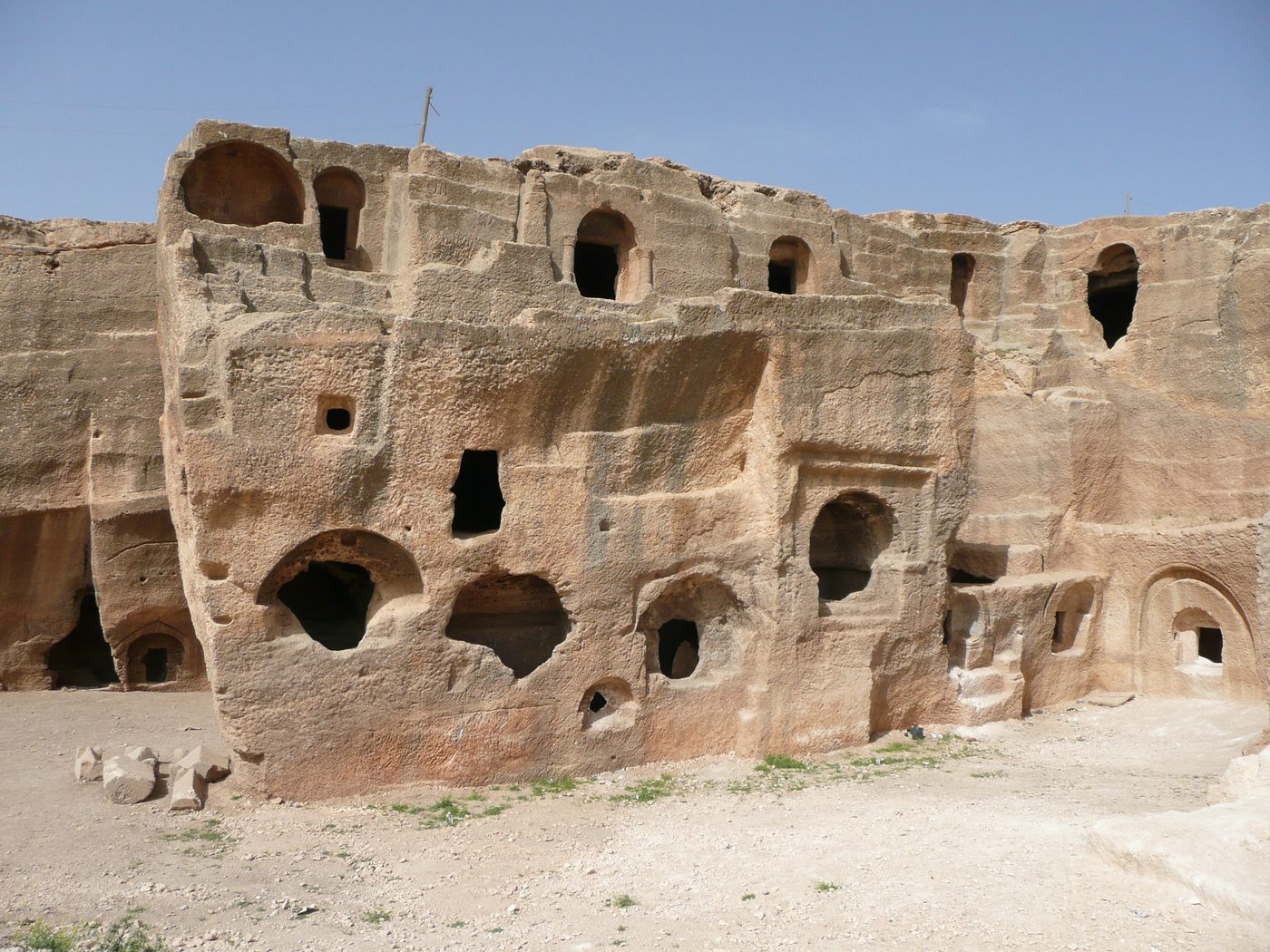
A 6th-century CE rock-cut necropolis with over 250 tombs, including arcosolia and sarcophagi, located on the northern cliffs.

Dating Method

Ceramic typology and coin finds from Anastasian to Heraclian periods (early 6th to mid-7th century CE) confirm the primary occupation phase.

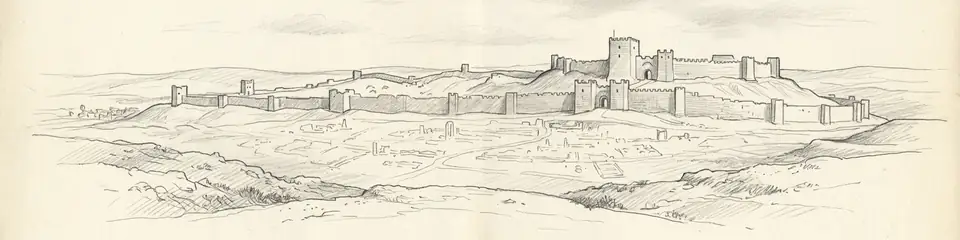
Graphite pencil sketch banner of Dara (Anastasiopolis)

“Dara embodies the centuries-long rivalry between Rome/Byzantium and the Persian empires that shaped the ancient Near East.”

De Wikipédia

Dara (Anastasiopolis) was a massive Byzantine fortress city in Mesopotamia, built to counter Sasanian Persia, featuring enormous cisterns and the site of Belisarius's famous victory.

Lire l'article complet sur Wikipédia →

Localisation

Aperçu

Dara is one of the most impressive and least-known ancient fortress cities in Turkey, rising from the Mesopotamian plains near Mardin just 18 kilometers from the Syrian border. Built between 505-507 CE by Byzantine emperor Anastasius I as a military stronghold to counter the Sasanian Persian fortress at Nisibis (modern Nusaybin), Dara became one of the most formidable military installations in the late Roman world.

The city's most striking surviving features are its massive underground cisterns and water management systems — carved deep into the bedrock to sustain the garrison during prolonged sieges. The main cistern is an enormous vaulted space supported by rows of columns, creating a subterranean cathedral of engineering. Above ground, portions of the massive defensive walls, towers, and gateways remain standing, demonstrating Roman military engineering at its most sophisticated.

"Anastasius built a very strong city in the territory of the Persians, Dara by name."
— Procopius of Caesarea, c. 550 CE

Dara was the site of one of the most celebrated late Roman military victories — the Battle of Dara in 530 CE, where the young general Belisarius defeated a much larger Sasanian army using innovative tactical formations. This battle, described in detail by the historian Procopius, launched Belisarius on his career as one of the greatest generals in Byzantine history.

The surrounding landscape preserves a vast rock-cut necropolis with hundreds of tombs carved into cliff faces, many with architectural facades. The quarries that supplied the fortress's building stone are also visible, offering insight into the massive construction effort required to build an entire city in just two years.
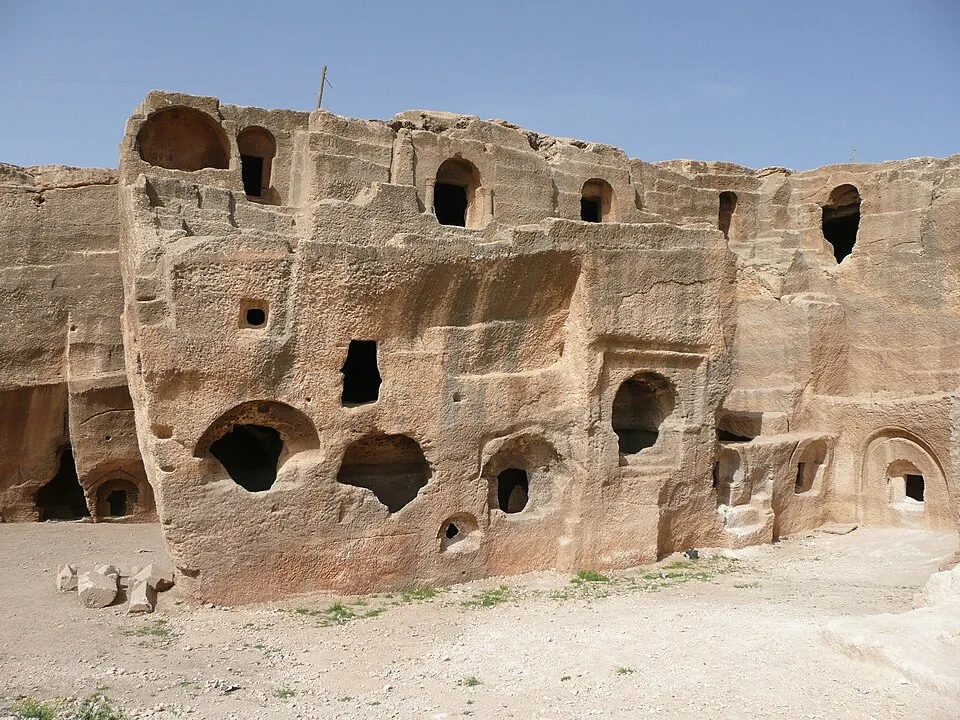
Dara P1030851 20080424091200
Dara P1030851 20080424091200 | Nevit Dilmen (CC BY-SA 3.0)

Pourquoi c'est important

Dara embodies the centuries-long rivalry between Rome/Byzantium and the Persian empires that shaped the ancient Near East. As a purpose-built military city, it provides unparalleled insight into late Roman military architecture, siege engineering, and logistical planning. The Battle of Dara marks the beginning of Belisarius's legendary career, connecting the site to one of the most fascinating military commanders in history. The massive cisterns and water systems demonstrate how the Romans solved the fundamental challenge of sustaining a large garrison in the arid Mesopotamian landscape.

Preuves et interprétation

Distinguer ce qui est bien établi de ce qui reste débattu.

Faits bien établis

3
  • Procopius (Buildings 2.1-3 and Wars 1.13-14) provides detailed accounts of Dara's construction by Anastasius I and the Battle of Dara under Belisarius in 530 CE.
  • The massive underground cisterns, carved into bedrock with vaulted ceilings supported by stone columns, have been archaeologically documented and partially cleared for public access.
  • Defensive wall sections with towers remain standing to significant heights, confirming Procopius's description of the fortification system.

Inférences savantes

1
  • The speed of construction (just two years for a complete fortress city) suggests the deployment of massive labor forces and prefabricated building techniques.

Interprétations débattues

2
  • The exact layout of the Battle of Dara, including Belisarius's famous trench system, is debated among military historians attempting to reconcile Procopius's account with the terrain.
  • The function of the large, multi-story structure known as the 'agora' or 'market building' is debated, with interpretations ranging from a military granary/storage depot to a civilian commercial center.

Découverte et fouilles

1986–1991

Initial surveys

Turkish archaeological surveys documented the defensive walls, cisterns, and necropolis, establishing the site's extent and significance.

2011–2018

Mardin Museum excavations

Systematic excavations uncovered additional cistern chambers, sections of the defensive walls, and portions of the internal city plan including churches and administrative buildings.

2019

Conservation and tourism development

Major conservation project stabilized the underground cisterns for public access and improved visitor infrastructure at the site.

2022

Necropolis and Cistern Excavations

Dirigé par Mardin Museum Directorate

Detailed excavations of the northern rock-cut necropolis and continued clearance of the southern underground cisterns, led by the Mardin Museum Directorate.

Photos de la communauté

Partagez votre expérience

Avez-vous visité ce site ? Téléchargez vos photos pour aider les autres à le découvrir.

Comment citer cette page

Atlas Anatolia. (505). Dara (Anastasiopolis). Atlas Anatolia. https://atlasanatolia.com/fr/site/dara

Contenu sous licence CC BY-SA 4.0 — attribution requise en cas de réutilisation.

Sources

  • Procopius: The Wars, Buildings, Secret History — Procopius (trans. H.B. Dewing) (1914)
  • Dara-Anastasiopolis: A Late Roman Fortress City — Brian Croke (2007)
  • Wikipedia — Dara (Mesopotamia)Lien

Questions fréquentes

Où se trouve Dara (Anastasiopolis) ?

Dara (Anastasiopolis) est situé à/en Mardin, Southeastern Anatolia, Türkiye.

De quand date Dara (Anastasiopolis) ?

Dara (Anastasiopolis) remonte approximativement à 505 apr. J.-C. – 700 apr. J.-C..

Quelles civilisations sont associées à Dara (Anastasiopolis) ?

Dara (Anastasiopolis) est associé à la civilisation Roman, Byzantine.

Pourquoi Dara (Anastasiopolis) est-il important ?

Dara embodies the centuries-long rivalry between Rome/Byzantium and the Persian empires that shaped the ancient Near East.

Dara (Anastasiopolis) est-il inscrit au patrimoine mondial de l'UNESCO ?

Dara (Anastasiopolis) n'est pas actuellement inscrit sur la liste du patrimoine mondial de l'UNESCO.