
Saltar al contenido
Atlas Anatolia
NoticiasIce Age teeth in Sulawesi push betel-nut use back as far as 25,000 yearsRoman mosaic and Eros head uncovered in the basilica at Pompeiopolis, Kastamonu
Pagoda Forest at Shaolin Monastery, Henan, China

Wikimedia Commons (CC BY-SA 3.0)

PatrimonioTemploUNESCODestacado

Shaolin Monastery

Seyfi Cem Baskin

少林寺477 d. C. – 1928 d. C.

The Chan Buddhist monastery on Mount Song in Henan — legendary birthplace of kung fu and one of the most searched temple names across English, Turkish, and Chinese Wikipedia — where stone pagoda forests and Tang-era inscriptions document centuries of martial and monastic tradition.

111
Interés 79

Ubicación

China

34.51°N · 112.94°E · Asia

Founded

Trad. 477 CE; Northern Wei patronage on Mount Song

Pagoda Forest

240+ stupas from Tang–Qing abbots

Fame

Chan Buddhism and global kung fu legend

UNESCO

Historic Monuments of Dengfeng (2010)

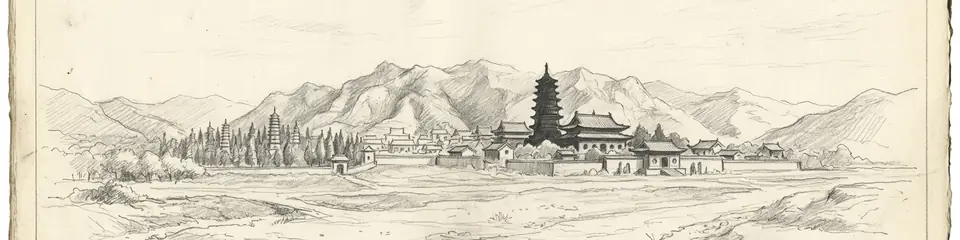
Graphite pencil sketch banner of Shaolin Monastery

Shaolin is where Buddhism, state patronage, and martial culture intersect in the Chinese imagination — a monastery whose name travels farther than almost any other Asian temple.”

Ubicación

Resumen

Shaolin Monastery stands in the foothills of Mount Song near Dengfeng in Henan Province, central China. Tradition credits its founding to the Indian monk Batuo (Buddhabhadra) in the 5th century CE under Northern Wei patronage; the monastery became a centre of Chan (Zen) Buddhism and, in popular lore, the cradle of Chinese martial arts. The Tang dynasty general Wang Shichong campaign (621 CE) produced stories of monk-defenders rewarded by the emperor — tales that later fed the kung fu legend.

The complex suffered repeated destruction and rebuilding — most famously in 1928 when warlord Shi Yousan burned many halls. What visitors see today mixes genuine historical layers with modern reconstruction. The Pagoda Forest (Talin) holds more than 240 brick stupas marking abbots and eminent monks from the Tang through Qing periods — an outdoor archive of monastic genealogy. Inscriptions, steles, and mural fragments document martial and medical traditions.

UNESCO listed "Historic Monuments of Dengfeng in 'The Centre of Heaven and Earth'" in 2010, including Shaolin and nearby Songyang Academy and observatory sites. The monastery's global fame far exceeds scholarly certainty about when fighting monks became central to its identity, but the material record proves an unbroken religious institution for more than 1,500 years on one of China's sacred mountains.

Por qué es importante

Shaolin is where Buddhism, state patronage, and martial culture intersect in the Chinese imagination — a monastery whose name travels farther than almost any other Asian temple. Its pagoda forest and Tang steles give archaeologists and historians datable evidence behind legends that otherwise live mainly in film and folklore.

Evidencia e interpretación

Distinguir lo bien establecido de lo que sigue en debate.

Hechos bien establecidos

1
  • Tang steles and pagoda inscriptions name abbots and donors from the 7th century onward.

Inferencias académicas

1
  • Martial training as monastic practice likely developed by the Ming period — later than popular media suggest.

Interpretaciones debatidas

1
  • Bodhidharma's personal role at Shaolin is legendary; historical presence in Henan is unproven.

Fotos de la comunidad

Comparte tu experiencia

¿Has visitado este sitio? Sube tus fotos para ayudar a otros a descubrirlo.

Cómo citar esta página

Atlas Anatolia. (477). Shaolin Monastery. Atlas Anatolia. https://atlasanatolia.com/es/site/shaolin-monastery

Contenido bajo licencia CC BY-SA 4.0 — se requiere atribución al reutilizar.

Fuentes

  • The Shaolin Monastery: History, Religion, and the Chinese Martial ArtsShahar, Meir (2008)
  • UNESCO — Historic Monuments of DengfengEnlace

Preguntas frecuentes

¿Dónde se encuentra Shaolin Monastery?

Shaolin Monastery se encuentra en China.

¿Qué antigüedad tiene Shaolin Monastery?

Shaolin Monastery se fecha aproximadamente en 477 d. C. – 1928 d. C..

¿Qué civilizaciones se relacionan con Shaolin Monastery?

Shaolin Monastery se relaciona con Ming, Qing.

¿Por qué es importante Shaolin Monastery?

Shaolin is where Buddhism, state patronage, and martial culture intersect in the Chinese imagination — a monastery whose name travels farther than almost any other Asian temple.

¿Shaolin Monastery es Patrimonio Mundial de la UNESCO?

Sí. Shaolin Monastery está inscrito en la Lista del Patrimonio Mundial de la UNESCO.