
Saltar al contenido
Atlas Anatolia
NoticiasIce Age teeth in Sulawesi push betel-nut use back as far as 25,000 yearsRoman mosaic and Eros head uncovered in the basilica at Pompeiopolis, Kastamonu
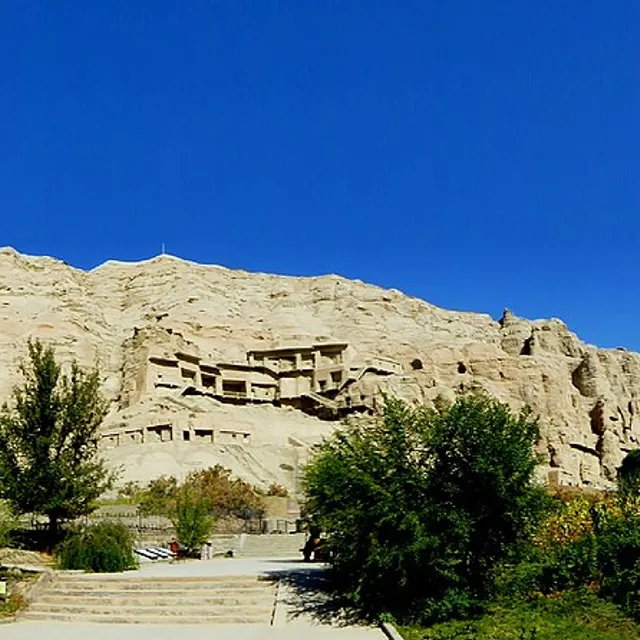
Cliff face and cave openings of the Kizil Buddhist grottoes, Xinjiang

Wikimedia Commons

SantuarioUNESCO

Kizil Caves

Seyfi Cem Baskin

克孜尔千佛洞300 d. C. – 800 d. C.

The earliest large complex of Buddhist rock-cut cave temples on the northern Silk Road, carved into cliffs above the Muzart River near Kucha — murals of Indo-Iranian and Central Asian style that predate and influenced later Chinese grotto art.

21
Interés 56

Ubicación

China

41.78°N · 82.50°E · Asia

Scale

200+ rock-cut caves along the Muzart River cliffs

Date

Main painting phases c. 3rd–8th centuries CE

Culture

Buddhist monasteries of the Kucha / Tocharian oasis kingdom

Art history

Earliest large grotto complex on the northern Silk Road

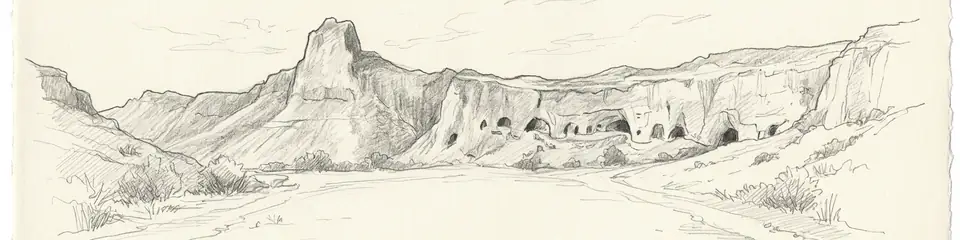
Graphite pencil sketch banner of Kizil Caves

Kizil is foundational for Central Asian Buddhist art history — chronologically early, stylistically hybrid, and textually linked to Tocharian monastic culture.”

Ubicación

Resumen

The Kizil Caves stretch along river cliffs about 70 kilometres west of Kucha (Kuqa) in Xinjiang, China. From roughly the 3rd to 8th centuries CE, Buddhist monastic communities excavated and painted over 230 caves, making Kizil the earliest major grotto series of the Tarim Basin — earlier in origin than Dunhuang’s Mogao heyday and crucial for understanding how Indian Buddhist art adapted along the northern route around the Taklamakan.

Murals employ distinctive “Western Regions” styles: stylised drapery, musical and narrative scenes from Jātakas and Avadānas, and a palette influenced by Iranian and Gandhāran visual traditions. German Turfan expeditions under Albert Grünwedel and Albert von Le Coq removed many mural panels to Berlin; surviving in situ painting still shows diamond-ceiling patterns, musicians, and donor figures of Tocharian-speaking oasis elites.
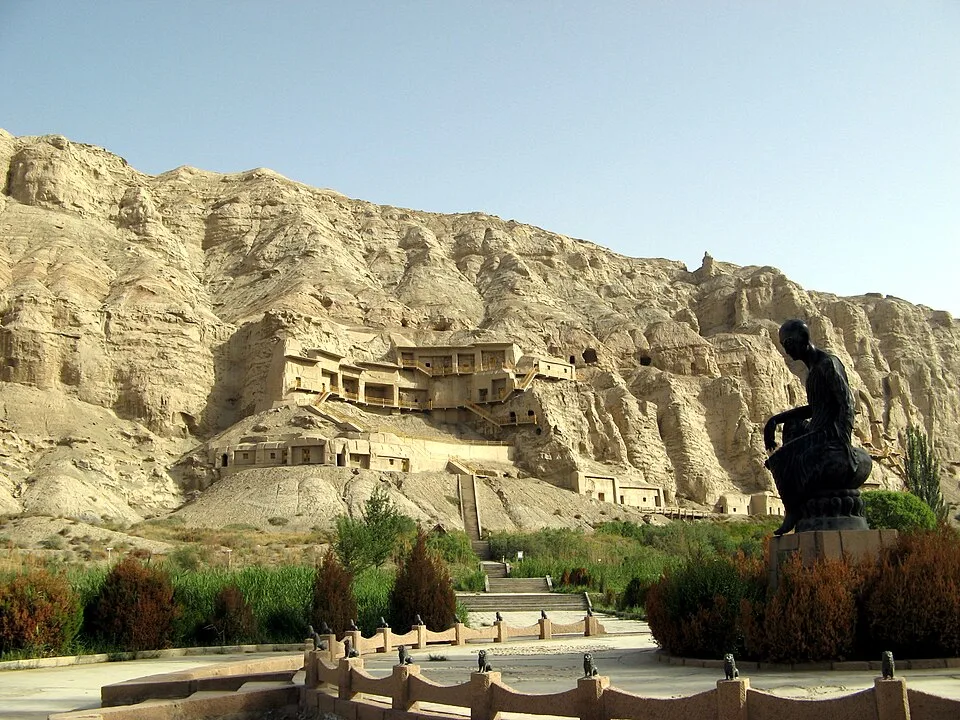
Kuqa May 2007 427
Kuqa May 2007 427 | G41rn8 (CC BY-SA 4.0)
"In the cliffs above the river the monks of Kucha cut cells and painted the deeds of the Bodhisattva — music, dance, and the path to nirvana in colours brought along the northern road."
— Modern paraphrase of Kucha Buddhist mural programmes at Kizil

Kizil belongs to the broader Kucha kingdom’s Buddhist landscape and is a component of UNESCO Silk Roads serial heritage. Conservation and documentation by Chinese institutes continue to recover chronology through radiocarbon and stylistic sequencing.
Por qué es importante

Kizil is foundational for Central Asian Buddhist art history — chronologically early, stylistically hybrid, and textually linked to Tocharian monastic culture. It shows how the Silk Road was not only a trader’s corridor but a monastery network that translated Indian Buddhism into oasis visual languages later radiating into China proper.

Evidencia e interpretación

Distinguir lo bien establecido de lo que sigue en debate.

Hechos bien establecidos

2
  • Standing caves and remaining murals document an extensive early Buddhist monastic complex.
  • Stylistic and palaeographic links connect Kizil art to Indo-Iranian and Tocharian Buddhist cultures of Kucha.

Interpretaciones debatidas

1
  • Fine-grained dating of individual cave phases continues to be refined; some early expedition attributions have been revised.

Fotos de la comunidad

Comparte tu experiencia

¿Has visitado este sitio? Sube tus fotos para ayudar a otros a descubrirlo.

Historias relacionadas

Cómo citar esta página

Atlas Anatolia. (300). Kizil Caves. Atlas Anatolia. https://atlasanatolia.com/es/site/kizil-caves

Contenido bajo licencia CC BY-SA 4.0 — se requiere atribución al reutilizar.

Gráfico

Conexiones con sitios e historias relacionados.

Fuentes

  • Chinese SculptureHoward, Angela F. et al. (2006)
  • Archaeological Survey at KizilVignato, Giuseppe (2006)

Preguntas frecuentes

¿Dónde se encuentra Kizil Caves?

Kizil Caves se encuentra en China.

¿Qué antigüedad tiene Kizil Caves?

Kizil Caves se fecha aproximadamente en 300 d. C. – 800 d. C..

¿Qué civilizaciones se relacionan con Kizil Caves?

Kizil Caves se relaciona con Han, Tocharian.

¿Por qué es importante Kizil Caves?

Kizil is foundational for Central Asian Buddhist art history — chronologically early, stylistically hybrid, and textually linked to Tocharian monastic culture.

¿Kizil Caves es Patrimonio Mundial de la UNESCO?

Sí. Kizil Caves está inscrito en la Lista del Patrimonio Mundial de la UNESCO.