
تخط إلى المحتوى
Atlas Anatolia
أخبارأسنان من العصر الجليدي في سولاويزي تدفع استخدام التنبول إلى ما يصل إلى 25,000 عاماكتشاف فسيفساء رومانية ورأس إيروس في بازيليكا بومبيوبوليس، كاستامونو
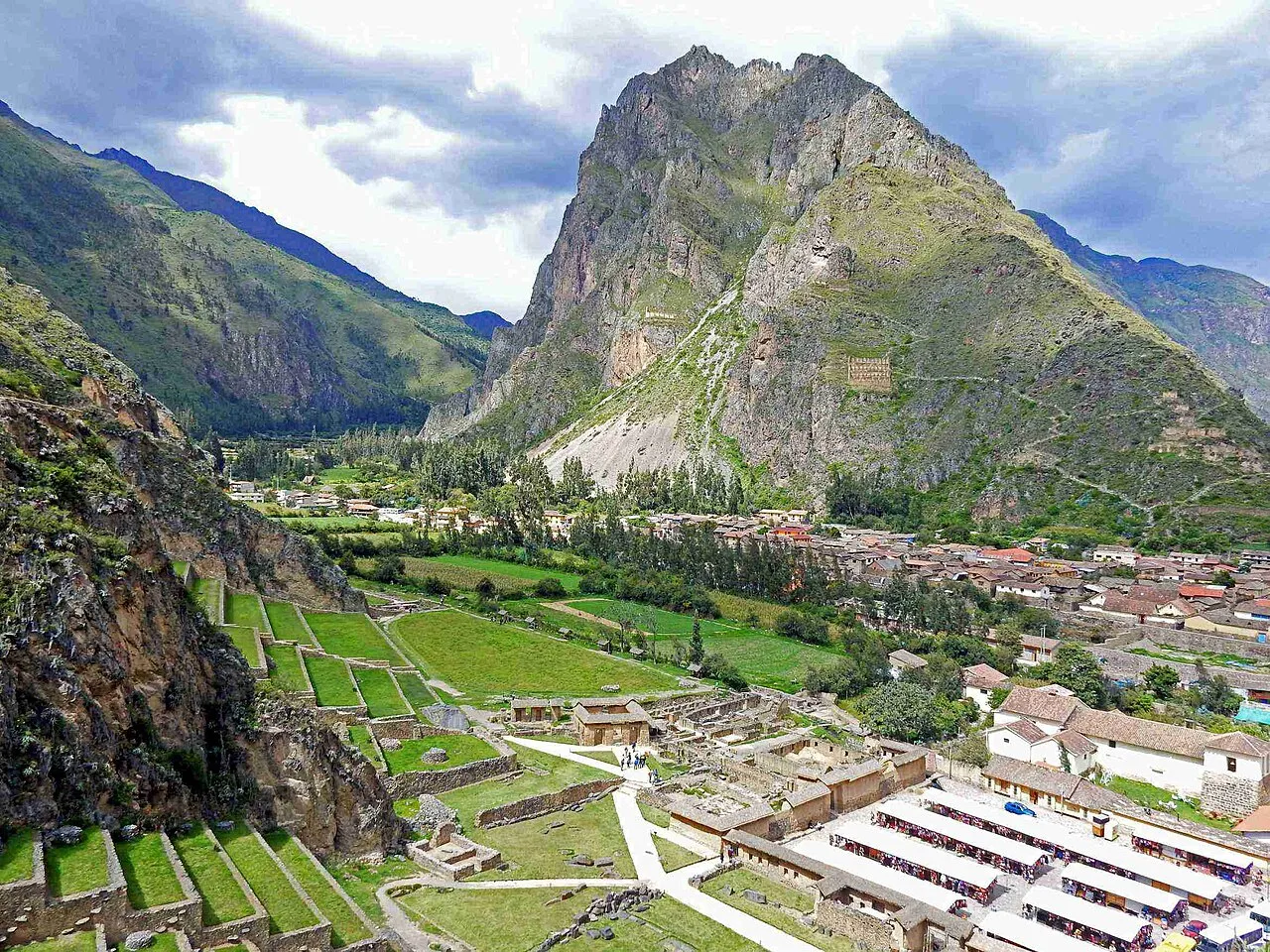
The terraces and ceremonial center of Ollantaytambo in the Sacred Valley, Peru

Wikimedia Commons

قلعةمميز

Ollantaytambo

Seyfi Cem Baskin

Ullantaytampu1440 م – 1540 م

A monumental Inca royal estate and fortress-temple complex in the Sacred Valley of Peru, where giant terraces climb the mountainside to an unfinished Temple of the Sun built from six colossal pink-granite monoliths. Still a living town laid out on its original Inca grid, it was the site of one of the few Inca victories over the Spanish.

41
اهتمام 70

الموقع

بيرو

13.26°S · 72.26°W · أمريكا الجنوبية

Built

Mid-15th century CE, royal estate of Pachacuti

Temple of the Sun

Unfinished; "Wall of the Six Monoliths" of pink rhyolite

Quarry

Kachiqhata, across the Urubamba and uphill from the site

Living town

Still inhabited on its original Inca street grid

1536 battle

Manco Inca repelled Hernando Pizarro — a rare Inca victory

Location

Sacred Valley, ~60 km from Cusco

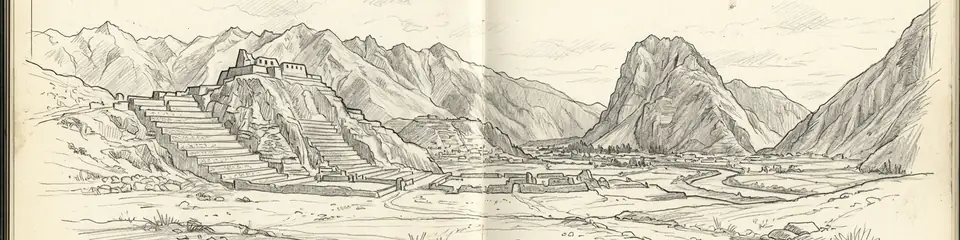
Graphite pencil sketch banner of Ollantaytambo

“Ollantaytambo is one of the finest surviving Inca complexes and an exceptional record of Inca engineering, urbanism, and statecraft.”

الموقع

نظرة عامة

Ollantaytambo lies at the northwestern end of the Sacred Valley of the Incas, about 60 kilometres from Cusco, where the Patacancha river meets the Urubamba. It was built in the mid-15th century as a royal estate of the emperor Pachacuti, who conquered the region, and combines an agricultural, administrative, and ceremonial complex with a planned town. The modern town below preserves the original Inca street grid and canal system, making it one of the few places where Inca domestic urban planning can still be walked.

Above the town rises the ceremonial centre, reached by a long flight of steep stone terraces (andenes) that both supported agriculture and monumentalised the approach. At the summit stands the unfinished Temple of the Sun, dominated by the celebrated "Wall of the Six Monoliths": six enormous slabs of pink rhyolite (porphyry), the largest several metres tall and weighing dozens of tonnes, set in a row and separated by thin spacer stones. The stone was quarried at Kachiqhata, several kilometres away on the far side of the Urubamba, and at a higher elevation — meaning the blocks had to be moved down a mountain, across the river, and up the terraced hillside. Unfinished blocks abandoned along this "ramp" route, and others stranded mid-transport, give rare insight into Inca quarrying and haulage.

In 1536, during Manco Inca's great rebellion against the Spanish, Ollantaytambo served as his stronghold. When a Spanish cavalry expedition under Hernando Pizarro advanced up the valley to capture him, the Inca defenders fought from the terraces and even flooded the plain below by diverting the river, repelling the attack — one of the rare Inca battlefield victories of the conquest. Manco Inca later withdrew to the remote refuge of Vilcabamba, and the Spanish eventually took the site.

لماذا يهم

Ollantaytambo is one of the finest surviving Inca complexes and an exceptional record of Inca engineering, urbanism, and statecraft. Its terraces and the unfinished Temple of the Sun showcase the megalithic stonework of the empire at its height, while the abandoned monoliths along the transport route preserve, frozen mid-construction, the methods the Inca used to move colossal stones without the wheel or draft animals. As a continuously inhabited town on its original Inca plan, it is a living example of Inca domestic architecture and water management. It is also celebrated as the site of one of the only Inca military victories over the Spanish, in 1536. It lies within the Sacred Valley and is one of Peru's most visited archaeological destinations.

الأدلة والتفسير

التمييز بين ما هو راسخ وما لا يزال موضع نقاش.

حقائق راسخة

4
  • The "Wall of the Six Monoliths" survives in situ at the unfinished Temple of the Sun, its giant rhyolite slabs separated by thin worked spacer stones — direct evidence of elite Inca masonry.
  • Partly dressed blocks abandoned along the route from the Kachiqhata quarry ("piedras cansadas," or tired stones) document the quarrying and transport process mid-operation.
  • The 1536 battle in which Manco Inca repelled Hernando Pizarro's cavalry — including the flooding of the plain by diverting water channels — is recorded by Spanish chroniclers of the conquest.
  • The lower town retains its original Inca orthogonal street grid, canals, and trapezoidal doorways, making it a rare surviving example of planned Inca domestic urbanism.

استنتاجات علمية

1
  • The colossal monoliths are thought to have been moved using ramps, levers, ropes, and large labour gangs, with the river crossing and uphill haul reconstructed from the route and abandoned stones; no Inca written account survives.

صور المجتمع

شارك تجربتك

هل قمت بزيارة هذا الموقع؟ ارفع صورك لمساعدة الآخرين في اكتشافه.

كيفية الاستشهاد بهذه الصفحة

Atlas Anatolia. (1440). Ollantaytambo. Atlas Anatolia. https://atlasanatolia.com/ar/site/ollantaytambo

المحتوى مرخّص بموجب CC BY-SA 4.0 — يجب ذكر المصدر عند إعادة الاستخدام.

المصادر

  • Inca Architecture and Construction at Ollantaytambo — Protzen, Jean-Pierre (1993)
  • The Conquest of the Incas — Hemming, John (1970)

الأسئلة الشائعة

أين يقع Ollantaytambo؟

يقع Ollantaytambo في Peru.

كم يبلغ عمر Ollantaytambo؟

يعود تاريخ Ollantaytambo إلى حوالي 1440 م – 1540 م.

ما هي الحضارات المرتبطة بـ Ollantaytambo؟

يرتبط Ollantaytambo بحضارة Inca.

لماذا يعتبر Ollantaytambo مهماً؟

Ollantaytambo is one of the finest surviving Inca complexes and an exceptional record of Inca engineering, urbanism, and statecraft.

هل Ollantaytambo موقع تراث عالمي لليونسكو؟

Ollantaytambo غير مدرج حالياً في قائمة التراث العالمي لليونسكو.