
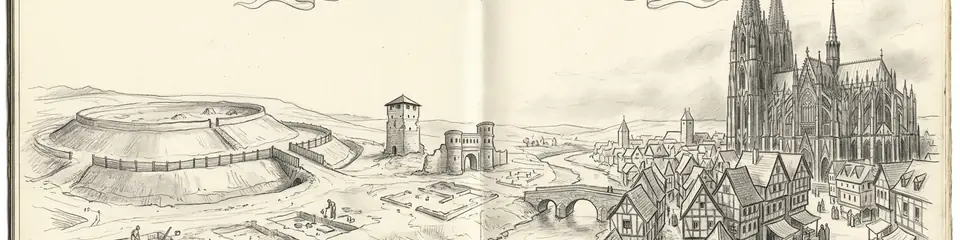
Germany is not the first place most people picture when they imagine the ancient world. The mind reaches instead for the pyramids of Egypt, the temples of Greece, or the forums of Rome. Yet the land between the Rhine and the Danube holds a past every bit as deep and dramatic. It runs from a Celtic city older than the Parthenon, through one of the great capitals of the Roman Empire, to cathedrals that took six centuries to complete. To travel through Germany's ancient and medieval sites is to watch the centre of European power shift, again and again, across more than two thousand years.
This is a journey through four of the most remarkable historic places in Germany, each one a turning point in the wider story of Europe.
"Beyond the Rhine lived peoples the Romans called barbarians — yet their oppida, graves, and limes forts still scribble history into German soil."
— Composite paraphrase of Tacitus Germania and limes archaeology
Heuneburg: the first city north of the Alps
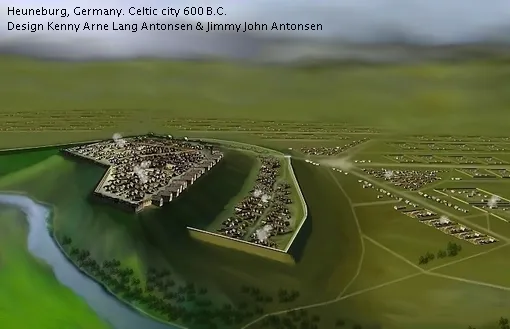
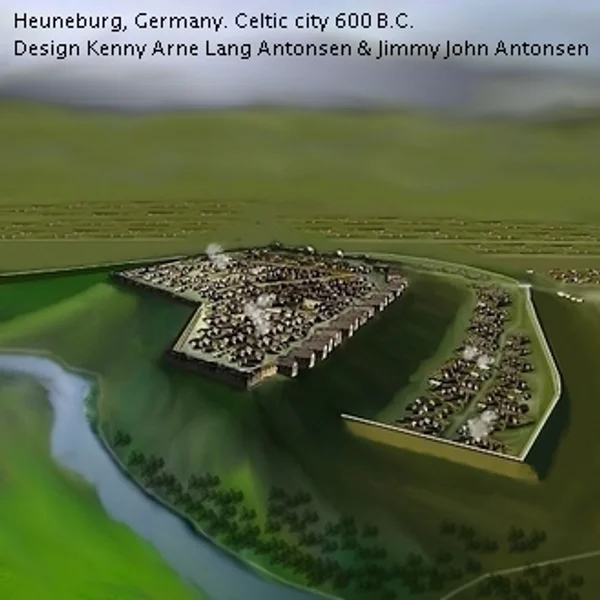
Long before Rome ever reached the Rhine, an early Celtic people built something extraordinary on a spur above the upper Danube, in what is now the state of Baden-Württemberg. The Heuneburg reached its height around 600 BCE, and its rulers did something no one else north of the Alps had done. In place of the usual ramparts of timber and earth, they raised a fortification wall of sun-dried mudbrick set on a stone foundation, with projecting bastions, in a technique borrowed directly from the Mediterranean world. Nothing else like it is known anywhere in temperate Europe. Plastered white and visible for miles, the wall was a deliberate statement of contact with the civilisations of Greece and Etruria.
The fortified citadel was only the core of a far larger settlement. Beyond the walls lay an extensive planned lower town, and together they may have covered around 100 hectares and housed several thousand people. That scale has led many archaeologists to describe the Heuneburg as the earliest city, or proto-city, north of the Alps. It may even be the place the Greek historian Herodotus called Pyrene, which he located near the source of the Danube in the fifth century BCE. If the identification is right, it would make the Heuneburg the first settlement in central Europe ever named in surviving history.
The wealth of its rulers still lies in the burial mounds that surround the site. The Hohmichele was one of the largest grave mounds in Europe, and in 2010 archaeologists uncovered the intact, richly furnished grave of an early Celtic woman, the so-called Bettelbühl princess, buried around 583 BCE with gold and amber ornaments. Greek black-figure pottery and Mediterranean wine amphorae found here show that these Celtic elites were trading with the Greek world centuries before a single Roman legion crossed the Alps.
Trier: when Rome ruled the Rhine
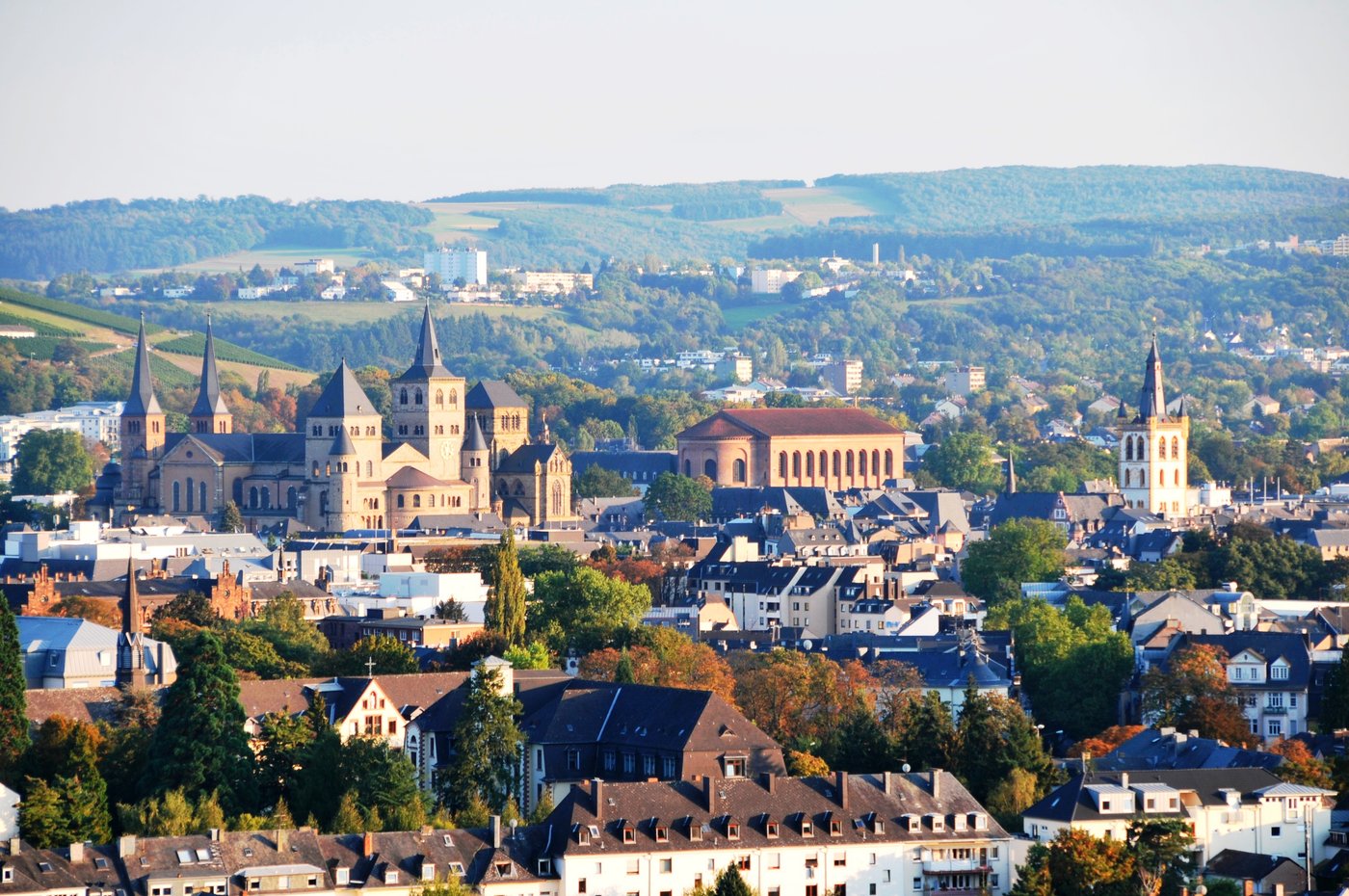
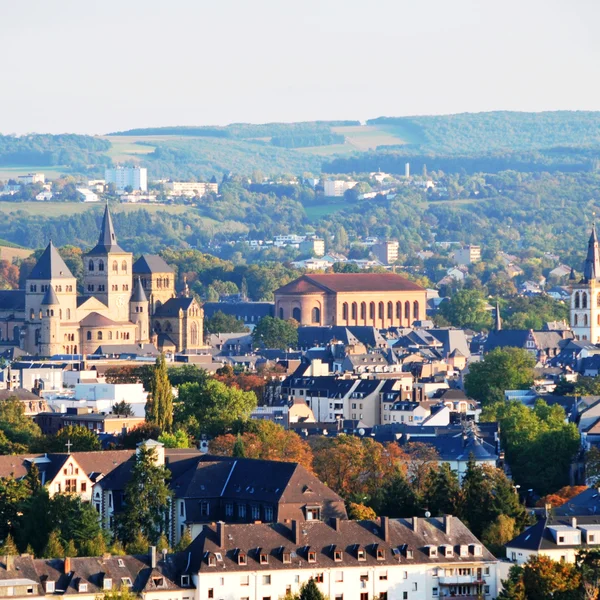
By the age of the emperors, the frontier of the Roman world ran straight through Germany, and its grandest city was Trier. Founded around 16 BCE as Augusta Treverorum, Trier grew into one of the largest cities of the Western Roman Empire and, during the turbulent later empire, one of its capitals. Emperors held court here, and the city styled itself a second Rome on the banks of the Moselle.
The monuments of that imperial age still stand. The Porta Nigra, the vast blackened sandstone gate that guards the old town, is the largest and best-preserved Roman city gate north of the Alps. The Imperial Baths and the amphitheatre speak to the scale of Roman public life on the frontier. Most striking of all is the Aula Palatina, the throne hall built for the emperor Constantine in the early fourth century. Its brick walls still rise to their original height, enclosing the largest single-room structure to survive from all of Roman antiquity. UNESCO inscribed the Roman monuments of Trier as a World Heritage Site in 1986, and the city is often called the oldest in Germany.
Aachen: Charlemagne and the rebirth of empire
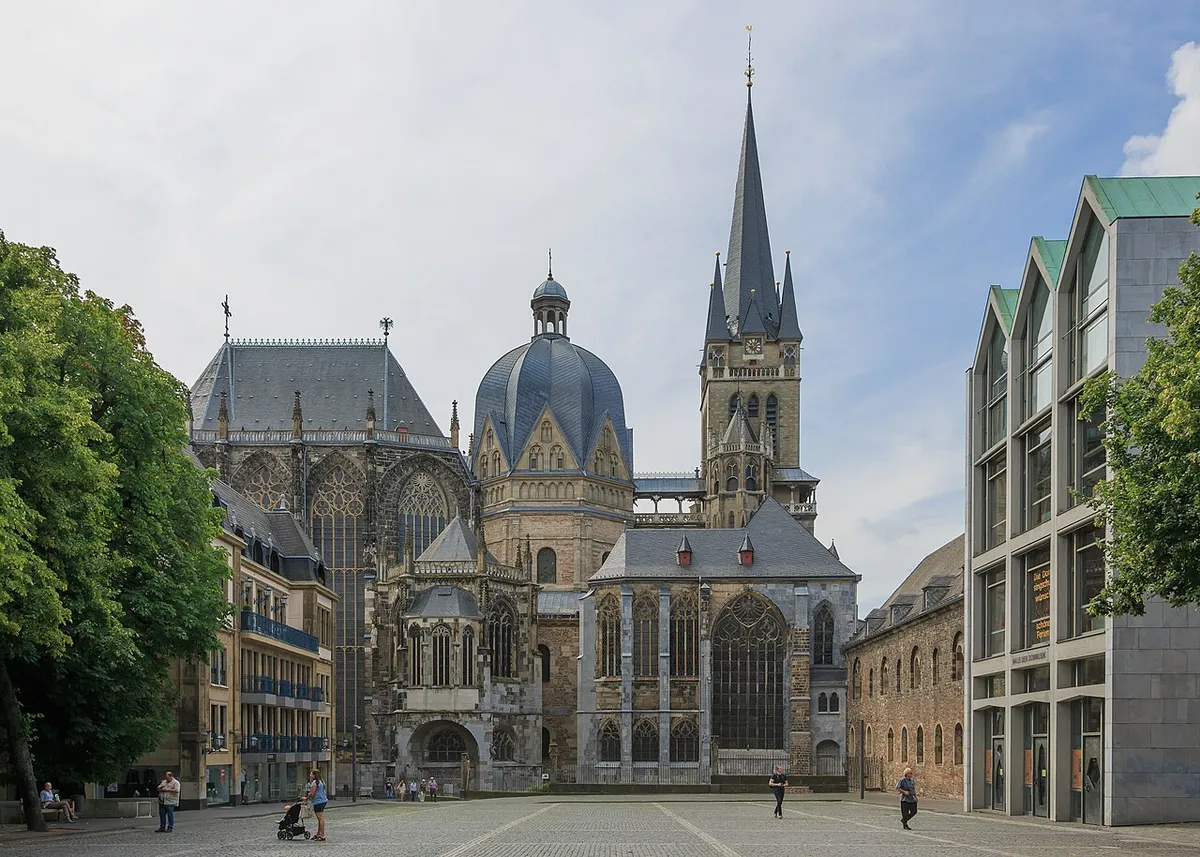
After Rome fell in the West, it was in Germany that the idea of empire was reborn. Around the year 800, the Frankish king Charlemagne made Aachen the principal seat of his revived Western empire and ordered the building of a great palace. Its surviving heart is the Palatine Chapel, a domed octagon designed by Odo of Metz and consecrated around 805.
The chapel is the supreme achievement of the Carolingian Renaissance. Its form deliberately echoes the imperial churches of the Mediterranean, above all San Vitale in Ravenna and the great churches of Byzantine Constantinople, as a statement that Charlemagne's realm was the rightful heir of Rome. Italian marble columns, bronze railings cast in Aachen, and a simple marble throne in the upper gallery survive from his day. Charlemagne was buried here in 814, and his remains still rest in the golden Shrine of Charlemagne. For nearly six centuries, from 936 to 1531, more than thirty kings of the Holy Roman Empire were crowned beside that throne. In 1978 Aachen Cathedral became the very first site in Germany to be added to the UNESCO World Heritage List.
Cologne Cathedral: six centuries in the making
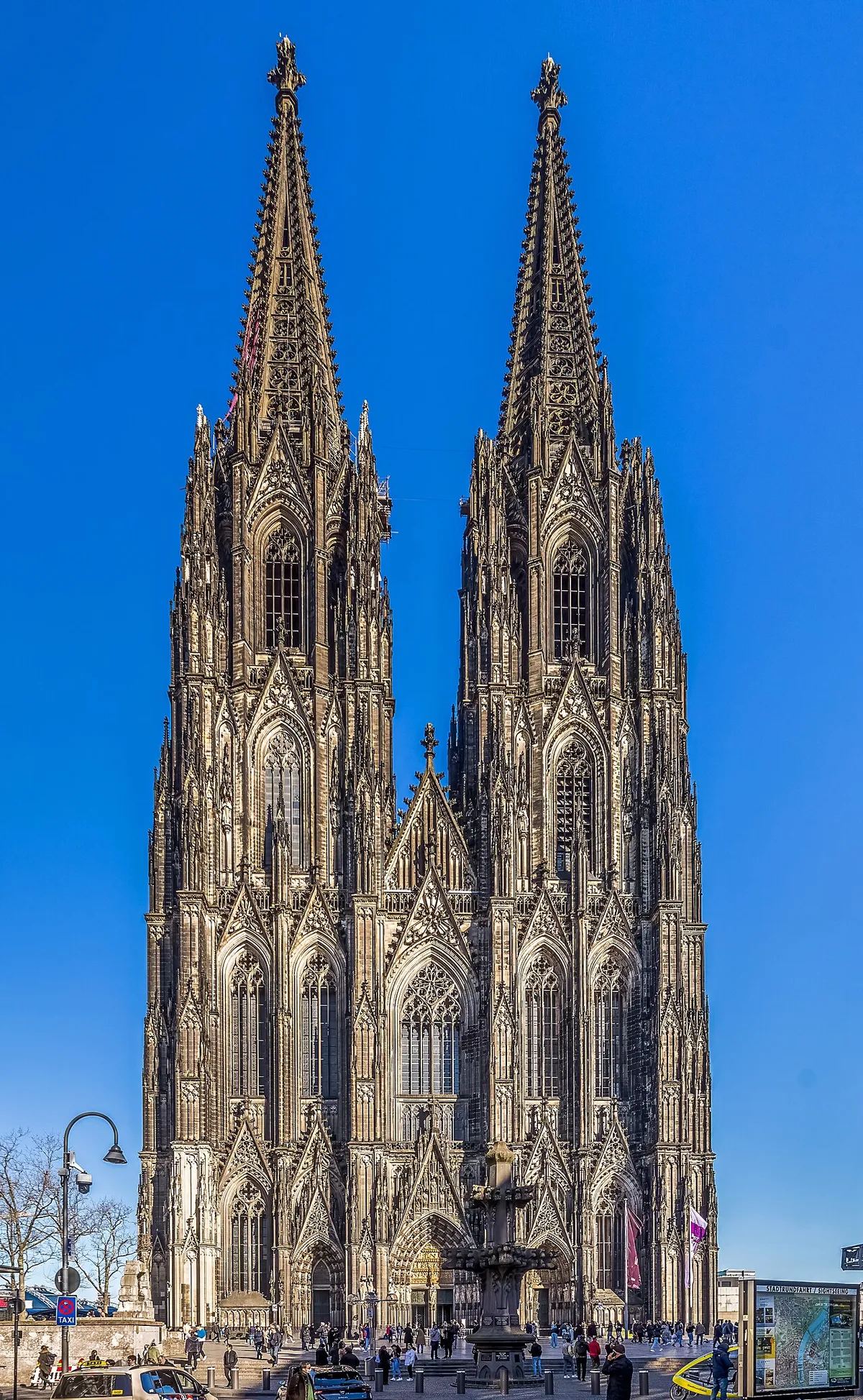
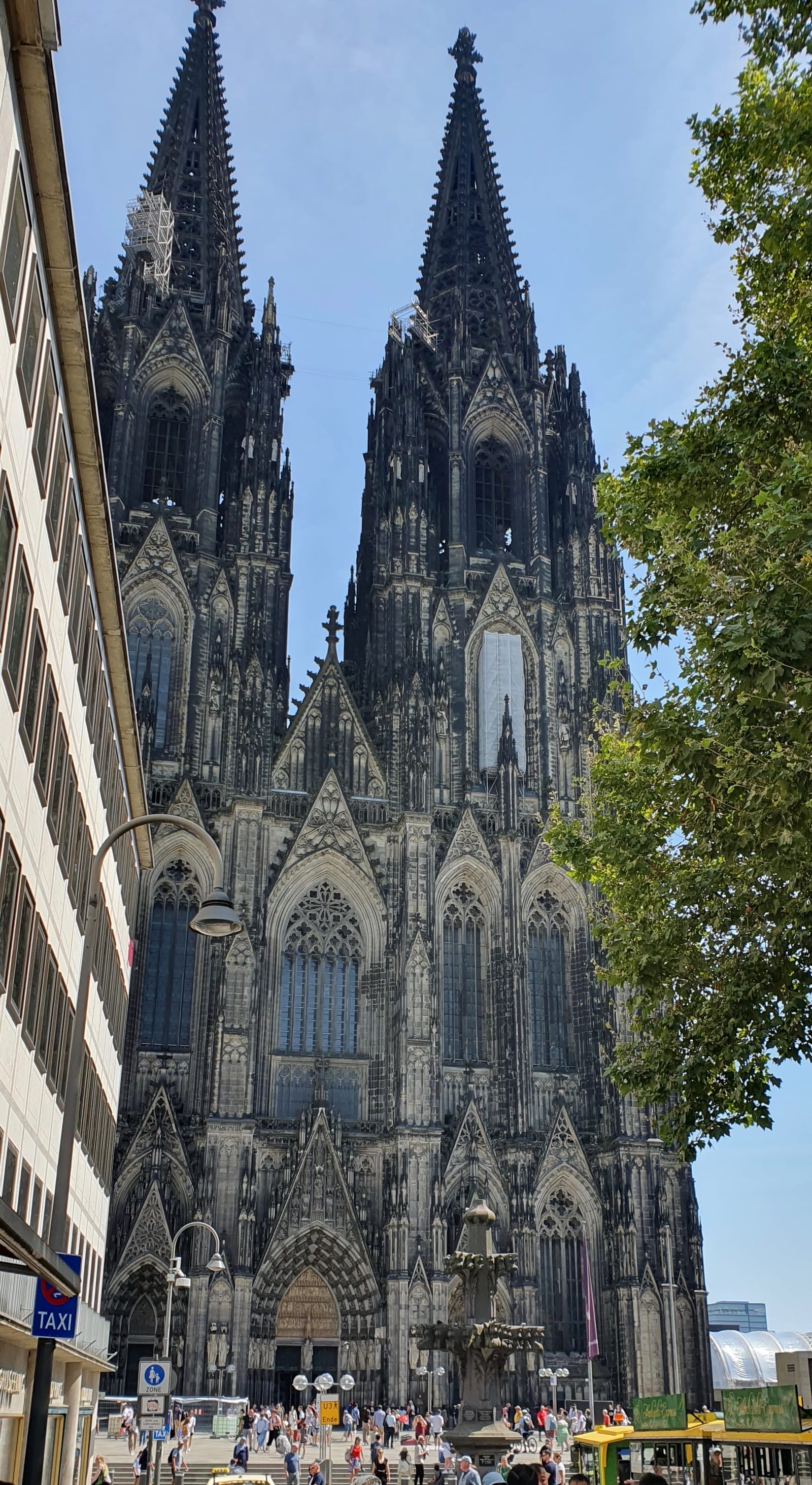
No building captures the ambition and the patience of medieval Germany like Cologne Cathedral. It was begun in 1248 to house one of the most prized relics in Christendom, the bones believed to be those of the Three Kings, brought to Cologne from Milan in 1164. Conceived on an enormous scale in the High Gothic style, its choir was consecrated in 1322. But the ambition outran the money, and in 1473 work simply stopped, leaving a medieval crane standing on the half-finished south tower for the next three hundred years.
The cathedral was finally completed in the nineteenth century, in a wave of Romantic nationalism, and it was completed faithfully. The original medieval plans for the west façade had survived, so the builders of the 1800s finished the church essentially as its medieval masons had intended. When the work was done in 1880, its 157-metre towers made it the tallest building in the world. During the Second World War, Allied bombing flattened central Cologne, yet the cathedral, struck by some fourteen bombs, remained standing amid the rubble, an image that became a symbol of survival. Today it is the most visited landmark in Germany, and a UNESCO World Heritage Site since 1996.
The thread that connects them
Four sites, more than two thousand years apart, and yet a single thread runs through them all. Each marks a moment when this land stood at the centre of something far larger than itself: the reach of Mediterranean trade into Iron Age Europe at the Heuneburg; the northern frontier of Rome at Trier; the rebirth of empire under Charlemagne at Aachen; the soaring confidence of the medieval Church at Cologne. Germany's deep past is not a quiet provincial story. It is the story of Europe itself, told in stone.
Planning a journey through ancient Germany
These sites are spread across the west and south of the country, and three of the four are UNESCO World Heritage Sites. Trier, Aachen, and Cologne lie within easy reach of one another in the Rhineland and can be visited on a single loop, while the Heuneburg, with its open-air museum and reconstructed mudbrick gate, sits further south above the Danube in Baden-Württemberg. Together they trace a route through Celtic Europe, Roman power, and the medieval empire, and they are only the beginning of what the German past has to offer.
Every site mentioned here has a full, evidence-based entry in the atlas, with an interactive map, key facts, excavation history, photographs, and academic sources. Use them to plan a trip, settle an argument, or simply fall down a very deep historical rabbit hole.
Germany
Cologne Cathedral
The masterpiece of German Gothic architecture and the most-visited landmark in Germany — a twin-spired cathedr
Germany
Aachen Cathedral
The oldest cathedral in northern Europe and Germany's first UNESCO World Heritage Site — built around 796–805
Germany
Trier
Roman colony founded c. 16 BCE, Trier preserves the largest ensemble of Roman architecture north of the Alps,
Germany
Heuneburg
A fortified early Celtic hilltop town above the upper Danube in southwestern Germany, often called the oldest


