
Skip to content
Atlas AnatoliaAtlas Anatolia
Reconstructed Sutton Hoo helmet with face mask, British Museum

Sutton Hoo

575 CE – 650 CE
75

Interest

Early MedievalAnglo-Saxon

Burial date

c. 625 CE

Ship

27-metre clinker-built vessel; only rivet pattern survives

Helmet

Iron face-mask helmet with gilded bronze; most iconic Anglo-Saxon object

Probable occupant

Raedwald of East Anglia (d. c. 625), most powerful English king of his era

Discovery

1939 by Basil Brown, on the eve of the Second World War

Treasures held

British Museum, London

Sutton Hoo demolished the idea that early medieval England was a barbaric interregnum between Roman civilization and the Normans.”

Overview

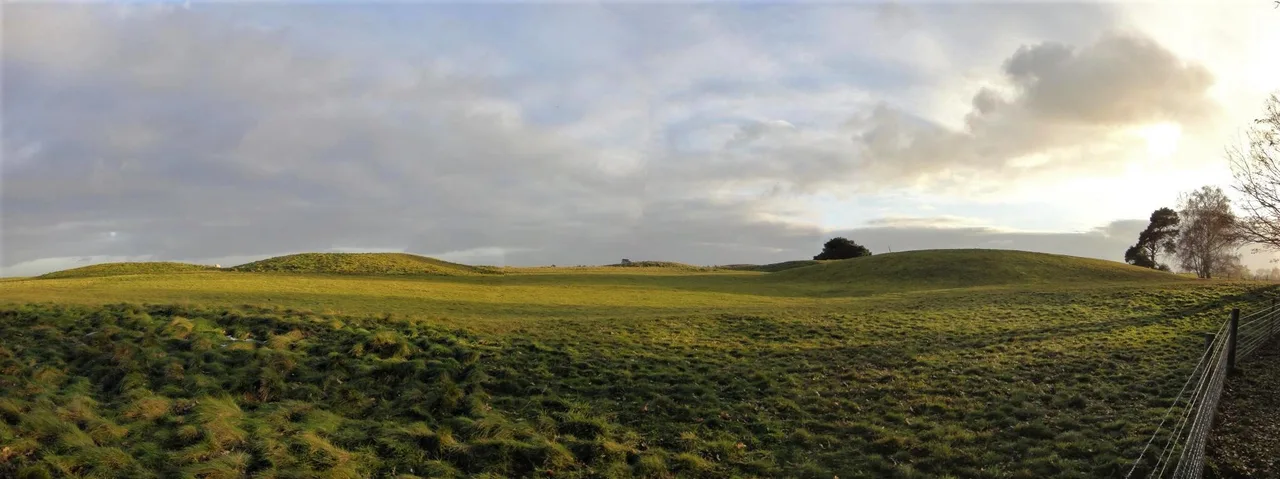
Sutton Hoo is a complex of burial mounds on a promontory above the River Deben in Suffolk, eastern England. In 1939 the landowner Edith Pretty commissioned excavation of the largest mound, and archaeologist Basil Brown uncovered the impression left by a 27-metre-long clinker-built ship that had been dragged inland and buried with a treasure chamber at its centre. The timbers had long since rotted, but the iron rivets marking their positions preserved the ghost of the entire vessel in the sand.

Within the burial chamber lay the richest assemblage of Anglo-Saxon treasure ever found: a distinctive iron helmet with a face mask of bronze decorated with gilded animals; a great gold belt buckle weighing 412 grams; shoulder clasps, purse lid, and sword fittings all in cloisonne goldwork with garnets from Sri Lanka; a ceremonial whetstone (sceptre); silver plate from Byzantium; and drinking horns and cauldrons for feasting. The extraordinary quality and the mixture of local craftsmanship with imports from Byzantium, Scandinavia, and the Near East reveal a ruler deeply enmeshed in the networks of early medieval Europe.

No body was found — dissolved by the acidic Suffolk sand — but the scale and contents of the burial strongly suggest a king, and the most persuasive candidate is Raedwald of East Anglia, who died around 625 CE and was described by Bede as the most powerful king in England. The connection to Beowulf — the Old English poem set in the same milieu of Scandinavian-influenced royal burial, ship funerals, and hall culture — has made Sutton Hoo one of the most discussed sites in medieval studies. The site is managed by the National Trust; the treasures are held by the British Museum.

Why It Matters

Sutton Hoo demolished the idea that early medieval England was a barbaric interregnum between Roman civilization and the Normans. The treasures show Anglo-Saxon kings operating in a sophisticated international world, commissioning goldsmiths of supreme skill, receiving Byzantine silverware as diplomatic gifts, and presiding over a hall culture that matches the world described in Beowulf almost exactly. The site also transformed the archaeology of early medieval Europe: it proved that ship burial — previously known mainly from Scandinavia — was practiced in England, confirmed the extraordinary level of Anglo-Saxon metalworking, and showed that the period 400-700 CE was not a dark age but an era of remarkable artistic and political achievement. The Sutton Hoo helmet has become the most recognisable symbol of Anglo-Saxon England.

Stay curious

New stories and sites, once a month. No spam.

Evidence & Interpretation

Distinguishing what is well-established from what remains debated.

Well-Established Facts

3
  • The iron rivets marking the hull of a 27-metre clinker-built ship were found intact in the sand; the ship type and construction are consistent with East Anglian vessels of the early 7th century CE.
  • The treasure assemblage includes Byzantine silver dated by hallmarks to the late 6th century, Swedish Vendel-period style parallels, and Sri Lankan garnets in the cloisonne goldwork — confirming long-distance exchange networks.
  • Coins in the purse — 37 Merovingian tremisses from different mints — provide a terminus post quem of c. 610-625 CE for the burial.

Scholarly Inferences

1
  • The identity of the buried individual is inferred from the royal scale of the deposit and Bede's description of Raedwald as the most powerful English king; no inscription names the occupant and no body survived.

More Photos

Museum Artifacts

Community Photos

Share your experience

Have you visited this site? Upload your photos to help others discover it.

Location

Sources

  • The Sutton Hoo Ship Burial (3 vols)Bruce-Mitford, Rupert (1975)
  • Sutton Hoo: A Seventh-Century Princely Burial Ground and Its ContextCarver, Martin (2005)

Research Papers

Frequently Asked Questions

Where is Sutton Hoo located?

Sutton Hoo is located in United Kingdom.

How old is Sutton Hoo?

Sutton Hoo dates to approximately 575 CE – 650 CE.

Which civilizations are associated with Sutton Hoo?

Sutton Hoo is associated with the Anglo-Saxon.

Why is Sutton Hoo important?

Sutton Hoo demolished the idea that early medieval England was a barbaric interregnum between Roman civilization and the Normans.

Is Sutton Hoo a UNESCO World Heritage Site?

Sutton Hoo is not currently inscribed on the UNESCO World Heritage List.