Skip to content
Atlas AnatoliaAtlas Anatolia
Façade and dome of St. Peter’s Basilica from St. Peter’s Square

Wikimedia Commons (CC BY-SA 4.0)

HeritageTempleUNESCOFeatured

St. Peter's Basilica

Basilica di San Pietro1506 CE – 1626 CE

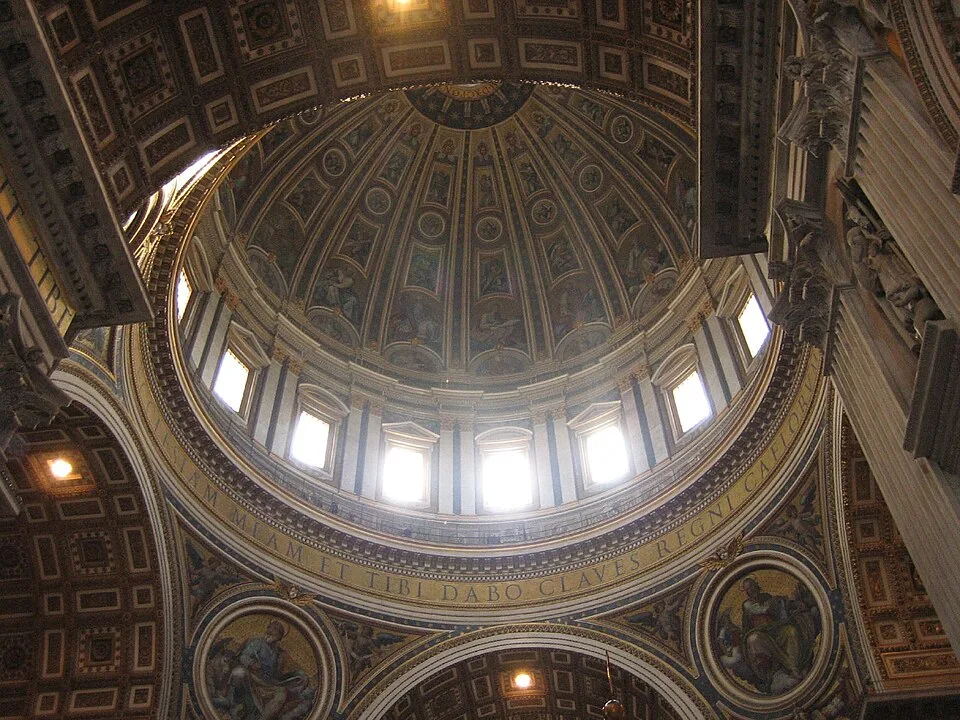
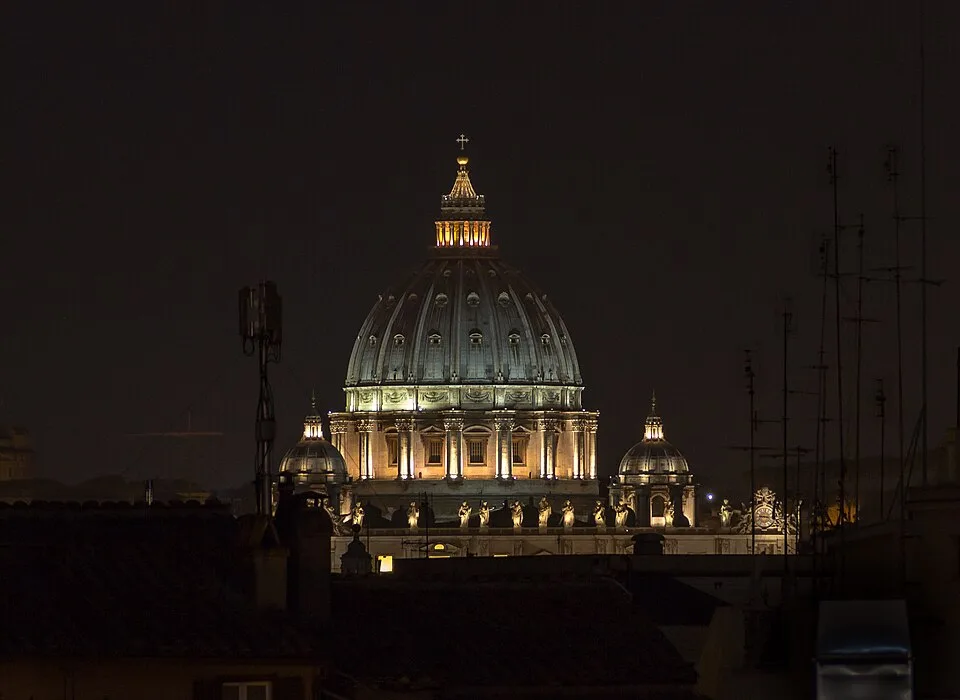
The vast Renaissance and Baroque papal church on Vatican Hill — Michelangelo’s dome, Bernini’s baldachin, and the liturgical stage of Christianity’s largest church — leads our multilingual Wikipedia pageview rankings among monuments still missing from the atlas.

21
Interest 90

Location

Vatican City

41.90°N · 12.45°E · Europe

Capacity

Over 60,000 worshippers

Dome

Michelangelo; height to lantern ~136 m

Consecrated

1626 under Urban VIII

UNESCO

Vatican City (1984)

St.”

Location

Overview

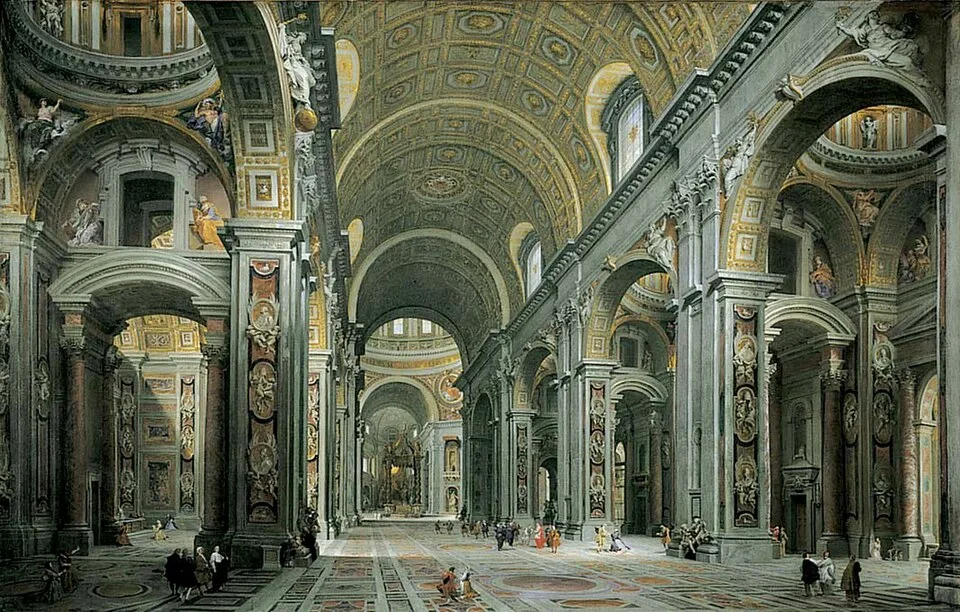
St. Peter's Basilica stands in Vatican City on the traditional burial site of the apostle Peter. Constantine’s 4th-century basilica was replaced from 1506 under Julius II; Bramante’s Greek-cross plan evolved through Michelangelo’s dome (completed 1590) and Carlo Maderno’s elongated nave and façade (1608–12). Gian Lorenzo Bernini later shaped the baldachin over the high altar and the embracing colonnades of St. Peter’s Square.

The interior combines papal tombs, mosaic altars, and Michelangelo’s Pietà near the entrance. Beneath the Confessio excavators have mapped the Constantinian and Nero-period necropolis that anchors the church’s origin story. UNESCO covers the basilica within “Vatican City” (1984). Pair with Hagia Sophia and Notre-Dame de Paris for contrasting imperial and Gothic Christian centres.

Why It Matters

St. Peter's is the architectural and ceremonial focus of the papacy and a reference work for Renaissance dome engineering and Baroque urban theatre. Its continuous rebuilding from Constantine through Bernini compresses 1,600 years of Christian monumental practice into one site.

Stay curious

New stories and sites, once a month. No spam.

Evidence & Interpretation

Distinguishing what is well-established from what remains debated.

Well-Established Facts

2
  • Building accounts, papal bulls, and signed contracts document successive architects from Bramante to Maderno and Bernini.
  • Excavations under the Confessio revealed a 1st–4th-century necropolis including the tropaion traditionally linked to Peter’s grave.

Scholarly Inferences

1
  • Maderno’s nave extension answered Counter-Reformation demands for processional space ahead of the papal altar.

More Photos

Museum Artifacts

Community Photos

Share your experience

Have you visited this site? Upload your photos to help others discover it.

How to cite this page

Atlas Anatolia. (1506). St. Peter's Basilica. Atlas Anatolia. https://atlasanatolia.com/site/saint-peters-basilica

Content licensed CC BY-SA 4.0 — attribution required when reusing.

Sources

  • The Architecture of the Italian RenaissanceFrommel, Christoph Luitpold (2007)
  • UNESCO — Vatican CityLink

Research Papers

Frequently Asked Questions

Where is St. Peter's Basilica located?

St. Peter's Basilica is located in Vatican City.

How old is St. Peter's Basilica?

St. Peter's Basilica dates to approximately 1506 CE – 1626 CE.

Which civilizations are associated with St. Peter's Basilica?

St. Peter's Basilica is associated with the Renaissance Italian, Papal.

Why is St. Peter's Basilica important?

St.

Is St. Peter's Basilica a UNESCO World Heritage Site?

Yes — St. Peter's Basilica is inscribed as a UNESCO World Heritage Site.