Skip to content
Atlas AnatoliaAtlas Anatolia
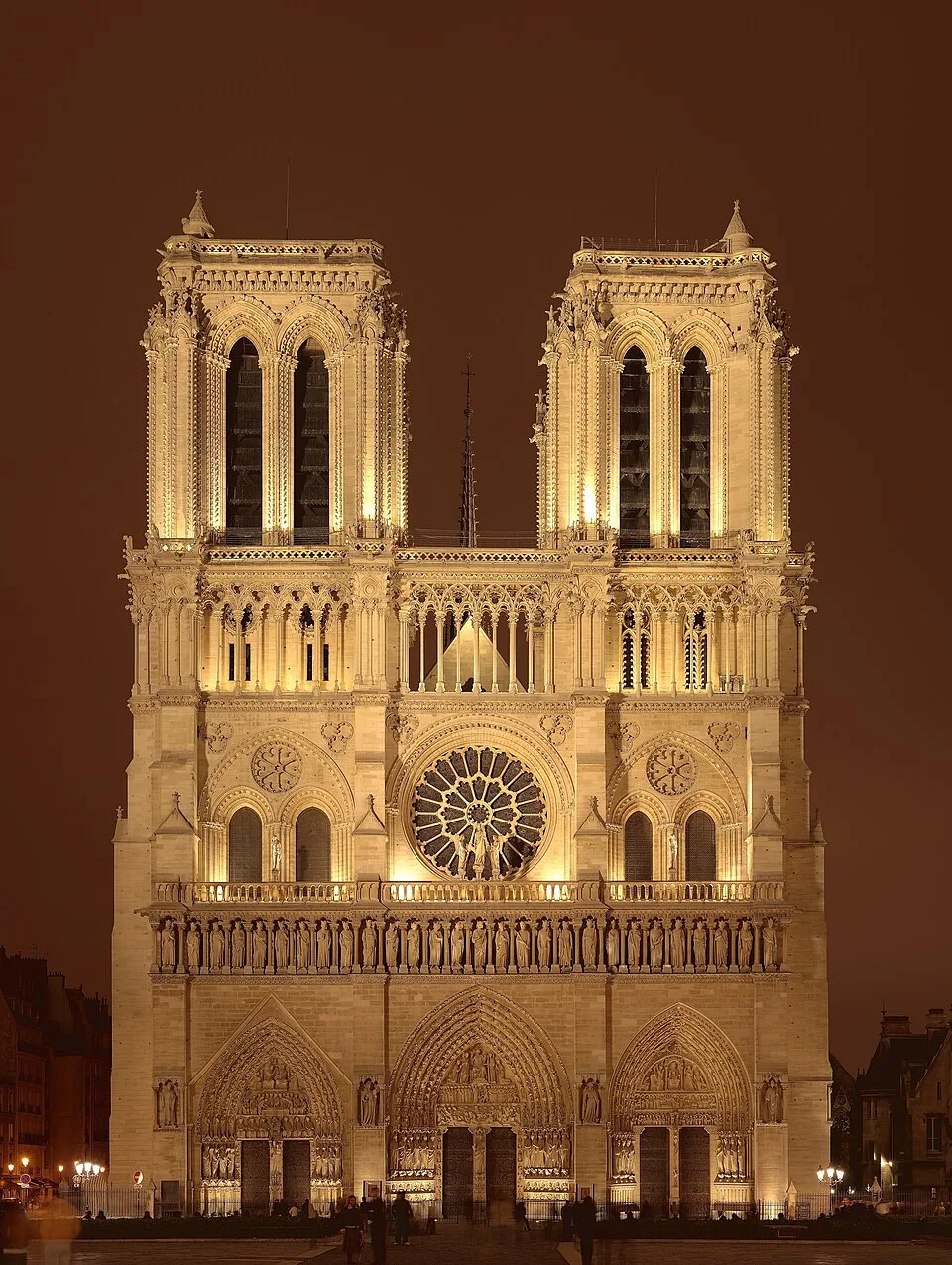
The west façade of Notre-Dame de Paris before the 2019 fire

Wikimedia Commons (CC BY-SA 4.0)

Country Record

Longest Recorded History in France

HeritageMonumentUNESCOFeatured

Notre-Dame de Paris

Cathédrale Notre-Dame de Paris1163 CE – 1345 CE

The Gothic cathedral on the Île de la Cité — flying buttresses, rose windows, and gargoyles above the Seine — whose 2019 fire shocked the world and whose rebuilding keeps it among the most searched churches in English, Turkish, and Chinese Wikipedia.

3
Interest 94

Location

France

48.85°N · 2.35°E · Europe

Begun

c. 1163 under Bishop Maurice de Sully

Fire

15 April 2019 — oak frame and spire lost; vaults survived

Rose windows

North (c. 1250) and south (c. 1260) — largely intact

UNESCO

Paris, Banks of the Seine (1991)

Notre-Dame is the reference point for French Gothic architecture and for how a medieval church becomes a secular symbol of national identity.”

Location

Overview

Notre-Dame de Paris stands on the eastern end of the Île de la Cité in the heart of Paris. Bishop Maurice de Sully began the present cathedral around 1163; the choir was consecrated in 1182 and the nave completed by the mid-13th century. Early Gothic innovations — rib vaults, pointed arches, flying buttresses — allowed taller walls pierced by enormous windows including north and south rose windows (13th century).

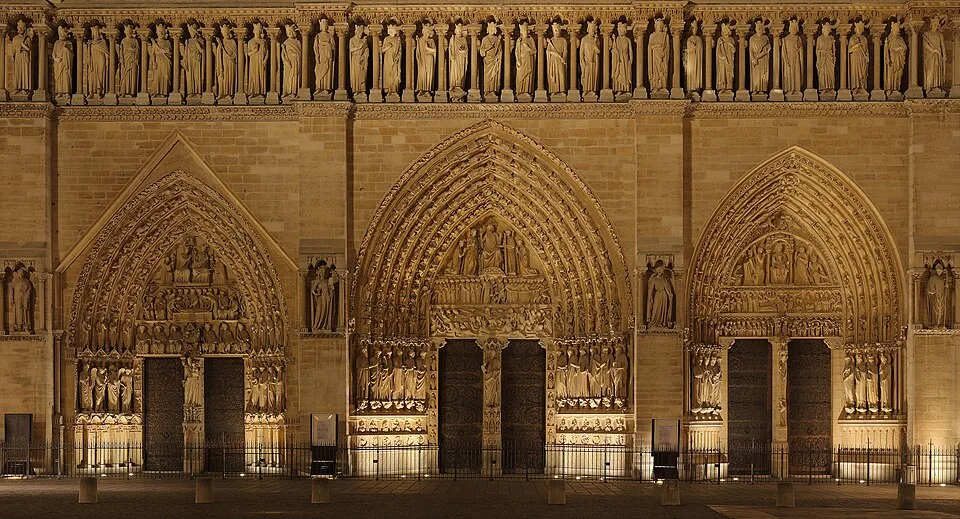
The west façade's twin towers and Gallery of Kings became symbols of Paris. Victor Hugo's 1831 novel revived public affection when the building faced demolition; Eugène Viollet-le-Duc's 19th-century restoration added the spire later lost in the fire of 15 April 2019. Flames destroyed the oak frame (the "forest") and collapsed the spire; stone vaults largely held. A international restoration aims to reopen the cathedral for worship and tourism.

The crypt preserves Gallo-Roman and medieval archaeological layers beneath the square. UNESCO lists Notre-Dame as part of the Banks of the Seine (1991). Pair with Chartres Cathedral and Mont-Saint-Michel on a French Gothic itinerary.

Why It Matters

Notre-Dame is the reference point for French Gothic architecture and for how a medieval church becomes a secular symbol of national identity. The 2019 fire and rebuild made it a live case study in heritage conservation, oak framing, and global crowdfunding at cathedral scale.

Stay curious

New stories and sites, once a month. No spam.

Evidence & Interpretation

Distinguishing what is well-established from what remains debated.

Well-Established Facts

3
  • Bishopric charters and stylistic analysis date construction phases 1163–1345.
  • 2019–present structural surveys document fire damage and vault stability.
  • Crypt excavations reveal Lutetia Roman structures and early Christian layers.

More Photos

Museum Artifacts

Community Photos

Share your experience

Have you visited this site? Upload your photos to help others discover it.

How to cite this page

Atlas Anatolia. (1163). Notre-Dame de Paris. Atlas Anatolia. https://atlasanatolia.com/site/notre-dame-paris

Content licensed CC BY-SA 4.0 — attribution required when reusing.

Sources

  • Notre-Dame, Cathedral of AmiensMurray, Stephen (1996)
  • UNESCO — Paris, Banks of the SeineLink

Research Papers

Frequently Asked Questions

Where is Notre-Dame de Paris located?

Notre-Dame de Paris is located in France.

How old is Notre-Dame de Paris?

Notre-Dame de Paris dates to approximately 1163 CE – 1345 CE.

Which civilizations are associated with Notre-Dame de Paris?

Notre-Dame de Paris is associated with the Medieval French.

Why is Notre-Dame de Paris important?

Notre-Dame is the reference point for French Gothic architecture and for how a medieval church becomes a secular symbol of national identity.

Is Notre-Dame de Paris a UNESCO World Heritage Site?

Yes — Notre-Dame de Paris is inscribed as a UNESCO World Heritage Site.