
Skip to content
Atlas AnatoliaAtlas Anatolia
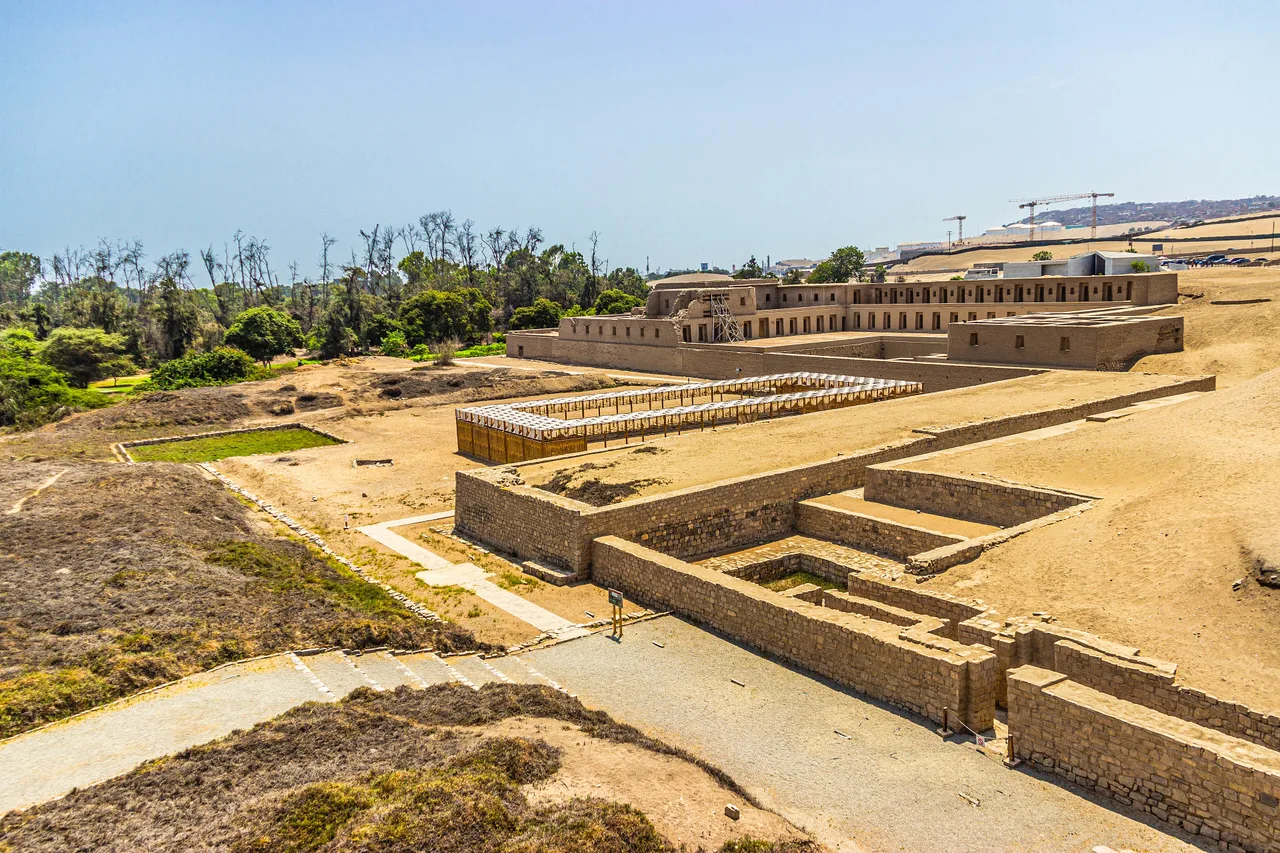
Stepped adobe pyramid-temples of the ancient pilgrimage city of Pachacamac on the Peruvian coast

Pachacamac

200 CE – 1533 CE
56

Interest

Late AntiqueEarly MedievalMedievalHigh Medieval+1IncaIchma

Deity

Pacha Kamaq — creator god associated with earthquakes and life

Span

c. 200–1533 CE — occupied by Lima, Wari, Ychsma, and Inca cultures in succession

Inca incorporation

Conquered c. 1470s; Inca built a Temple of the Sun and Acllahuasi rather than suppressing the cult

Pizarro expedition

Hernando Pizarro sent specifically to Pachacamac in 1533, drawn by reports of its wealth

Archaeology

Max Uhle's 1896 excavations helped found scientific Andean archaeology

Pachacamac is one of the clearest examples anywhere in the ancient world of a religious institution outlasting and even shaping the political powers that controlled it.”

Overview

Pachacamac lies on the Pacific coast roughly 40 kilometres south of modern Lima, at the mouth of the Lurín Valley. It takes its name from Pacha Kamaq, a creator deity worshipped across the central Andean coast believed to control earthquakes and be responsible for the creation and continuation of life. For more than 1,300 years, from roughly 200 CE until the Spanish conquest in the 1530s, Pachacamac functioned as one of the most important religious and pilgrimage centres in the Andean world, drawing worshippers and offerings from across a vast region regardless of which political power controlled the coast at any given time.

The earliest major construction phase is attributed to the Lima culture (c. 200–600 CE), who built the Old Temple (Templo Viejo), a stepped adobe pyramid that remains the oldest identified structure at the site. During the Middle Horizon (c. 600–1000 CE), the expanding Wari state incorporated Pachacamac into its network of religious and administrative centres, and the site's oracle cult appears to have grown significantly in prestige and reach during this period. Following the Wari's decline, the local Ychsma (or Ichma) culture rose to prominence in the Lurín and Rímac valleys from roughly 1000–1470 CE, and it was under Ychsma patronage that Pachacamac reached its greatest architectural extent, with numerous stepped pyramid-temples constructed by different lineage groups or communities who each maintained their own shrine within the wider sacred complex.

When the Inca Empire conquered the central coast in the 1470s under Topa Inca Yupanqui, they made a striking political and religious choice: rather than suppressing the powerful and already-ancient Pachacamac oracle, they formally incorporated it into the state religion, elevating it to one of the most important shrines in the empire, second in prestige perhaps only to the Coricancha in Cusco. The Inca built their own major structures at the site, including a Temple of the Sun on a hilltop overlooking the ocean and an Acllahuasi ("House of the Chosen Women") to house women dedicated to state and religious service. The Inca oracle at Pachacamac was consulted on matters of state importance, and pilgrims travelled from across the empire to seek its counsel or leave offerings.

When Francisco Pizarro's expedition reached Peru in 1533, Hernando Pizarro was dispatched specifically to Pachacamac, drawn by reports of its fabulous wealth; he found the temple's idol housed in a dark inner sanctum but was reportedly disappointed to find much of its treasure already removed. The site was gradually abandoned as a religious centre following the conquest but was never fully forgotten, and has been the subject of major archaeological investigation since the early 20th century, including pioneering excavations by German archaeologist Max Uhle in 1896, which helped establish the basic chronological framework for coastal Peruvian archaeology still used today.

Why It Matters

Pachacamac is one of the clearest examples anywhere in the ancient world of a religious institution outlasting and even shaping the political powers that controlled it. Across four distinct political regimes spanning 1,300 years — Lima, Wari, Ychsma, and finally Inca — each successive power chose to build onto and legitimise itself through Pachacamac's existing sacred authority rather than replace it, a pattern of religious continuity remarkably rare in the archaeological record of conquest societies. The Inca decision to formally adopt a conquered people's oracle cult, rather than impose the state sun-god Inti exclusively, reveals a pragmatic and often underappreciated dimension of Inca imperial strategy: legitimacy through incorporation rather than pure replacement. This strategy of religious syncretism at Pachacamac offers historians a detailed case study in how the Inca actually managed their vast, culturally diverse empire in practice. Max Uhle's 1896 excavations at Pachacamac were foundational to the development of Andean archaeology as a scientific discipline, establishing stratigraphic excavation methods and a relative chronology for coastal Peruvian cultures that, though refined since, still underpins the field's basic framework today.

Stay curious

New stories and sites, once a month. No spam.

Evidence & Interpretation

Distinguishing what is well-established from what remains debated.

Well-Established Facts

3
  • Stratigraphic excavation and ceramic seriation, beginning with Max Uhle's 1896 work, established four successive occupation phases at Pachacamac: Lima, Wari, Ychsma, and Inca.
  • Spanish colonial chronicles, including accounts by Hernando Pizarro and Pedro Cieza de León, directly document the Inca-era oracle cult and the 1533 Spanish expedition to the site.
  • Architectural and stylistic analysis confirms the Temple of the Sun and Acllahuasi were built in characteristic Inca imperial style, distinct from and later than the surrounding Ychsma-period pyramid-temples.

Scholarly Inferences

1
  • The continuity of Pachacamac's religious importance across four different ruling cultures is inferred from continued monumental construction and offerings at the site through each political transition, rather than from a single continuous documentary record.

Discovery & Excavation

1896

Max Uhle excavations

Pioneering stratigraphic excavation establishing the site's multi-period chronology and founding modern Andean archaeological method.

1938–1941

Julio C. Tello and Peruvian state excavations

Extensive excavation and site mapping by Peru's leading indigenous archaeologist, expanding understanding of the Ychsma-period pyramid-temples.

1999

Ychsma Project

Ongoing Belgian-Peruvian archaeological project (led by Peter Eeckhout) focused on the pyramid-with-ramp structures and Ychsma-period urbanism.

More Photos

Museum Artifacts

Community Photos

Share your experience

Have you visited this site? Upload your photos to help others discover it.

Location

Sources

  • Pachacamac: Report of the William Pepper, M.D., LL.D., Peruvian Expedition of 1896Uhle, Max (1903)
  • The Palaces of the Lords of Ychsma: An Archaeological Reappraisal of the Function of Pyramids with Ramps at PachacamacEeckhout, Peter (1999)
  • Pachacamac Archaeology: Retrospect and ProspectShimada, Izumi (ed.) (1991)

Research Papers

Frequently Asked Questions

Where is Pachacamac located?

Pachacamac is located in Lima, Peru.

How old is Pachacamac?

Pachacamac dates to approximately 200 CE – 1533 CE.

Which civilizations are associated with Pachacamac?

Pachacamac is associated with the Inca, Ichma.

Why is Pachacamac important?

Pachacamac is one of the clearest examples anywhere in the ancient world of a religious institution outlasting and even shaping the political powers that controlled it.

Is Pachacamac a UNESCO World Heritage Site?

Pachacamac is not currently inscribed on the UNESCO World Heritage List.