
Skip to content
Atlas AnatoliaAtlas Anatolia
White main keep of Osaka Castle above stone ramparts and spring foliage

Wikimedia Commons (CC BY-SA 3.0)

HeritageFortressFeatured

Osaka Castle

大阪城1583 CE – 1868 CE

Toyotomi Hideyoshi’s fortress reconstituted as a Tokugawa stronghold — white keep, gold roof ornaments, and stone ramparts above Osaka’s business core — is Japan’s most searched castle after Himeji in our multilingual audit.

21
Interest 80

Location

Japan

34.69°N · 135.53°E · Asia

Founded

1583 by Toyotomi Hideyoshi

Siege

Summer Siege of Osaka, 1615

Present keep

1931 ferroconcrete rebuild; renovated 1997

Surviving fabric

Stone walls, moats, baileys

Osaka Castle concentrates Toyotomi–Tokugawa transition politics in Japan’s commercial capital and remains a primary pilgrimage site for Azuchi–Momoyama history.”

Location

Overview

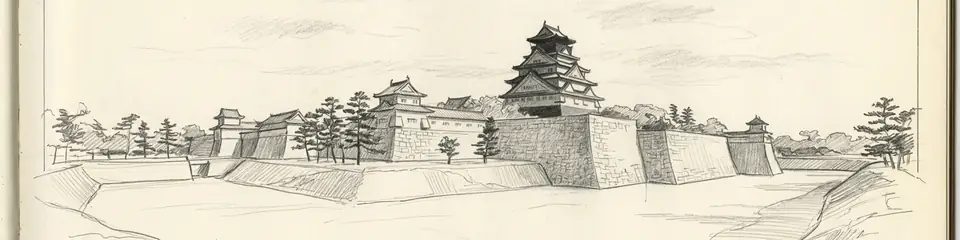
Osaka Castle was founded by Toyotomi Hideyoshi in 1583 on the site of the Ishiyama Hongan-ji temple-fortress. Its colossal ashlar walls and multi-storey keep projected the unification wars’ climax. After the Summer Siege of 1615 the Tokugawa rebuilt and garrisoned the castle; fires and the 1868 Boshin War damaged successive keeps. The present ferroconcrete main keep (1931), renovated in 1997, is a historicist reconstruction housing a museum inside surviving stone walls and moats.

The Nishinomaru garden, outer baileys, and inscribed megaliths (including stones from Hideyoshi’s vassals) retain Edo-period spatial order. Pair with Himeji Castle for authentic wooden keep architecture versus Osaka’s urban memorial reconstruction.

Why It Matters

Osaka Castle concentrates Toyotomi–Tokugawa transition politics in Japan’s commercial capital and remains a primary pilgrimage site for Azuchi–Momoyama history. Its stone walls still display named contribution blocks that map late-16th-century warlord networks.

Stay curious

New stories and sites, once a month. No spam.

Evidence & Interpretation

Distinguishing what is well-established from what remains debated.

Well-Established Facts

2
  • Chronicle accounts of Hideyoshi’s construction and Tokugawa siege maps document the castle’s late-16th and early-17th-century phases.
  • Inscribed ashlar blocks name daimyo contributors to the stone curtains.

Scholarly Inferences

1
  • The 1931 keep’s historicist design deliberately revived Toyotomi imagery for modern Osaka civic pride.

More Photos

Museum Artifacts

Community Photos

Share your experience

Have you visited this site? Upload your photos to help others discover it.

How to cite this page

Atlas Anatolia. (1583). Osaka Castle. Atlas Anatolia. https://atlasanatolia.com/site/osaka-castle

Content licensed CC BY-SA 4.0 — attribution required when reusing.

Sources

  • Osaka 1615: The Last Battle of the SamuraiTurnbull, Stephen (2006)
  • Architecture and Authority in JapanCoaldrake, William H. (1996)

Research Papers

Frequently Asked Questions

Where is Osaka Castle located?

Osaka Castle is located in Japan.

How old is Osaka Castle?

Osaka Castle dates to approximately 1583 CE – 1868 CE.

Which civilizations are associated with Osaka Castle?

Osaka Castle is associated with the Tokugawa, Toyotomi.

Why is Osaka Castle important?

Osaka Castle concentrates Toyotomi–Tokugawa transition politics in Japan’s commercial capital and remains a primary pilgrimage site for Azuchi–Momoyama history.

Is Osaka Castle a UNESCO World Heritage Site?

Osaka Castle is not currently inscribed on the UNESCO World Heritage List.