
Overview
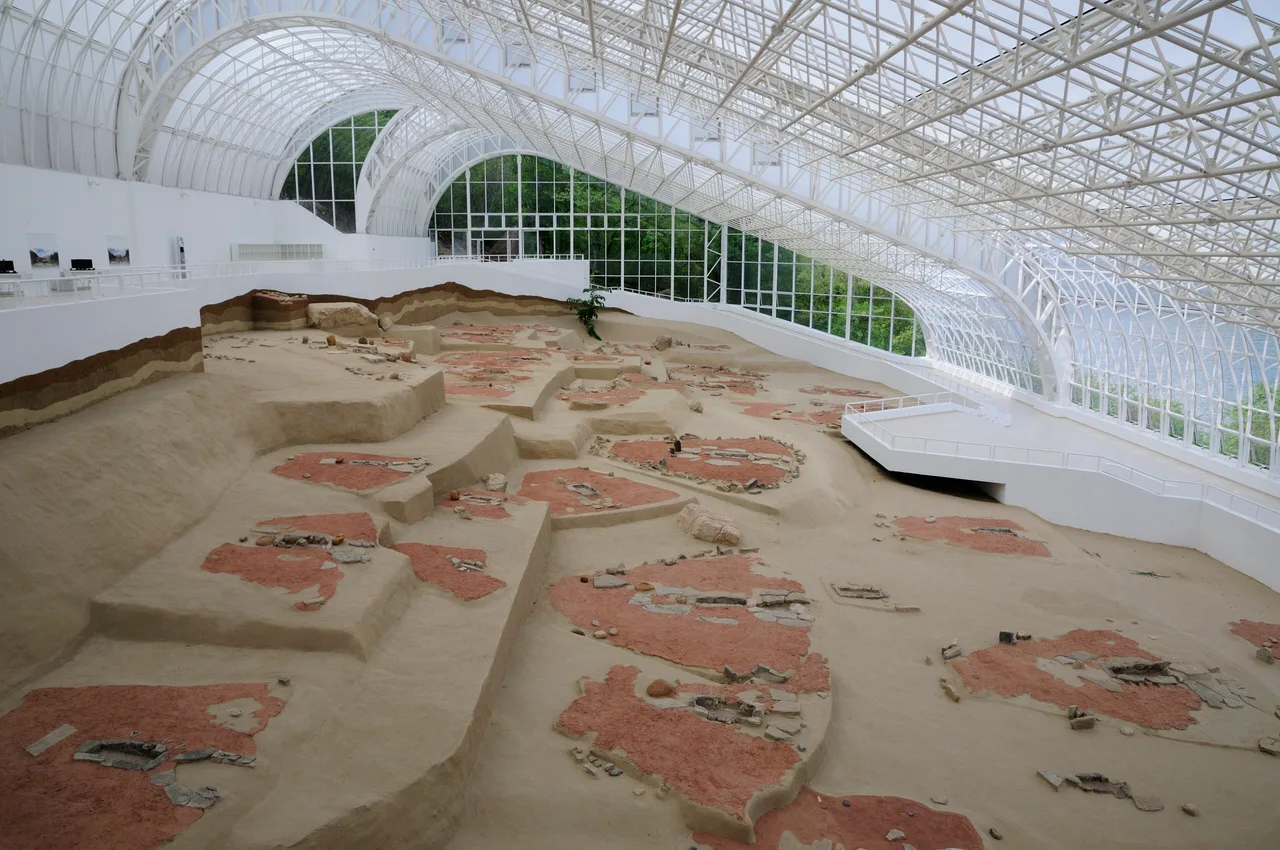
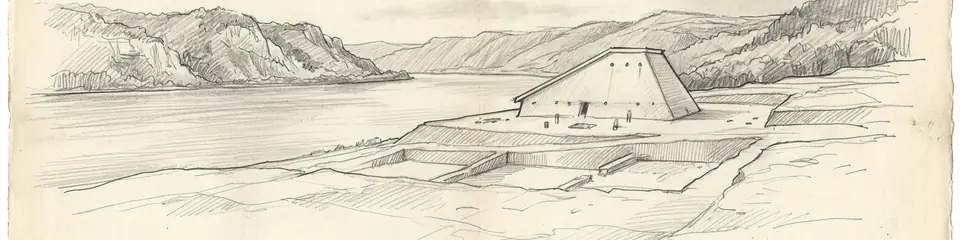
Lepenski Vir occupies a natural terrace on the right bank of the Danube in the dramatic Iron Gates gorge at the border of modern Serbia and Romania. It was discovered in 1965 during surveys for a hydroelectric dam and excavated by Dragoslav Srejovic before the site was submerged. The excavated remains were removed to higher ground and are displayed at a museum above the original location.
The settlement was occupied from approximately 7000 to 5500 BCE by hunter-gatherer-fisher communities who lived in a very unusual way for Mesolithic Europe: instead of mobile encampments, they built a precisely planned village of trapezoid-shaped limestone houses arranged in a fan pattern around a central plaza, all oriented toward a distinctive whirlpool in the Danube and a striking mountain peak opposite. Each house had a carefully prepared limestone floor, a central hearth of red limestone slabs, and was built to precise geometric specifications — astonishing evidence of planning and permanence among hunter-gatherers.
The most extraordinary feature of Lepenski Vir is its sculpture. Sixty-nine boulders of Danube sandstone were carved into fish-human hybrid figures — wide-mouthed faces with bulging fish-eyes, combining human features with the appearance of the giant beluga sturgeon that spawned in the Danube gorge. These sculptures, the oldest monumental art in Europe, were found placed in precise positions within the houses, typically at the base of the hearths. Their meaning is unknown, but they appear to combine veneration of the Danube river and its fish with ancestral or spiritual imagery.
Lepenski Vir challenges the assumption that complex art, permanent settlements, and monumental architecture required agriculture: this was a society that built like farmers but lived as hunter-fishers.