Overview
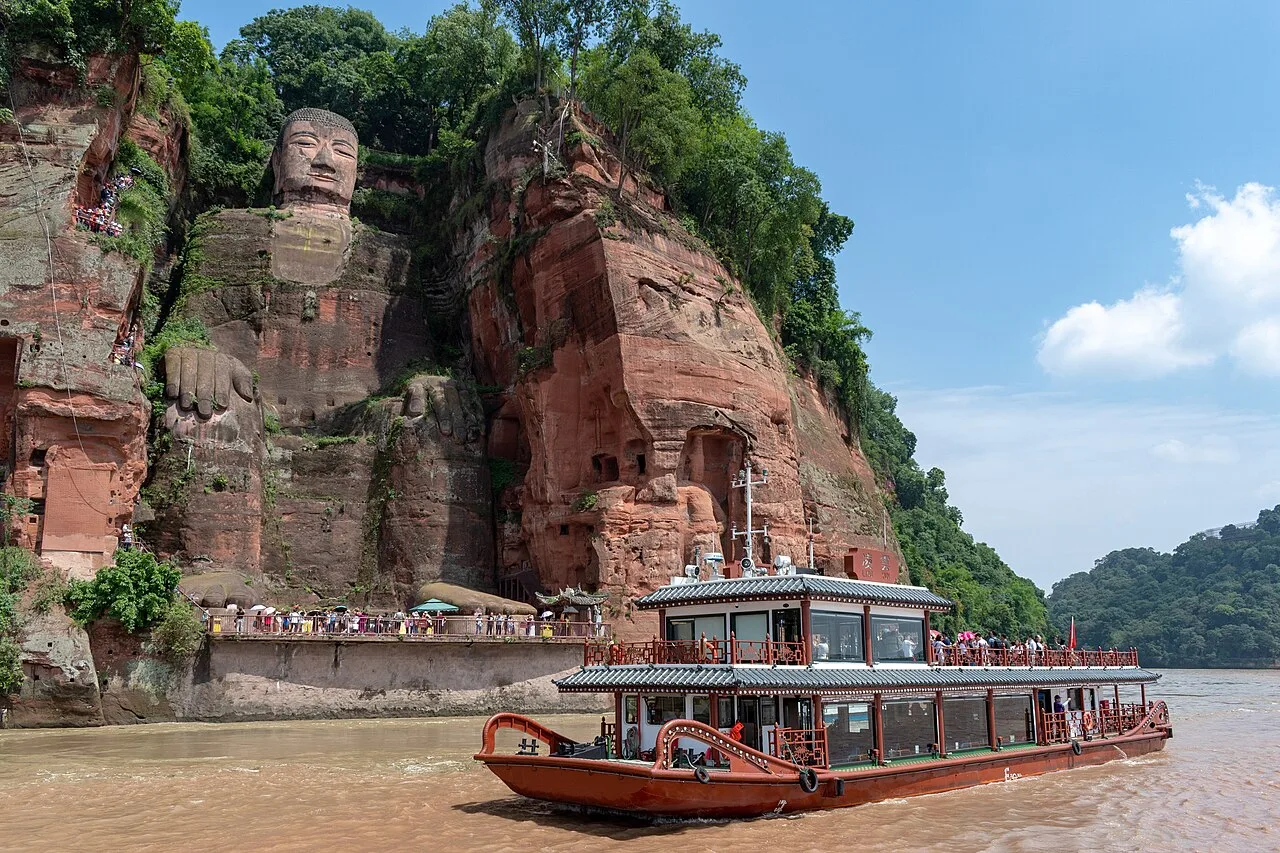
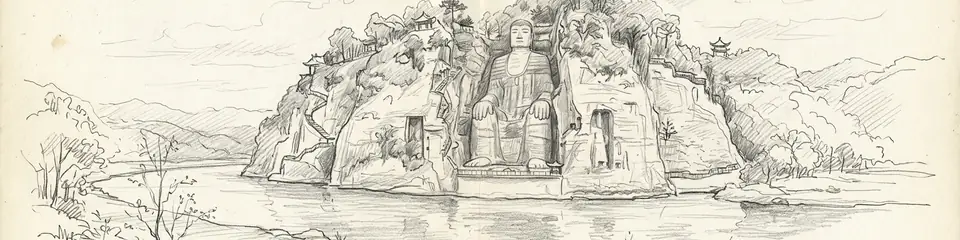
The Leshan Giant Buddha is carved into the face of Lingyun Hill, where the Min, Dadu, and Qingyi rivers converge near the city of Leshan in Sichuan province, southwestern China. The figure depicts Maitreya, the Buddha of the future, seated with hands resting on his knees and gazing across the water toward the sacred mountain of Emei. At 71 metres tall it is by a wide margin the largest stone Buddha statue carved before the modern era: its shoulders are about 28 metres wide, each ear is 7 metres long, and its toenails alone are large enough for a person to sit on.
The project was begun in 713 CE during the Tang dynasty, initiated by a Chinese monk named Haitong. The waters at the confluence below were notoriously turbulent and dangerous, wrecking boats and drowning travellers, and Haitong is said to have believed that carving a colossal Buddha overlooking the rivers would calm the spirits responsible and protect those on the water. According to tradition, when local officials threatened to seize the funds he had gathered for the work, Haitong gouged out his own eyes to demonstrate his sincerity and devotion. He did not live to see the statue finished; work stalled after his death and was completed only around 803 CE, some ninety years after it began, under the patronage of a regional military governor.
The Buddha is an extraordinary feat of both sculpture and engineering. Concealed within the figure is a sophisticated drainage system — channels and gutters cut into the head, behind the ears, and in the folds of the robe and chest — that carries rainwater away and reduces erosion of the soft sandstone, a key reason the statue has endured. The vast quantity of stone removed during carving was tipped into the river below, and this material, together with the calming visual presence intended by Haitong, did in practice alter the currents and make the waters safer for navigation.
For centuries the Buddha was sheltered by a multi-storeyed wooden pavilion built against the cliff, but this structure was destroyed, and the figure has stood exposed to the elements ever since. It has required repeated conservation against weathering, pollution, and biological growth. The Leshan Giant Buddha, together with the nearby Mount Emei, was inscribed as a UNESCO World Heritage Site in 1996.