
Skip to content
Atlas AnatoliaAtlas Anatolia
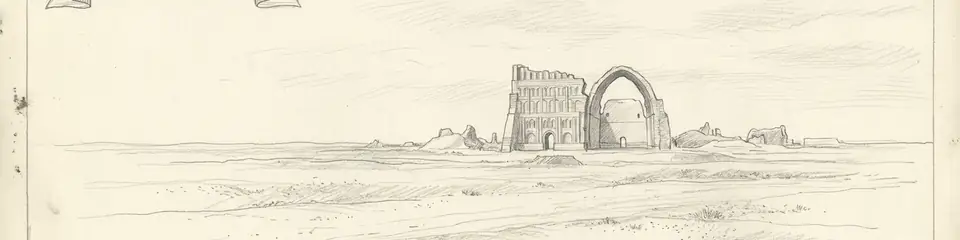
The brick vault of Taq Kasra, the great ayvān of Ctesiphon, Iraq

Wikimedia Commons (CC BY-SA 4.0)

Country Record

Known by the Most Names in Iraq

CityFeatured

Ctesiphon

قطيسفون129 BCE – 637 CE

The Parthian and Sasanian capital on the Tigris south of Baghdad — celebrated for the colossal brick vault of Taq Kasra — is among the most searched late-antique archaeological sites and the administrative twin of Seleucia on the opposite bank.

21
Interest 64

Location

Iraq

33.09°N · 44.58°E · Asia

Capitals

Parthian winter seat; Sasanian imperial capital

Taq Kasra

~30 m high brick vault (ayvān)

Fall

Taken by Arab armies, 637 CE

Location

East bank of Tigris, ~35 km SE of Baghdad

Ctesiphon was the primary capital of the last pre-Islamic Iranian empire and the eastern pole opposite Constantinople in late antique geopolitics.”

Location

Overview

Ctesiphon developed on the east bank of the Tigris opposite Hellenistic Seleucia, consolidating into the twin cities later called al-Mada’in. Parthian kings wintered here; Sasanian shahanshahs made it the ceremonial and administrative heart of Erānshahr from Ardashir I through Khosrow II. Arab armies captured the city in 637 CE after the Battle of al-Qādisiyyah; much of the palace quarter decayed as Baghdad rose.

What remains most dramatically visible is Taq Kasra (the Arch of Khosrow / ayvān of al-Madāʾin): a free-standing baked-brick vault roughly 30 metres high spanning about 25 metres — one of the largest unreinforced brick arches ever built. Excavations and early travellers documented palace complexes, residential mounds, and canalised floodplains; modern damage, flood, and conflict have thinned standing fabric beyond the arch.

The site anchors debates on Sasanian court culture, silk-road diplomacy with Byzantium, and the transfer of imperial capitalship from Mesopotamian to Islamic Iraq. Pair with Hatra and Persepolis for complementary Iranian imperial landscapes, and with Palmyra for late antique caravan politics.

Why It Matters

Ctesiphon was the primary capital of the last pre-Islamic Iranian empire and the eastern pole opposite Constantinople in late antique geopolitics. Taq Kasra remains the clearest standing monument of Sasanian brick technology and royal architecture.

Stay curious

New stories and sites, once a month. No spam.

Evidence & Interpretation

Distinguishing what is well-established from what remains debated.

Well-Established Facts

2
  • Classical, Syriac, and early Islamic sources identify Ctesiphon as the Sasanian capital opposite Seleucia.
  • Structural surveys of Taq Kasra document brick bonding and span unique among surviving Sasanian vaults.

Debated Interpretations

1
  • Exact royal builders and phases of the standing vault (Shapur I vs later Khosrows) are still argued from sparse building inscriptions.

More Photos

Museum Artifacts

Community Photos

Share your experience

Have you visited this site? Upload your photos to help others discover it.

How to cite this page

Atlas Anatolia. (129). Ctesiphon. Atlas Anatolia. https://atlasanatolia.com/site/ctesiphon

Content licensed CC BY-SA 4.0 — attribution required when reusing.

Sources

  • CtesiphonKeall, Edward J. (1975)
  • Sasanian Persia: The Rise and Fall of an EmpireDaryaee, Touraj (2009)

Research Papers

Frequently Asked Questions

Where is Ctesiphon located?

Ctesiphon is located in Iraq.

How old is Ctesiphon?

Ctesiphon dates to approximately 129 BCE – 637 CE.

Which civilizations are associated with Ctesiphon?

Ctesiphon is associated with the Parthian, Sasanian.

Why is Ctesiphon important?

Ctesiphon was the primary capital of the last pre-Islamic Iranian empire and the eastern pole opposite Constantinople in late antique geopolitics.

Is Ctesiphon a UNESCO World Heritage Site?

Ctesiphon is not currently inscribed on the UNESCO World Heritage List.