Overview
Anuradhapura lies in the dry northern plain of Sri Lanka. According to the island's chronicles, it was established as the royal capital by King Pandukabhaya in the 4th century BCE, and it remained the political and religious heart of the island for some 1,300 years, until the capital was moved to Polonnaruwa in the early 11th century CE after invasions from southern India. At its height it was one of the largest and most sophisticated urban centres in the ancient world, with a population in the tens of thousands sustained by an extraordinary network of reservoirs and canals.
The city's history is inseparable from the arrival of Buddhism in Sri Lanka. In the 3rd century BCE, during the reign of King Devanampiya Tissa, the missionary Mahinda — son of the Indian Mauryan emperor Ashoka — is said to have converted the king and introduced Theravada Buddhism to the island. Shortly afterward, a cutting from the sacred Bodhi tree at Bodh Gaya in India — the tree under which the Buddha attained enlightenment — was brought to Anuradhapura and planted. This tree, the Jaya Sri Maha Bodhi, still grows in the city and is documented as the oldest living human-planted tree in the world with a known planting date, tended continuously for over two thousand years.
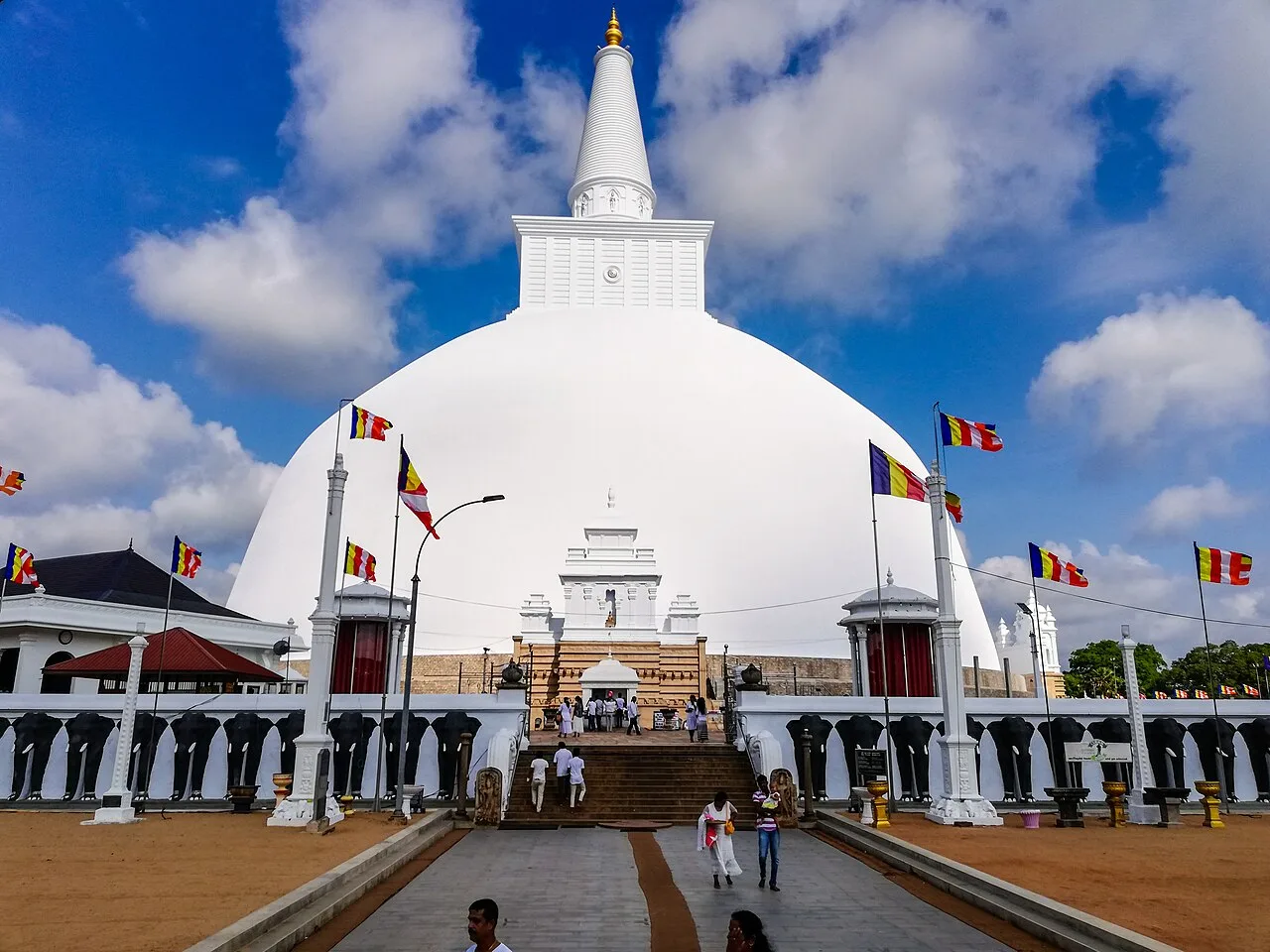
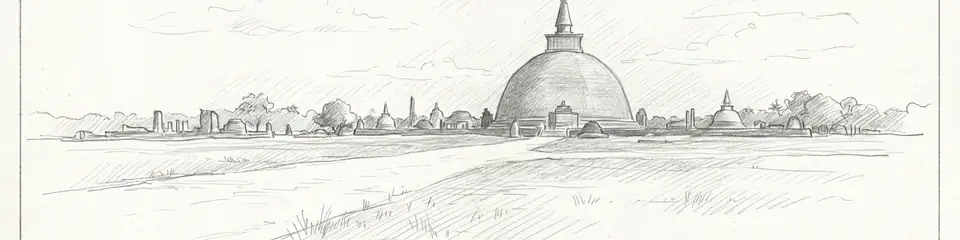
Anuradhapura is dominated by its dagobas (stupas), some of the largest brick structures ever built. The Ruwanwelisaya (Ruwanweli Maha Seya), built by King Dutugemunu in the 2nd century BCE, is a vast white hemispherical monument. The Jetavanaramaya, built in the 3rd century CE, originally rose to around 122 metres, making it at the time one of the tallest structures in the world after the great pyramids of Egypt, and the largest stupa anywhere. The Abhayagiri and Jetavana monasteries were major centres of Buddhist learning that drew monks and pilgrims from across Asia; the Chinese pilgrim Faxian stayed at Abhayagiri around 410 CE and described thousands of resident monks.
Underpinning the city was a hydraulic civilisation of remarkable sophistication. Sri Lankan engineers built enormous artificial reservoirs (tanks) such as the Tissa Wewa and Abhaya Wewa, fed by long canals, to store monsoon water and irrigate rice agriculture through the dry season. The precise control of water — including the invention of the biso-kotuwa, a valve-pit mechanism for regulating outflow from deep reservoirs — supported a dense population and is regarded as one of the great achievements of ancient engineering. After Anuradhapura was abandoned as capital, it was largely reclaimed by jungle and rediscovered and cleared by archaeologists in the 19th and 20th centuries.