
Перейти к содержанию
Atlas Anatolia
НовостиЗубы ледникового периода на Сулавеси отодвигают использование бетеля на 25 000 лет назадРимская мозаика и голова Эрота обнаружены в базилике Помпейополиса, Кастамону
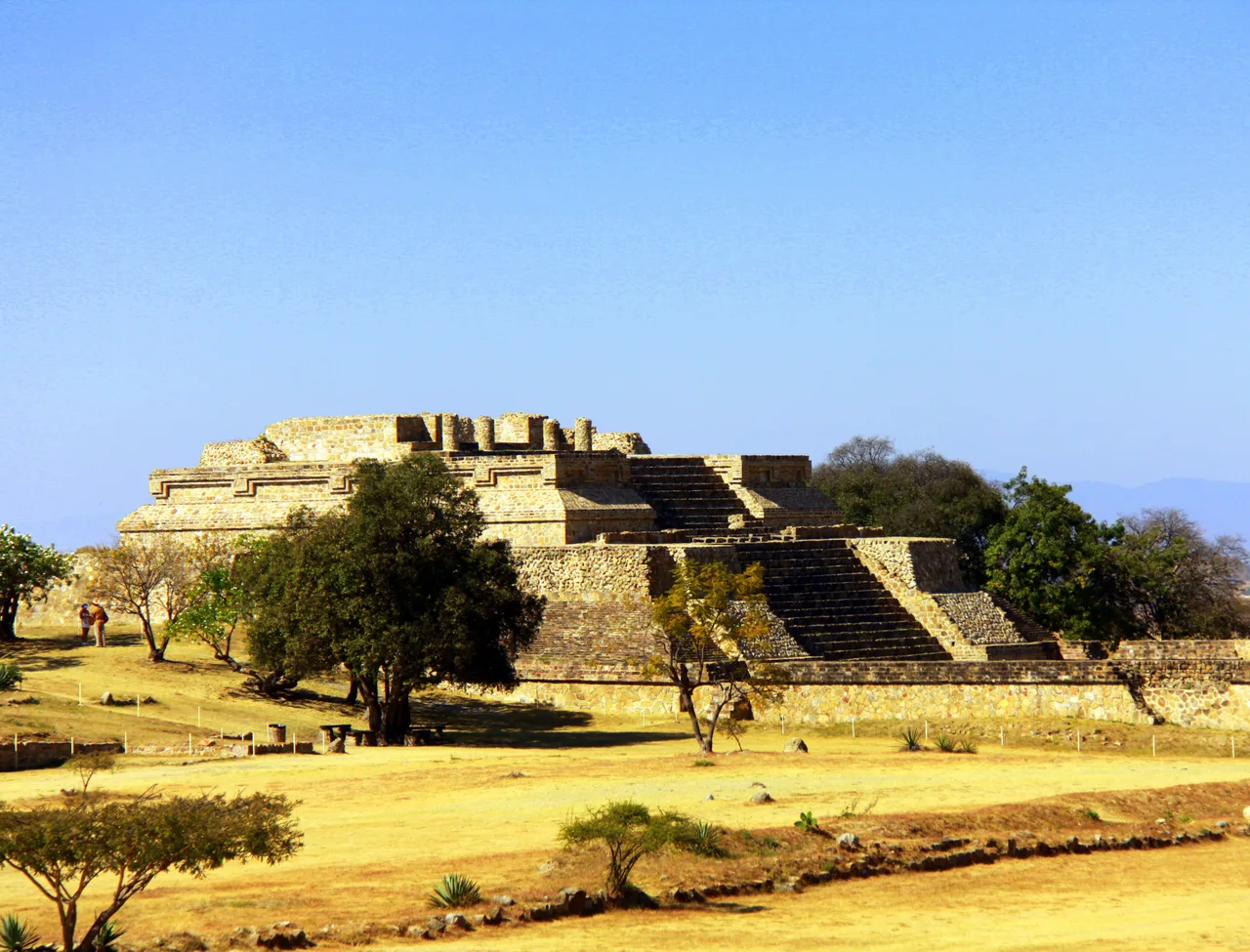
The Gran Plaza of Monte Albán viewed from the North Platform

Wikimedia Commons

Continent Record

Earliest Known Site in North America

ГородЮНЕСКОИзбранное

Monte Albán

Seyfi Cem Baskin

500 до н. э. – 900 н. э.

The capital of the Zapotec civilization for over a millennium, built on a leveled mountaintop in Oaxaca from c. 500 BCE — the first city of Mesoamerica and home to the continent's earliest known writing system.

21
Интерес 66

Местоположение

Мексика

17.04°N · 96.77°W · Северная Америка

Founded

c. 500 BCE

Peak population

17,000–25,000 (200–700 CE)

Gran Plaza dimensions

840 × 200 m

Altitude above valley

400 m

Danzante slabs

300+ carved relief slabs, oldest writing in Americas

UNESCO

World Heritage Site since 1987

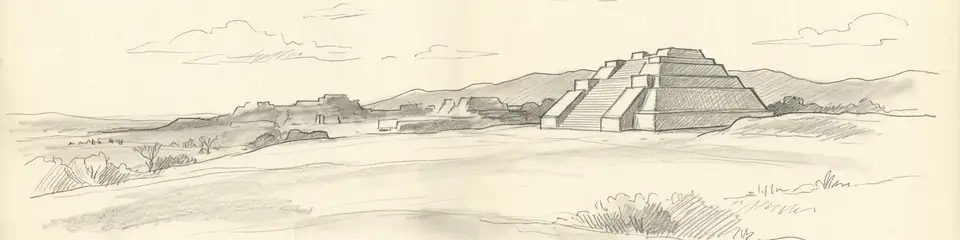
Graphite pencil sketch banner of Monte Albán

“Monte Albán represents the origin point of urbanism in Mesoamerica.”

Местоположение

Обзор

Monte Albán stands on a series of artificially leveled hilltops 400 m above the Valley of Oaxaca, in southern Mexico, 9 km southwest of the modern city of Oaxaca. It was founded c. 500 BCE and served as the political and religious capital of the Zapotec civilization for roughly 1,200 years, reaching its peak population of 17,000–25,000 around 200–700 CE. The site is remarkable for several reasons: it was built on a hilltop that required massive earth-moving to create a flat platform, deliberately above and apart from the valley agricultural land — a statement of political power rather than economic convenience. The Gran Plaza (840 × 200 m) is one of the largest ceremonial platforms in Mesoamerica, flanked by temples, ball courts, tombs, and an arrow-shaped observatory building (Building J). The site's Danzante reliefs — carved stone slabs depicting naked, distorted human figures interpreted as captured warriors or sacrificial victims — are among the earliest representations of captives and conquest in Mesoamerica, and the accompanying glyphs are considered the oldest writing system on the American continent, predating Mayan script. Monte Albán was gradually abandoned between 700 and 900 CE as the Zapotec polity fragmented, and the site was later used by the Mixtec as a burial ground.

Почему это важно

Monte Albán represents the origin point of urbanism in Mesoamerica. Before Monte Albán, no city of comparable scale had existed on the continent. Its deliberate placement on an unfarmed hilltop is a signature of political theater: the city was built to be seen, to project Zapotec power across the Valley of Oaxaca. The Danzante glyphs — the earliest writing in the Americas — have been only partially decoded and remain an active area of research. The site also holds 170 excavated tombs, several with intact polychrome murals depicting Zapotec cosmology. The Mixtec reuse of the site means that Monte Albán sits at a crossroads between two of Mesoamerica's great civilizations. The intact astronomical observatory (Building J) is aligned to the rising of the Capella star cluster and points southward to Monte Albán's southernmost horizon point, suggesting sophisticated calendrical knowledge.

Свидетельства и интерпретация

Различать, что хорошо установлено, а что остаётся предметом дискуссий.

Хорошо установленные факты

2
  • Radiocarbon dating of charcoal from the earliest construction phases of Monte Albán places the site's founding at c. 500 BCE, consistent with ceramic evidence indicating abandonment of nearby valley-floor villages at the same time.
  • The Danzante reliefs bear hieroglyphic texts currently identified as among the earliest writing in Mesoamerica, predating the earliest clearly dated Mayan inscriptions by one to two centuries.

Научные выводы

1
  • The arrow-shaped Building J is almost certainly an astronomical observatory: its orientation aligns with the heliacal rising of Capella, and its internal passage aligns precisely with a bright star rising point on the southern horizon, suggesting use for tracking the 365-day solar year.

Фотографии сообщества

Поделитесь своими впечатлениями

Вы посещали это место? Загрузите свои фотографии, чтобы помочь другим открыть его для себя.

Как цитировать эту страницу

Atlas Anatolia. (500). Monte Albán. Atlas Anatolia. https://atlasanatolia.com/ru/site/monte-alban

Материалы распространяются по лицензии CC BY-SA 4.0 — при повторном использовании указание авторства обязательно.

Источники

  • Monte Albán: Settlement Patterns at the Ancient Zapotec Capital — Joyce Marcus, Kent Flannery (1996)
  • UNESCO — Oaxaca and Monte AlbánСсылка

Часто задаваемые вопросы

Где находится Monte Albán?

Monte Albán находится в Mexico.

Сколько лет Monte Albán?

Monte Albán датируется приблизительно 500 до н. э. – 900 н. э..

С какими цивилизациями связано место Monte Albán?

Monte Albán связано с цивилизацией: Zapotec.

Почему Monte Albán имеет важное значение?

Monte Albán represents the origin point of urbanism in Mesoamerica.

Входит ли Monte Albán в список Всемирного наследия ЮНЕСКО?

Да — Monte Albán включено в список Всемирного наследия ЮНЕСКО.