
Перейти к содержанию
Atlas Anatolia
НовостиЗубы ледникового периода на Сулавеси отодвигают использование бетеля на 25 000 лет назадРимская мозаика и голова Эрота обнаружены в базилике Помпейополиса, Кастамону
Vermilion torii gate tunnel at Fushimi Inari-taisha, Kyoto

Wikimedia Commons (CC BY-SA 4.0)

НаследиеСвятилищеИзбранное

Fushimi Inari-taisha

Seyfi Cem Baskin

伏見稲荷大社711 н. э. – 2024 н. э.

The head shrine of Inari worship on Mount Inari in Kyoto — famous for thousands of vermilion torii gates lining forest paths — ranks fourth among missing sites in our multilingual pageview audit and is Japan's most photographed Shinto sanctuary.

21
Интерес 79

Местоположение

Япония

34.97°N · 135.77°E · Азия

Founded

Tradition dates to 711 CE on Mount Inari

Torii

Thousands of donor gates line mountain paths

Deity

Inari — kami of rice, foxes (kitsune) as messengers

Status

Head shrine (taisha) of Inari worship nationwide

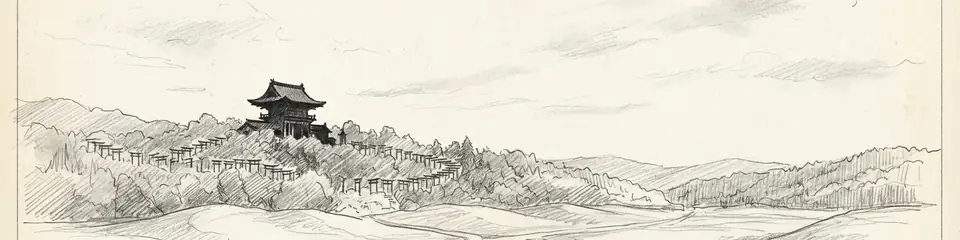
Graphite pencil sketch banner of Fushimi Inari-taisha

“Fushimi Inari documents how Shinto parish networks scaled through merchant patronage — each torii a dated donation record in wood and lacquer.”

Местоположение

Обзор

Fushimi Inari-taisha stands at the base of Mount Inari in Fushimi ward, Kyoto, Japan. Tradition credits the Hata clan with founding the shrine in 711 CE on the first day of the horse in the second month — an early date for Inari, kami of rice, sake, and prosperity. The shrine became the principal Inari institution, with tens of thousands of sub-shrines across Japan bearing its name.

Vermilion torii gates donated by merchants and devotees since the Edo period form tunnels along paths ascending the wooded mountain to inner shrines and stone fox (kitsune) statues — Inari's messengers. The main hall (honden) was rebuilt in 1499 and 1589; the Romon gate dates to 1589 patronage. Unlike Buddhist temples on the atlas, Fushimi Inari remains an active Shinto site with daily ritual, New Year pilgrimages, and festival processions.

The shrine is not individually UNESCO-listed but lies within the cultural landscape of Kyoto. Its torii corridors dominate image search and travel media for Japan. Pair with Kiyomizu-dera and Himeji Castle for Kyoto sacred architecture and feudal Japan.

Почему это важно

Fushimi Inari documents how Shinto parish networks scaled through merchant patronage — each torii a dated donation record in wood and lacquer. Its mountain paths fuse landscape pilgrimage with vernacular economics (rice, trade) in ways Buddhist temple complexes parallel but do not duplicate.

Свидетельства и интерпретация

Различать, что хорошо установлено, а что остаётся предметом дискуссий.

Хорошо установленные факты

2
  • Medieval and Edo-period donor inscriptions on torii record dates, names, and dedications.
  • Shrine registers and imperial patronage documents name 1499/1589 rebuild phases.

Научные выводы

1
  • Merchant donations expanded torii corridors as Inari cult spread with urban commerce.

Фотографии сообщества

Поделитесь своими впечатлениями

Вы посещали это место? Загрузите свои фотографии, чтобы помочь другим открыть его для себя.

Как цитировать эту страницу

Atlas Anatolia. (711). Fushimi Inari-taisha. Atlas Anatolia. https://atlasanatolia.com/ru/site/fushimi-inari

Материалы распространяются по лицензии CC BY-SA 4.0 — при повторном использовании указание авторства обязательно.

Источники

  • A New History of Shinto — Breen, John; Teeuwen, Mark (2010)
  • Fushimi Inari Taisha — official siteСсылка

Часто задаваемые вопросы

Где находится Fushimi Inari-taisha?

Fushimi Inari-taisha находится в Japan.

Сколько лет Fushimi Inari-taisha?

Fushimi Inari-taisha датируется приблизительно 711 н. э. – 2024 н. э..

С какими цивилизациями связано место Fushimi Inari-taisha?

Fushimi Inari-taisha связано с цивилизацией: Yamato Japan, Tokugawa.

Почему Fushimi Inari-taisha имеет важное значение?

Fushimi Inari documents how Shinto parish networks scaled through merchant patronage — each torii a dated donation record in wood and lacquer.

Входит ли Fushimi Inari-taisha в список Всемирного наследия ЮНЕСКО?

Fushimi Inari-taisha в настоящее время не включено в список Всемирного наследия ЮНЕСКО.