
Перейти к содержанию
Atlas Anatolia
НовостиЗубы ледникового периода на Сулавеси отодвигают использование бетеля на 25 000 лет назадРимская мозаика и голова Эрота обнаружены в базилике Помпейополиса, Кастамону
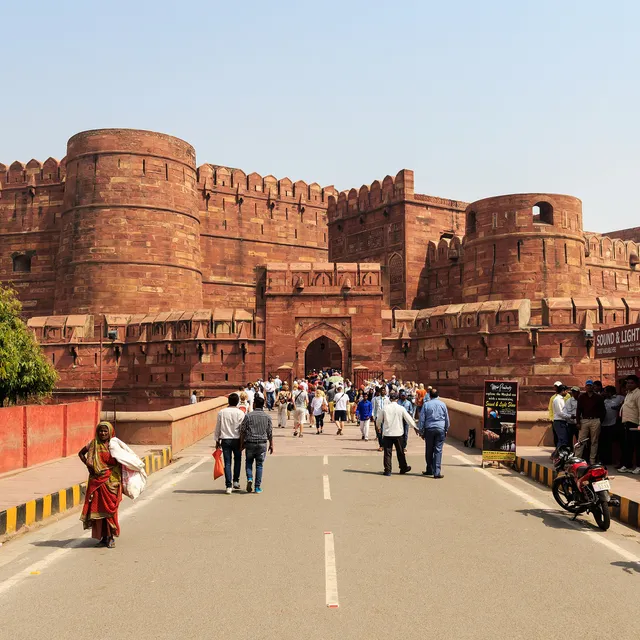
Red sandstone walls and gates of Agra Fort, India

Wikimedia Commons

Country Record

Oldest Fortress in India

НаследиеКрепостьЮНЕСКОИзбранное

Agra Fort

Seyfi Cem Baskin

आगरा किला1565 н. э. – 1857 н. э.

The massive red-sandstone fortress on the Yamuna at Agra — seat of Akbar, Jahangir, and Shah Jahan before the Mughal court moved to Delhi — whose palaces and mosques face the Taj Mahal across the river and draw millions of visitors on India's Golden Triangle circuit.

21
Интерес 75

Местоположение

Индия

27.18°N · 78.02°E · Азия

Built

Major phase c. 1565–1573 CE under Akbar; later marble works by Shah Jahan

Material

Red sandstone with white marble imperial apartments

View

Musamman Burj overlooks the Taj Mahal across the Yamuna

UNESCO

World Heritage Site (1983)

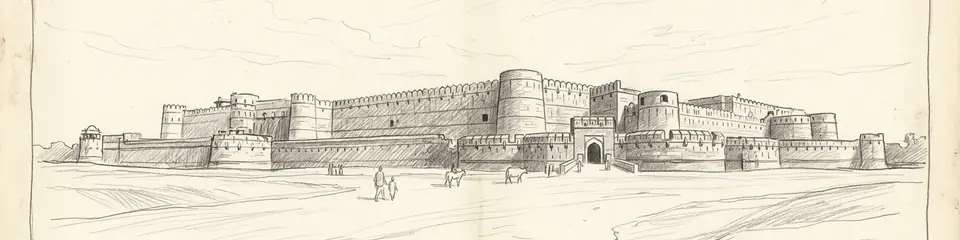
Graphite pencil sketch banner of Agra Fort

“Agra Fort is the military and residential counterpart to the Taj Mahal — together they document Mughal power, aesthetics, and riverine urban planning at its peak.”

Местоположение

Обзор

Agra Fort (Lal Qila) rises on the right bank of the Yamuna River in Agra, Uttar Pradesh, forming a crescent-shaped walled complex roughly 2.5 kilometres in circumference. Akbar the Great ordered its reconstruction in red sandstone beginning about 1565 on the site of an earlier fort; successive emperors added marble palaces, audience halls, and gardens. Shah Jahan's white-marble Musamman Burj tower — where he was imprisoned by Aurangzeb — offers the famous view toward the Taj Mahal.

The fort combines military architecture (double ramparts, moat, angled bastions) with refined residential courts: the Jahangir Mahal, Khas Mahal, Diwan-i-Am, and Diwan-i-Khas. Pietra dura, carved brackets, and inlaid marble reflect the same workshops that later built the Taj. After the Mughal decline the fort passed through Maratha and British control; much of the interior was adapted for barracks and administration.

The Archaeological Survey of India now manages the monument. UNESCO listed Agra Fort in 1983 alongside the Taj Mahal as a defining Mughal ensemble of the Yamuna corridor.

Почему это важно

Agra Fort is the military and residential counterpart to the Taj Mahal — together they document Mughal power, aesthetics, and riverine urban planning at its peak. Its continuous occupation from the 16th century preserves one of the largest and best-studied Islamic fort-palaces in South Asia.

Свидетельства и интерпретация

Различать, что хорошо установлено, а что остаётся предметом дискуссий.

Хорошо установленные факты

2
  • Mughal court chronicles and inscriptions attribute the Akbar-period rebuilding and Shah Jahan marble additions to documented imperial workshops.
  • Architectural analysis confirms Timurid–Mughal vaulting, jali screens, and pietra dura consistent with 16th–17th-century imperial ateliers.

Научные выводы

1
  • The fort's riverfront orientation was intended to integrate Yamuna transport and garden-tomb axes linking Agra's palatial and funerary landscapes.

Фотографии сообщества

Поделитесь своими впечатлениями

Вы посещали это место? Загрузите свои фотографии, чтобы помочь другим открыть его для себя.

Как цитировать эту страницу

Atlas Anatolia. (1565). Agra Fort. Atlas Anatolia. https://atlasanatolia.com/ru/site/agra-fort

Материалы распространяются по лицензии CC BY-SA 4.0 — при повторном использовании указание авторства обязательно.

Источники

  • Mughal Architecture — Koch, Ebba (1991)
  • UNESCO — Agra FortСсылка

Часто задаваемые вопросы

Где находится Agra Fort?

Agra Fort находится в India.

Сколько лет Agra Fort?

Agra Fort датируется приблизительно 1565 н. э. – 1857 н. э..

С какими цивилизациями связано место Agra Fort?

Agra Fort связано с цивилизацией: Mughal.

Почему Agra Fort имеет важное значение?

Agra Fort is the military and residential counterpart to the Taj Mahal — together they document Mughal power, aesthetics, and riverine urban planning at its peak.

Входит ли Agra Fort в список Всемирного наследия ЮНЕСКО?

Да — Agra Fort включено в список Всемирного наследия ЮНЕСКО.