
Pular para o conteúdo
Atlas Anatolia
NotíciasIce Age teeth in Sulawesi push betel-nut use back as far as 25,000 yearsRoman mosaic and Eros head uncovered in the basilica at Pompeiopolis, Kastamonu
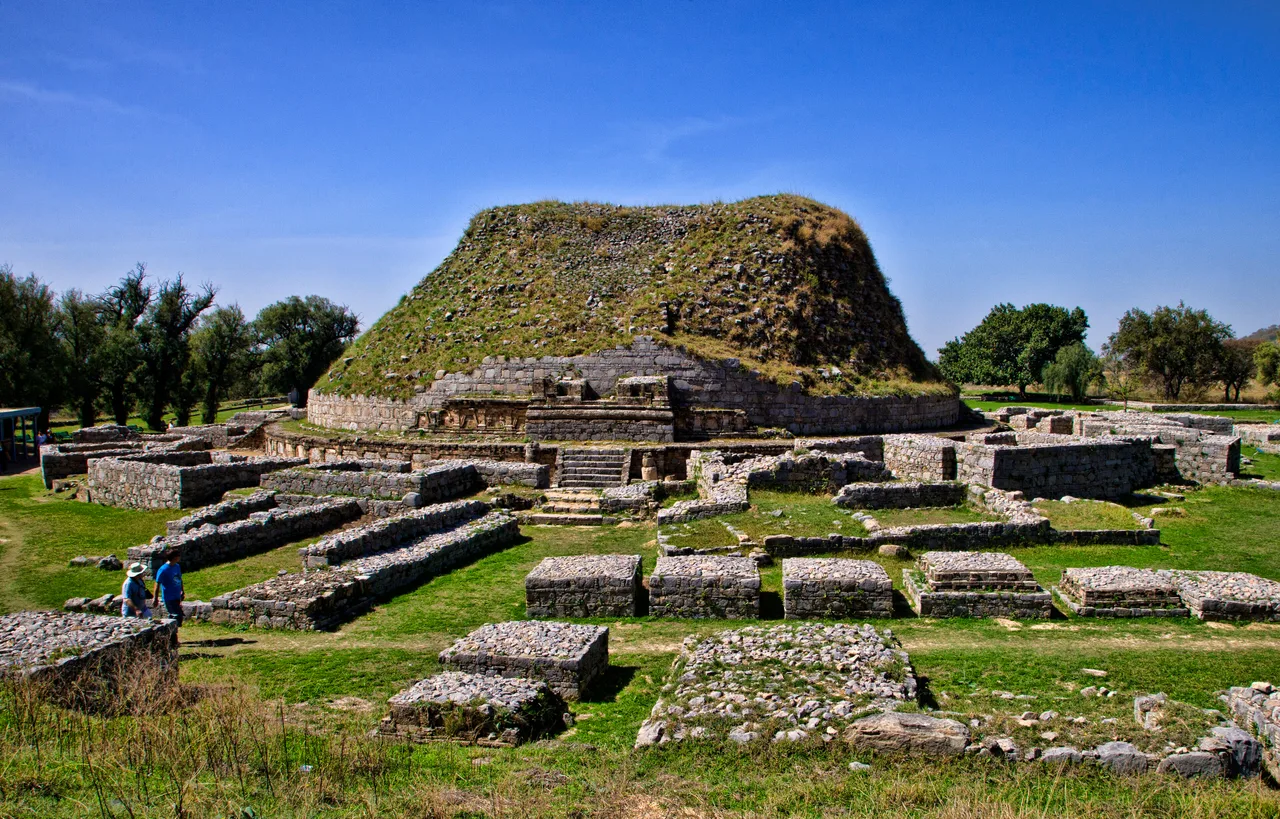
Ruins of Sirkap, the Hellenistic-era city of Taxila, with grid-plan streets visible

Wikimedia Commons

Country Record

Longest Continuously Occupied Site in Pakistan

CidadeUNESCO

Taxila

Seyfi Cem Baskin

ٹیکسلا518 a.C. – 600 d.C.

An ancient city in the Pothohar Plateau of Pakistan where Achaemenid Persia, Alexander's Macedonia, and Mauryan India met — its three successive city sites and Buddhist monasteries document 1,200 years of continuous urban life at the crossroads of the ancient world.

31
Interesse 65

Localização

Paquistão

33.78°N · 72.83°E · Ásia

First Persian mention

Behistun Inscription of Darius I, c. 518 BCE

Alexander's arrival

326 BCE — used as base before crossing the Indus

Three city layers

Bhir Mound (6th–2nd c. BCE), Sirkap (2nd c. BCE–2nd c. CE), Sirsukh (2nd c. CE+)

Artistic legacy

Origin of Gandharan style — first human depictions of the Buddha

UNESCO

World Heritage Site since 1980

Location

35 km northwest of Islamabad, eastern end of the Khyber Pass corridor

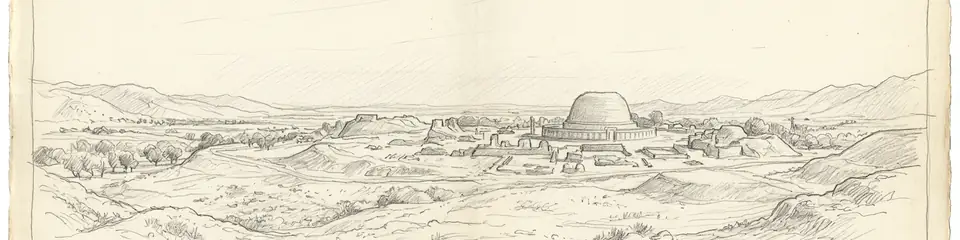
Graphite pencil sketch banner of Taxila

“Taxila is where the Buddha got a face.”

Localização

Visão geral

Taxila lies in the Pothohar Plateau, 35 km northwest of Islamabad, at the eastern end of the Khyber Pass route from Central Asia into the subcontinent. The strategic position made it the meeting point of overland trade routes connecting Persia, Central Asia, China, and India — and the city reflects this intersection in its architecture, coinage, and art.

The site encompasses three major successive urban settlements, each occupying a distinct location on the plateau:

Bhir Mound (6th–2nd century BCE): The oldest city at Taxila, founded in the Achaemenid period when Taxila was a provincial capital of the Persian Empire (mentioned in the Behistun Inscription of Darius I, c. 518 BCE). The city became an important intellectual center — later tradition identifies it as the location of a university where the grammarian Panini (author of the Ashtadhyayi, the world's first formal linguistic grammar) was educated, and where Chanakya (Kautilya), author of the Arthashastra statecraft manual, taught. Alexander the Great received the submission of the city's king Ambhi in 326 BCE and used Taxila as his base before crossing the Indus.

Sirkap (2nd century BCE – 2nd century CE): Founded by the Bactrian Greek king Demetrius I after his invasion of the subcontinent c. 185 BCE, Sirkap was laid out on a Hellenistic grid plan with a main street (a typical Greek decumanus) and rectangular blocks. The city passed successively under Saka, Parthian, and Kushana rule. Its most remarkable monument is the Dharmarajika Stupa complex, built by Ashoka in the 3rd century BCE and expanded over the following centuries.

Sirsukh (2nd century CE onward): Founded by the Kushana emperor Kanishka (c. 127 CE), Sirsukh is a large rectangular walled city of the Kushana type. The Kushana period was the golden age of Gandharan Buddhist art: the sculpture workshops of Taxila produced the first realistic human depictions of the Buddha in stone and stucco, combining Hellenistic figural conventions with Buddhist iconography. The resulting Gandharan style spread Buddha imagery across Asia.

Dozens of Buddhist monasteries, stupas, and viharas surround the three city sites, the most celebrated being the Jaulian Monastery (2nd–5th century CE) with its decorated stupa and assembly hall.

Por que isso importa

Taxila is where the Buddha got a face. Before Gandharan art developed in the workshops of Taxila and its region, the Buddha was depicted aniconically — by symbols, as at Sanchi. Gandharan sculptors, working in a tradition that merged Greek figural realism with Buddhist devotional needs, created the first human portraits of the Buddha, establishing the iconographic canon — ushnisha cranial protuberance, elongated earlobes, dhyana mudra hand gesture — that all subsequent Buddhist art from Japan to Java follows. Every Buddha image in the world is descended from the workshops of Taxila. Beyond art, Taxila is the physical site of the encounter of three great imperial traditions: Achaemenid administrative culture, Macedonian Hellenism, and Mauryan and Kushana Indian statecraft — each leaving material evidence in a single hilltop plateau.

Evidências e interpretação

Distinguir o que está bem estabelecido do que permanece em debate.

Fatos bem estabelecidos

3
  • The Behistun Inscription of Darius I (c. 518 BCE) lists Gadara (Gandhara, centered on Taxila) as a tributary province of the Achaemenid Empire, providing the earliest textual attestation of the site's political status.
  • Coins found at Sirkap follow a clear numismatic sequence: Indo-Greek (with Greek legends and Athena iconography), Indo-Scythian (Saka rulers), Indo-Parthian, and Kushana — documenting the city's succession of rulers with physical evidence at each stratum.
  • Gandharan Buddha sculptures from the Taxila region display a consistent fusion of Hellenistic figural anatomy (contrapposto stance, naturalistic drapery) with Buddhist iconographic conventions (ushnisha, elongated earlobes, hand mudras), a hybrid style dated by coin associations to the 1st–3rd centuries CE.

Inferências acadêmicas

1
  • The oral tradition that Taxila hosted a famous university where Chanakya, Panini, and Jivaka (the Buddha's physician) were educated is supported by the city's intellectual products — the Arthashastra, the Ashtadhyayi — but no physical remains of a university building have been identified.

Fotos da comunidade

Compartilhe sua experiência

Você visitou este sítio? Envie suas fotos para ajudar outros a descobri-lo.

Como citar esta página

Atlas Anatolia. (518). Taxila. Atlas Anatolia. https://atlasanatolia.com/pt/site/taxila

Conteúdo licenciado sob CC BY-SA 4.0 — atribuição necessária ao reutilizar.

Fontes

  • Taxila, 3 vols. — John Marshall (1951)
  • Gandharan Art in Context — Elizabeth Errington and Joe Cribb (eds.) (1992)
  • UNESCO — Archaeological Ruins at MoenjodaroLink

Perguntas frequentes

Onde fica Taxila?

Taxila está localizado em Pakistan.

Qual é a antiguidade de Taxila?

Taxila data de aproximadamente 518 a.C. – 600 d.C..

Quais civilizações estão associadas a Taxila?

Taxila está associado à civilização Achaemenid Persian, Greek, Mauryan, Indus Valley.

Por que Taxila é importante?

Taxila is where the Buddha got a face.

Taxila é um Patrimônio Mundial da UNESCO?

Sim — Taxila está inscrito na Lista do Patrimônio Mundial da UNESCO.