
Pular para o conteúdo
Atlas Anatolia
NotíciasIce Age teeth in Sulawesi push betel-nut use back as far as 25,000 yearsRoman mosaic and Eros head uncovered in the basilica at Pompeiopolis, Kastamonu
Persepolis — Iran

Wikimedia Commons (CC BY-SA)

Country Record

Known by the Most Names in Iran

ComplexoUNESCODestaque

Persepolis

Seyfi Cem Baskin

تخت جمشید518 a.C. – 330 a.C.

Ceremonial capital of the Achaemenid Empire, built by Darius I c. 518 BCE and sacked by Alexander the Great in 330 BCE, renowned for its monumental terraces and reliefs.

322
Interesse 82

Localização

Fars Province · Marvdasht Plain · Irã

29.94°N · 52.89°E · Ásia

Built

c. 518 BCE

Civilization

Achaemenid Empire

Discovered

First identified by European travelers in 1618; systematically excavated by Ernst Herzfeld from 1931.

Status

UNESCO World Heritage Site, inscribed 1979.

Location

Fars Province, Iran (about 60 km northeast of Shiraz)

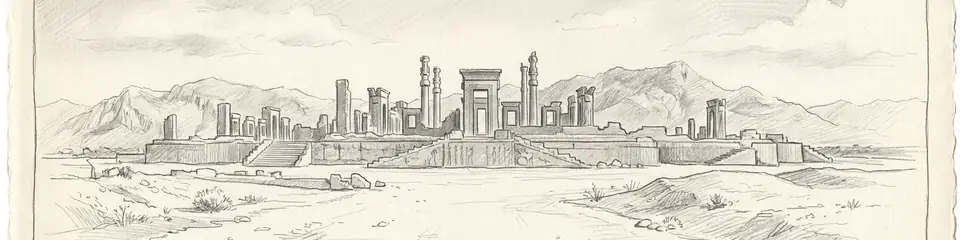
Graphite pencil sketch banner of Persepolis

“Persepolis stands as the quintessential expression of Achaemenid imperial art and ideology, reflecting the empire’s multicultural administration and ceremonial practices.”

Localização

Visão geral

Historical Context

Persepolis, known as Pārsa to its builders, was conceived by Darius I around 518 BCE as a grand ceremonial seat for the Achaemenid dynasty. It was constructed on a vast artificial terrace at the foot of Kuh‑e Rahmat, the Mountain of Mercy, in the heartland of Persis (modern Fars, Iran). The site was intended to embody imperial ideology, showcasing the power and cosmopolitan nature of an empire that stretched from the Indus to the Aegean. Successive kings, particularly Xerxes I and Artaxerxes I, expanded the complex with additional palaces, halls, and gates, making Persepolis the architectural culmination of Achaemenid art.
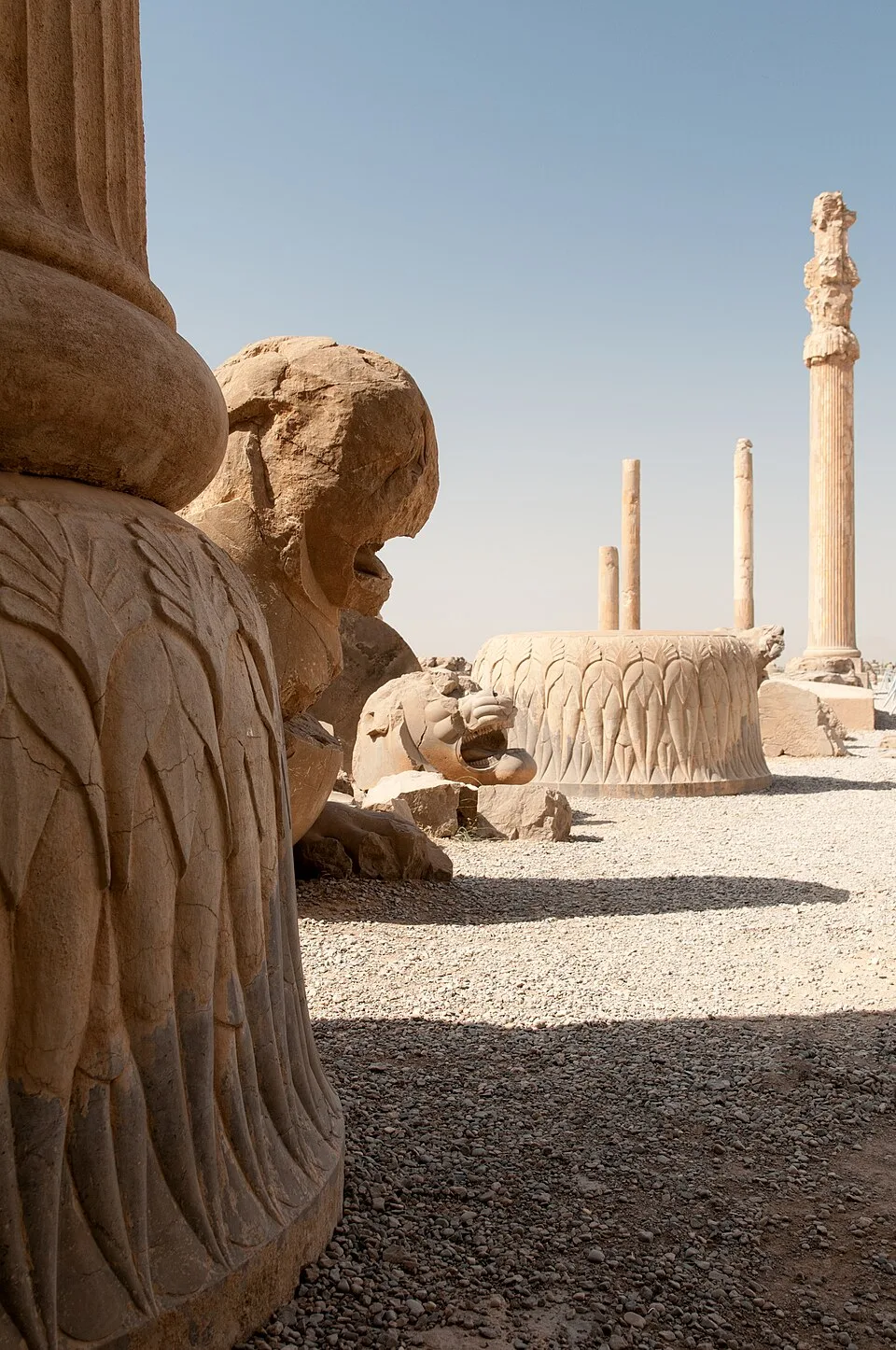
2018-09-21 Iran, Persepolis, Apadana Palace (from the Eastern Staircase)
2018-09-21 Iran, Persepolis, Apadana Palace (from the Eastern Staircase) | Laurens R. Krol (CC BY 4.0)
"I am Darius the great king, king of kings, king of countries containing all kinds of men, king in this great earth far and wide. By the favour of Ahuramazda I built this palace."
— Darius I, Foundation Inscription at Persepolis, c. 515 BCE

Architectural Layout

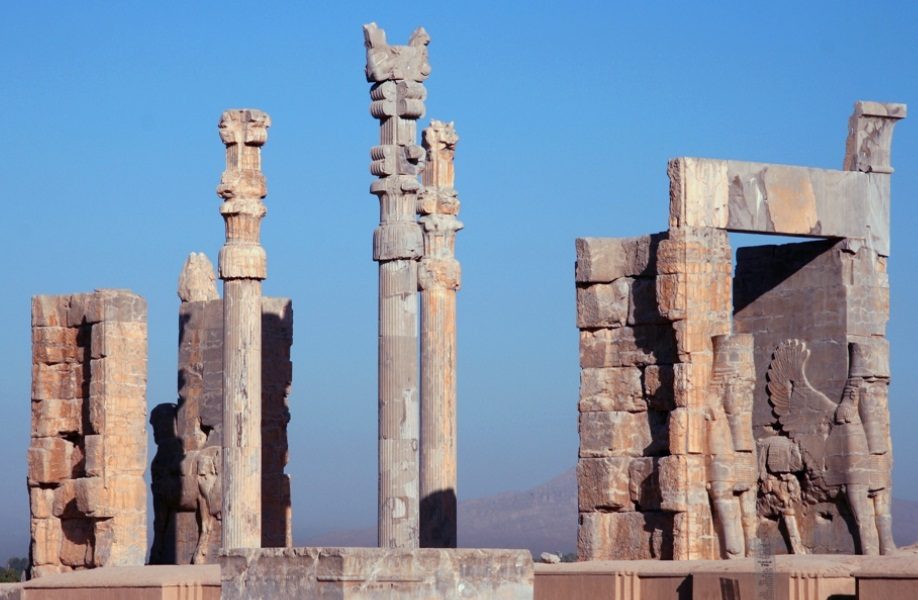
The 125,000‑square‑metre terrace is accessed via a monumental double‑reversed staircase leading to the Gate of All Nations, guarded by colossal lamassu. The core structures include the Apadana (audience hall) with 36 columns, the Throne Hall, the Treasury, and private palaces of Darius, Xerxes, and others. The Apadana’s reliefs depict 23 delegations bearing gifts, a visual catalogue of the empire’s diversity. Constructed primarily of limestone, the buildings employed post‑and‑beam techniques with wooden ceilings, and many columns featured elaborate double‑bull capitals. The site also includes a sophisticated drainage system and evidence of polychrome decoration.
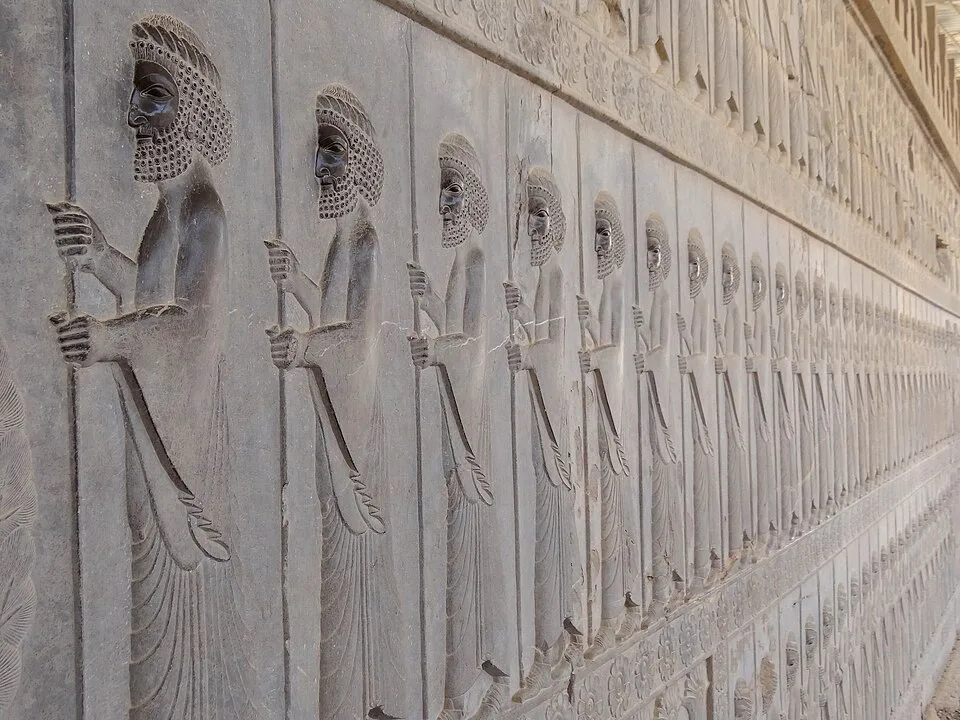
Bas-Relief on Apadana Staircase - Persepolis - Central Iran - 03 (7427777288)
Bas-Relief on Apadana Staircase - Persepolis - Central Iran - 03 (7427777288) | Adam Jones from Kelowna, BC, Canada (CC BY-SA 2.0)

Reliefs and Inscriptions

Persepolis is rich in cuneiform inscriptions in Old Persian, Elamite, and Babylonian, often recording royal proclamations and dedications. The most famous is Darius’s inscription on the southern terrace wall, emphasizing Achaemenid dynastic legitimacy. Equally significant are the sculptured friezes, particularly on the Apadana stairways, which are among the most important surviving examples of Achaemenid court art. They illustrate a carefully choreographed ceremony of tribute, with figures from subject nations identified by costume and goods, providing an unparalleled source for Achaemenid imperial administration and costume.
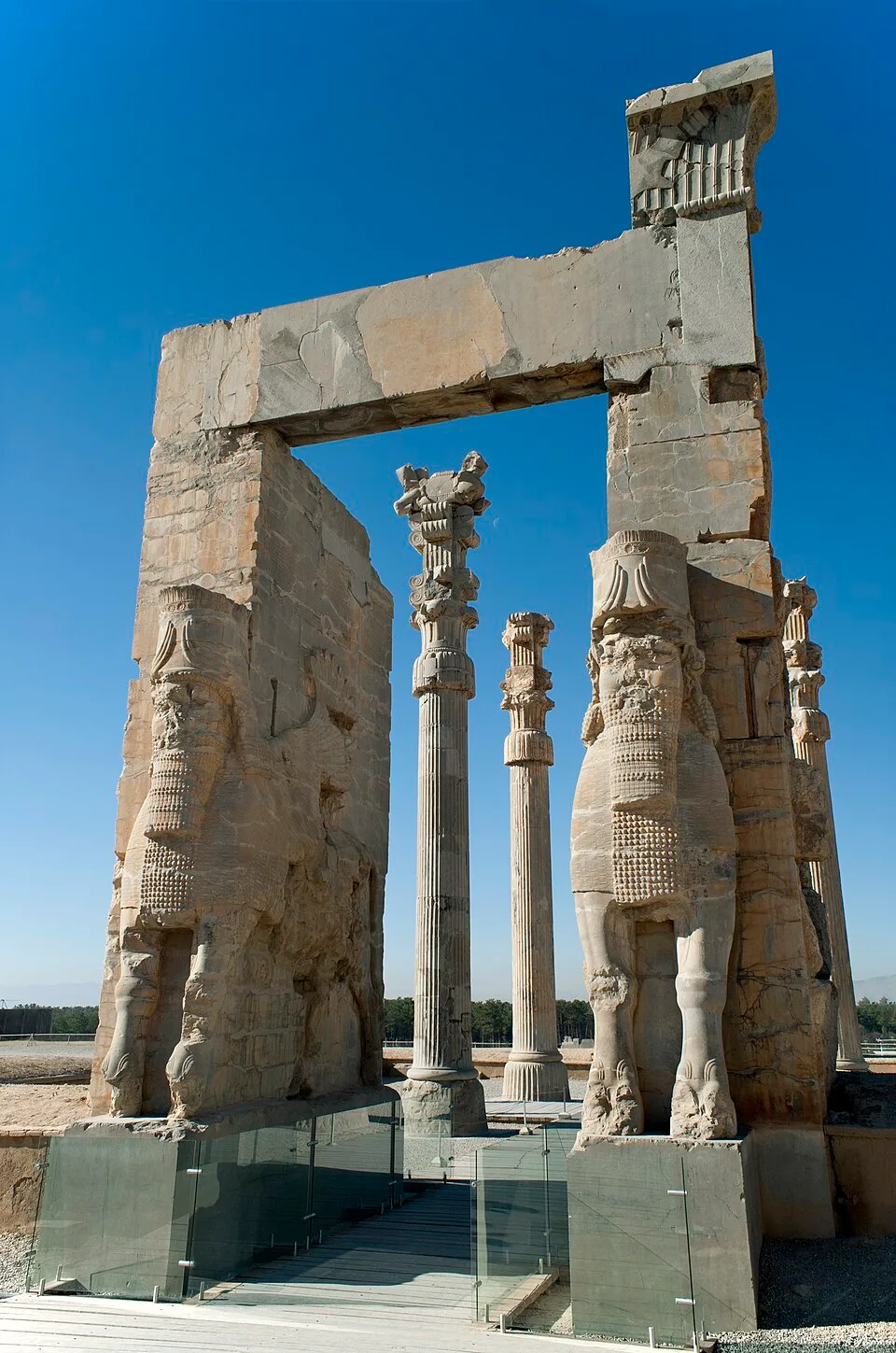
20101229 Gates of the nations Persepolis Iran
20101229 Gates of the nations Persepolis Iran | User:Ggia (CC BY-SA 3.0)

Destruction and Legacy

In 330 BCE, Alexander the Great captured Persepolis and, after a period of occupation, ordered the burning of the palace complex—an act often interpreted as retaliation for the Persian destruction of Athens or as a calculated political statement. The firedamaged remains preserved a moment of violent transition, and later sources like Diodorus Siculus and Plutarch detail the event, though the precise extent of deliberate destruction versus subsequent decay is debated. Over centuries, the site was known to locals as Takht‑e Jamshid (Throne of Jamshid), weaving it into Persian myth. Modern scholarship has re‑established its historical identity, and it endures as a potent symbol of pre‑Islamic Iranian heritage.
Por que isso importa

Persepolis stands as the quintessential expression of Achaemenid imperial art and ideology, reflecting the empire’s multicultural administration and ceremonial practices. Its destruction symbolizes the end of the Persian Empire and the rise of Hellenistic influences, while its rediscovery and study have profoundly shaped modern understanding of the ancient Near East.

Evidências e interpretação

Distinguir o que está bem estabelecido do que permanece em debate.

Fatos bem estabelecidos

3
  • Cuneiform inscriptions in Old Persian, Elamite, and Babylonian confirm construction by Darius I, Xerxes I, and Artaxerxes I between 518 and 450 BCE.
  • The terrace measures approximately 125,000 square metres and is constructed of precisely cut limestone blocks held together by iron clamps.
  • Reliefs on the Apadana stairways depict 23 delegations bearing tribute, corroborating Achaemenid administrative records such as the Persepolis Fortification Tablets.

Inferências acadêmicas

2
  • The site likely served as a ceremonial venue for the annual Nowruz (New Year) festival, though direct textual evidence is lacking.
  • The unfinished state of several structures, such as the Gate of All Nations’ southern passage, implies abrupt cessation, probably linked to Alexander’s invasion.

Interpretações debatidas

2
  • Scholars disagree on the extent of Alexander’s deliberate destruction versus subsequent decay, looting, and natural fire damage.
  • Whether Persepolis functioned as a regular administrative capital or exclusively as a ritual‑ceremonial complex remains contested.

Descoberta e escavação

Modern Iranian conservation

Dirigido por ICHHTO / Parse‑Pasargadae Research Foundation

Ongoing conservation, documentation, and site management by the Iranian Cultural Heritage, Handicrafts and Tourism Organization (ICHHTO), including digital recording and structural stabilization.

1618–1618

Early European identification

Dirigido por Garcia de Silva Figueroa

Garcia de Silva Figueroa identifies the ruins as Persepolis and copies cuneiform inscriptions, sparking European interest.

1931–1939

Systematic excavations by Herzfeld

Dirigido por Ernst Herzfeld

Ernst Herzfeld conducts first scientific excavations on behalf of the Oriental Institute, revealing major structures like the Apadana and the Treasury.

1939–1979

Schmidt’s excavations and aerial surveys

Dirigido por Erich F. Schmidt

Erich F. Schmidt expands work to the treasury and fortifications, conducts pioneering aerial photographic surveys, and publishes the Persepolis series.

1965–1975

Italian restoration projects

Dirigido por G. Annibaldi / Italian Archaeological Mission

Italian missions led by G. Annibaldi and others focus on conservation and restoration, particularly of the Apadana columns.

Fotos da comunidade

Compartilhe sua experiência

Você visitou este sítio? Envie suas fotos para ajudar outros a descobri-lo.

Histórias relacionadas

Como citar esta página

Atlas Anatolia. (518). Persepolis. Atlas Anatolia. https://atlasanatolia.com/pt/site/persepolis

Conteúdo licenciado sob CC BY-SA 4.0 — atribuição necessária ao reutilizar.

Gráfico

Conexões com sítios e histórias relacionados.

Fontes

  • Mousavi, A. (2012). Persepolis: Discovery and Afterlife of a World Wonder. — Ali Mousavi (2012)
  • Root, M. C. (1979). The King and Kingship in Achaemenid Art: Essays on the Creation of an Iconography of Empire. — Margaret Cool Root (1979)
  • Schmidt, E. F. (1953-1970). Persepolis I-III: Structures, Reliefs, Inscriptions. — Erich F. Schmidt (1953)
  • Henkelman, W. (2008). 'The Other Gods Who Are: Studies in Elamite‑Iranian Acculturation Based on the Persepolis Fortification Texts.' Achaemenid History 14. — Wouter F. M. Henkelman (2008)
  • UNESCO World Heritage Centre: PersepolisLink

Perguntas frequentes

Onde fica Persepolis?

Persepolis está localizado em Fars Province, Marvdasht Plain, Iran.

Qual é a antiguidade de Persepolis?

Persepolis data de aproximadamente 518 a.C. – 330 a.C..

Quais civilizações estão associadas a Persepolis?

Persepolis está associado à civilização Achaemenid Persian.

Por que Persepolis é importante?

Persepolis stands as the quintessential expression of Achaemenid imperial art and ideology, reflecting the empire’s multicultural administration and ceremonial practices.

Persepolis é um Patrimônio Mundial da UNESCO?

Sim — Persepolis está inscrito na Lista do Patrimônio Mundial da UNESCO.