
Pular para o conteúdo
Atlas Anatolia
NotíciasIce Age teeth in Sulawesi push betel-nut use back as far as 25,000 yearsRoman mosaic and Eros head uncovered in the basilica at Pompeiopolis, Kastamonu
The ancient theatre and assembly hall at Patara with Mediterranean coastline

Wikimedia Commons (CC BY-SA)

CidadeDestaque

Patara

Seyfi Cem Baskin

800 a.C. – 700 d.C.

Capital of the Lycian League and birthplace of St. Nicholas, Patara housed the oldest known lighthouse in the world and served as the political heart of one of antiquity's earliest democratic federations.

411
Interesse 57

Localização

Antalya · Mediterranean · Turquia

36.26°N · 29.32°E · Ásia

Political Role

Capital of the Lycian League

Lighthouse

Oldest known in the world (c. 60 CE)

Notable Native

St. Nicholas (c. 270 CE)

Beach Length

18 km (Caretta caretta nesting site)

Notable Monument

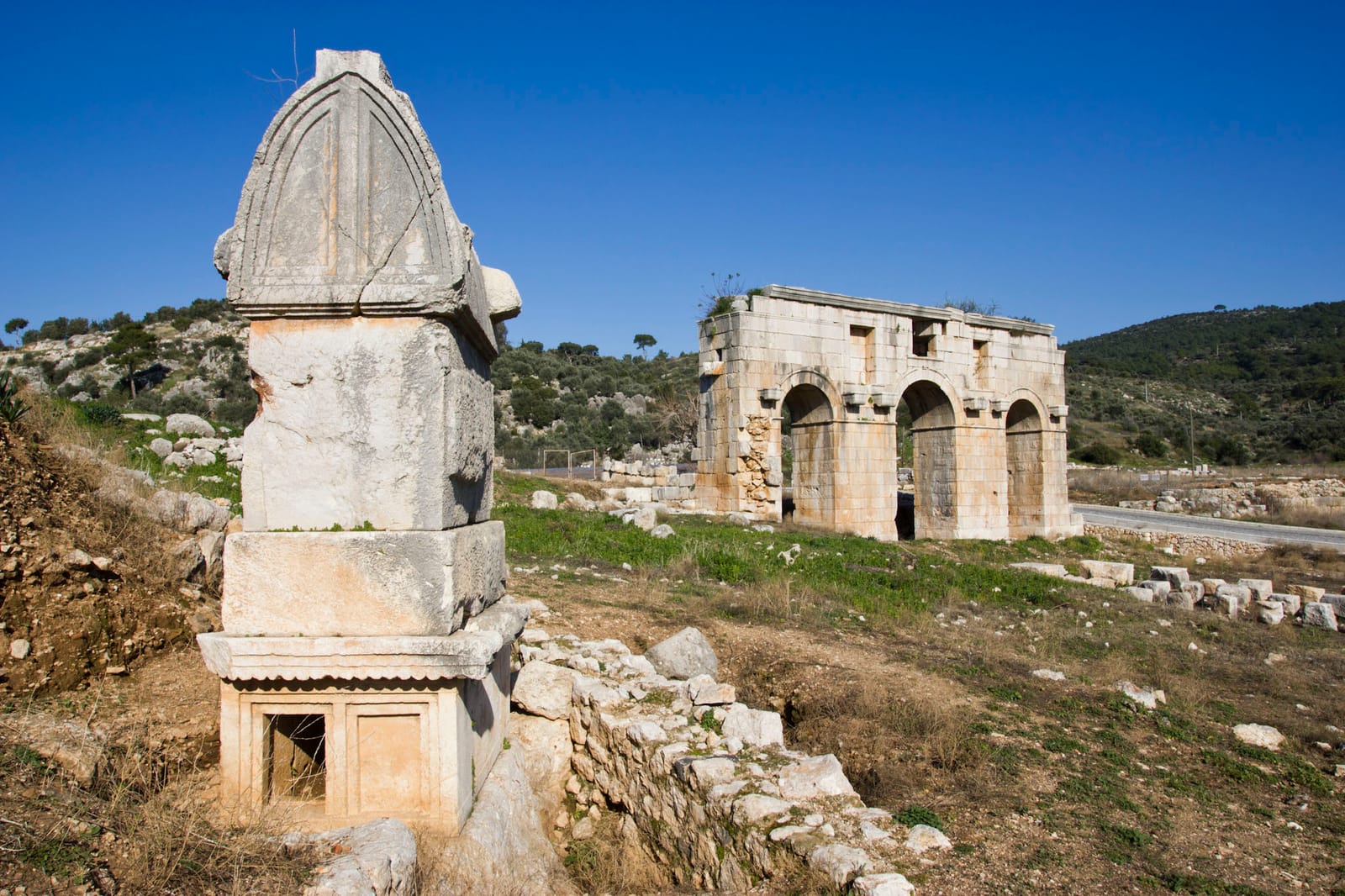
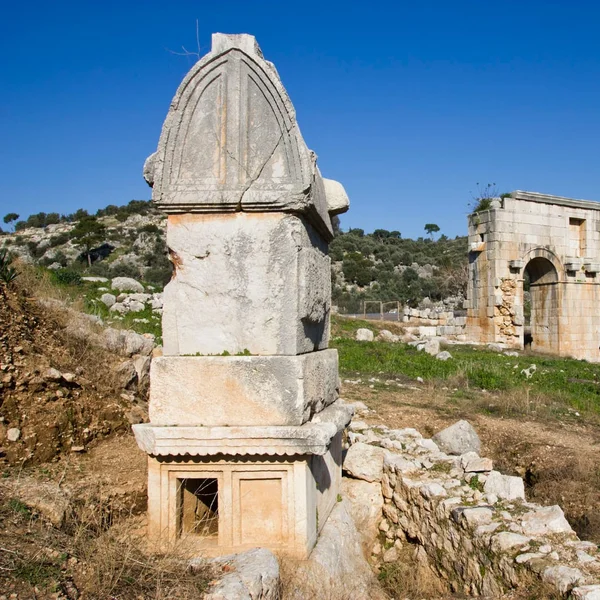
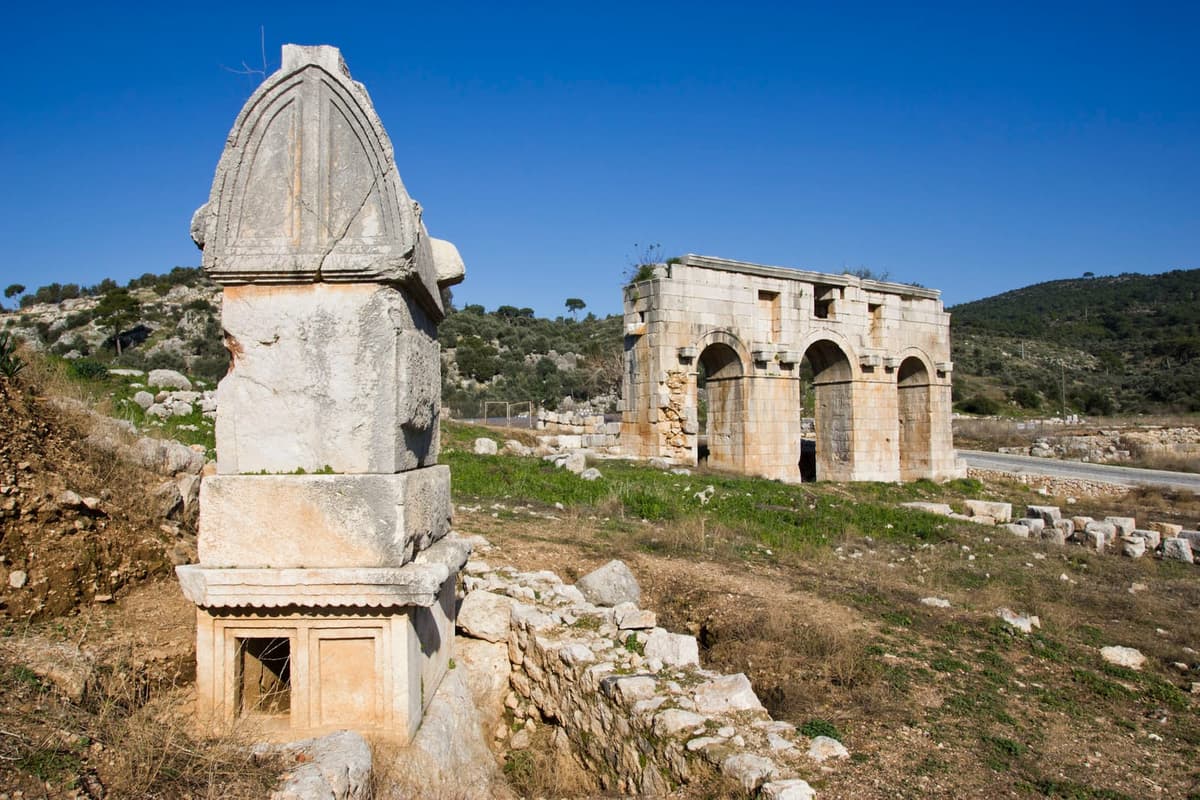
The monumental triple-arched Roman triumphal gate (Mettius Modestus Gate), built c. 100 CE.

Major Infrastructure

A monumental Roman water distribution terminal (nymphaeum) and a 22.5 km long aqueduct system from the Kızıltepe massif.

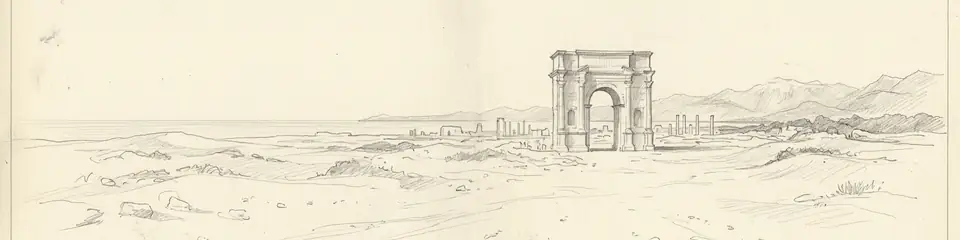
Graphite pencil sketch banner of Patara

“Patara's significance extends far beyond archaeology.”

Da Wikipédia

Patara was a flourishing maritime and commercial city on the southwestern coast of Lycia, capital of the Lycian League.

Ler o artigo completo na Wikipédia →

Localização

Visão geral

Patara was the principal city of the Lycian League — one of the earliest known democratic federations in history — and its chief port on the Mediterranean. Located where the Xanthos River meets the sea, Patara was both a political capital and a critical maritime waystation between the Aegean and the eastern Mediterranean.

The city's monumental assembly hall (bouleuterion), where representatives of the Lycian League's member cities gathered to deliberate and vote, is the best-preserved example of an ancient democratic parliament building. The American founders, including James Madison, studied the Lycian League's proportional representation system when drafting the U.S. Constitution.

"Patara is a city of Lycia, where there is a temple of Apollo, and an oracle which gives responses in winter."
— Strabo, c. 7 BCE - 23 CE

Patara's lighthouse, dated by inscription to the reign of Nero (54-68 CE), is considered the oldest known lighthouse structure in the world. The city also boasts a massive Roman theatre, a triple-arched triumphal gate, a colonnaded main street, Roman baths, granaries, and a basilica.

St. Nicholas of Myra — the historical figure behind Santa Claus — was born in Patara around 270 CE. The city's 18-kilometer beach, one of the longest in Turkey, now serves as a nesting ground for endangered loggerhead sea turtles (Caretta caretta), intertwining natural and cultural conservation.
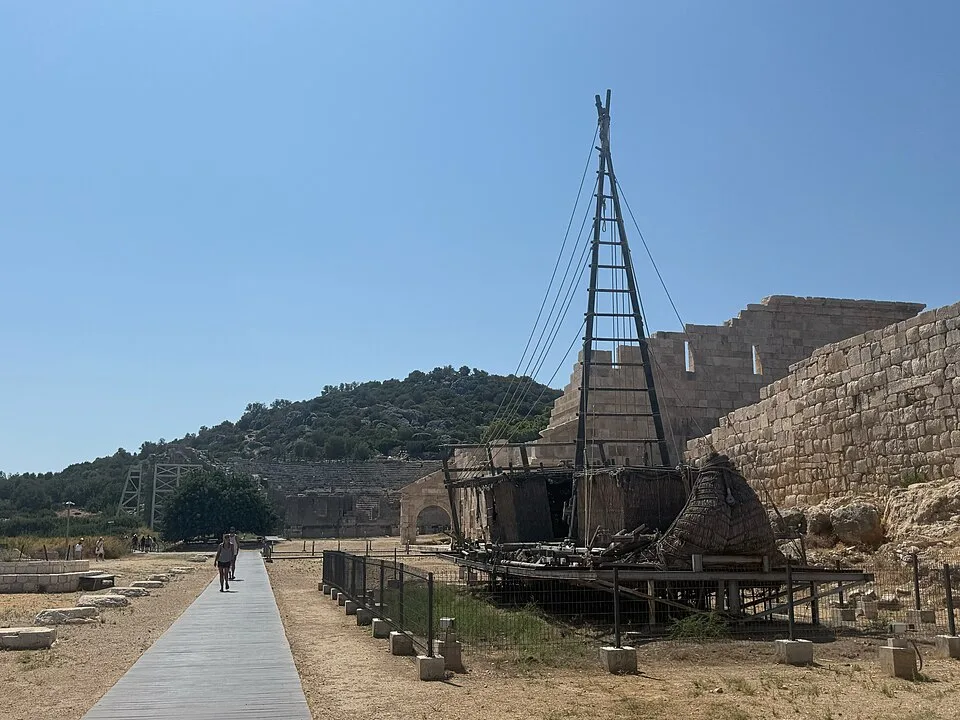
Ruins of Patara, capital of Lycia, Turkey
Ruins of Patara, capital of Lycia, Turkey | Roman_Zacharij (CC BY-SA 4.0)

Beyond its political monuments, Patara was a city of grand public works. Its main entrance, the triple-arched Mettius Modestus Gate, erected around 100 CE, marked the start of the city's colonnaded main street. A sophisticated water system, including a monumental nymphaeum and a 22.5 km long Roman aqueduct, sustained its population and bath complexes. The city's prosperity was fueled by its role as a key node in Mediterranean trade, evidenced by its massive Hadrianic granary, which stored grain for the imperial fleet. Daily life centered around its theater, baths, and bustling harbor. Patara's decline began with harbor siltation from the Xanthos River and Arab raids in the 7th century CE, leading to its eventual abandonment.
Por que isso importa

Patara's significance extends far beyond archaeology. The Lycian League that governed from its assembly hall influenced modern democratic theory — its system of proportional representation is directly cited in the Federalist Papers as a model for the American republic. The lighthouse discovery reshaped our understanding of ancient maritime infrastructure. The city's layered history — from Lycian federal capital to Roman provincial center to birthplace of one of Christianity's most beloved saints — makes it a nexus point for understanding political, religious, and cultural evolution in the ancient Mediterranean.

Evidências e interpretação

Distinguir o que está bem estabelecido do que permanece em debate.

Fatos bem estabelecidos

4
  • An inscription on the lighthouse dates the structure to the reign of Nero (54-68 CE), making it the oldest known lighthouse in the world.
  • The bouleuterion served as the assembly hall of the Lycian League, based on inscriptions naming it as the location of federal deliberations.
  • The Federalist Papers (No. 16) explicitly cite the Lycian League as a model for proportional federal representation.
  • The city's granary (horreum) was dedicated to the Roman Emperor Hadrian and his wife Sabina in 131 CE, as recorded by a dedicatory inscription found on the structure.

Inferências acadêmicas

1
  • The granary complex near the harbor suggests Patara served as a major grain distribution point for the eastern Mediterranean under Roman administration.

Interpretações debatidas

1
  • Whether Patara was the primary or merely one of several capitals of the Lycian League has been debated, though current evidence strongly favors its primacy.

Descoberta e escavação

1988

Akdeniz University excavations begin

Dirigido por Fahri Isik

Fahri Isik of Akdeniz University initiated long-term excavations at Patara.

2005

Lighthouse identification

The cylindrical structure near the harbor was identified as the world's oldest known lighthouse based on a Neronian inscription.

2007

Lycian League assembly hall uncovered

Full excavation of the bouleuterion revealed the meeting hall of the Lycian League's democratic parliament.

2010–2020

Ongoing excavations

Continued work on the main street, basilica, and harbor area under the direction of Havva Iskan Isik.

Fotos da comunidade

Compartilhe sua experiência

Você visitou este sítio? Envie suas fotos para ajudar outros a descobri-lo.

Histórias relacionadas

Como citar esta página

Atlas Anatolia. (800). Patara. Atlas Anatolia. https://atlasanatolia.com/pt/site/patara

Conteúdo licenciado sob CC BY-SA 4.0 — atribuição necessária ao reutilizar.

Gráfico

Conexões com sítios e histórias relacionados.

Leia o artigo completo na World History Encyclopedia
World History Encyclopedia · CC BY-NC-SA

Fontes

  • Patara: The History and Ruins of the Capital of the Lycian League — Fahri Isik (2000)
  • Patara Excavations — Akdeniz UniversityLink
  • The Lycian League: A Political History — Trevor Bryce (1986)

Perguntas frequentes

Onde fica Patara?

Patara está localizado em Antalya, Mediterranean, Türkiye.

Qual é a antiguidade de Patara?

Patara data de aproximadamente 800 a.C. – 700 d.C..

Quais civilizações estão associadas a Patara?

Patara está associado à civilização Lycian, Greek, Roman, Byzantine.

Por que Patara é importante?

Patara's significance extends far beyond archaeology.

Patara é um Patrimônio Mundial da UNESCO?

Patara não está atualmente inscrito na Lista do Patrimônio Mundial da UNESCO.