
Pular para o conteúdo
Atlas Anatolia
NotíciasIce Age teeth in Sulawesi push betel-nut use back as far as 25,000 yearsRoman mosaic and Eros head uncovered in the basilica at Pompeiopolis, Kastamonu
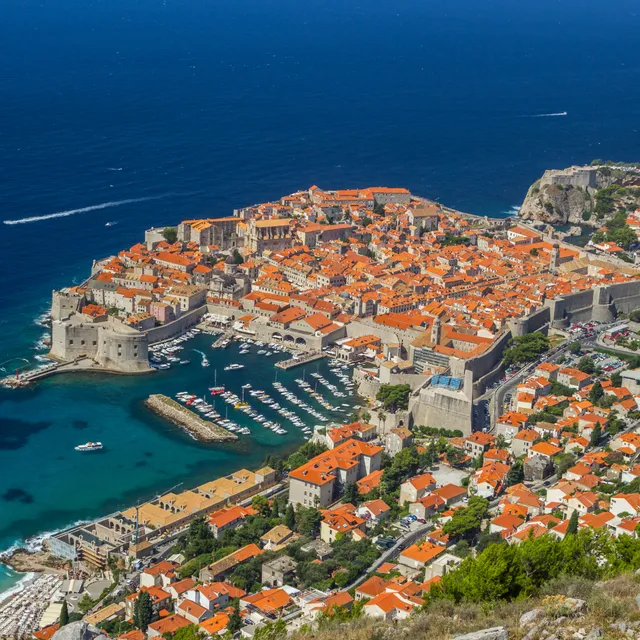
Walled old town and harbour of Dubrovnik on the Adriatic Sea

Wikimedia Commons

Country Record

Longest Continuously Occupied Site in Croatia

CidadeUNESCO

Dubrovnik Old Town

Seyfi Cem Baskin

Dubrovnik600 d.C. – 1808 d.C.

The walled marble city on the Adriatic — capital of the maritime Republic of Ragusa for centuries — whose intact ramparts, Stradun, and Renaissance palaces make it one of Europe's most visited historic cities and a UNESCO masterpiece of late-medieval urban design.

21
Interesse 84

Localização

Croatia

42.65°N · 18.09°E · Europa

Republic

Independent Republic of Ragusa 1358–1808

Walls

~2 km circuit; largely 12th–17th centuries

1667 earthquake

Devastated city; major rebuild in baroque forms

UNESCO

Old City of Dubrovnik (1979)

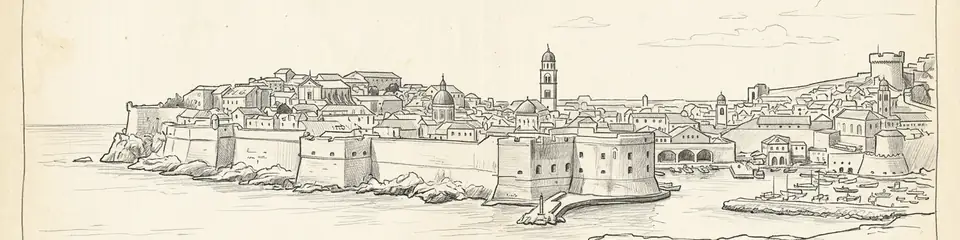
Graphite pencil sketch banner of Dubrovnik Old Town

“Dubrovnik preserves an exceptionally complete late-medieval and Renaissance walled city — rare proof of how a small republic projected power through trade rather than territory.”

Localização

Visão geral

Dubrovnik (historical Ragusa) occupies a rocky promontory on the Dalmatian coast of Croatia, facing the Adriatic Sea. Founded or refounded by refugees from Epidaurum (Cavtat) after Slavic and Avar incursions, the city grew as a Byzantine-then-independent maritime republic from the 7th century onward. By the 15th and 16th centuries Ragusa was a wealthy trading state balancing Ottoman, Venetian, and Habsburg spheres, famed for diplomacy, shipbuilding, and its 1272 Statute.

The present circuit of walls — roughly 2 kilometres, up to 25 metres high — largely dates to the 12th–17th centuries, withstood the 1667 earthquake, and was repaired after the 1990s siege of Dubrovnik. Inside, the Stradun (Placa) limestone artery links the Pile and Ploče Gates; the Rector's Palace, Sponza, and Franciscan monastery exemplify Gothic and Renaissance Adriatic architecture.

UNESCO listed the Old City of Dubrovnik in 1979; damage during the 1991–1992 shelling led to major international restoration. Tourism now ranks among the highest in the Mediterranean, with cruise and heritage visitors crowding the walls each summer.

Por que isso importa

Dubrovnik preserves an exceptionally complete late-medieval and Renaissance walled city — rare proof of how a small republic projected power through trade rather than territory. Its 1990s war damage and restoration became a landmark case in heritage protection under conflict (ICTY prosecutions cited shelling of the old town).

Evidências e interpretação

Distinguir o que está bem estabelecido do que permanece em debate.

Fatos bem estabelecidos

2
  • The 1272 Statute of Ragusa and later municipal archives document governance, trade privileges, and building regulations.
  • Architectural survey confirms Gothic–Renaissance palaces, wall phases, and post-1667 baroque reconstruction within the historic fabric.

Interpretações debatidas

1
  • The precise date and circumstances of Ragusa's foundation remain debated between medieval chronicles and limited early archaeological evidence.

Fotos da comunidade

Compartilhe sua experiência

Você visitou este sítio? Envie suas fotos para ajudar outros a descobri-lo.

Como citar esta página

Atlas Anatolia. (600). Dubrovnik Old Town. Atlas Anatolia. https://atlasanatolia.com/pt/site/dubrovnik

Conteúdo licenciado sob CC BY-SA 4.0 — atribuição necessária ao reutilizar.

Fontes

  • Dubrovnik: A History — Harris, Robin (2003)
  • UNESCO — Old City of DubrovnikLink

Perguntas frequentes

Onde fica Dubrovnik Old Town?

Dubrovnik Old Town está localizado em Croatia.

Qual é a antiguidade de Dubrovnik Old Town?

Dubrovnik Old Town data de aproximadamente 600 d.C. – 1808 d.C..

Quais civilizações estão associadas a Dubrovnik Old Town?

Dubrovnik Old Town está associado à civilização Byzantine, Republic of Ragusa.

Por que Dubrovnik Old Town é importante?

Dubrovnik preserves an exceptionally complete late-medieval and Renaissance walled city — rare proof of how a small republic projected power through trade rather than territory.

Dubrovnik Old Town é um Patrimônio Mundial da UNESCO?

Sim — Dubrovnik Old Town está inscrito na Lista do Patrimônio Mundial da UNESCO.