
Pular para o conteúdo
Atlas Anatolia
NotíciasIce Age teeth in Sulawesi push betel-nut use back as far as 25,000 yearsRoman mosaic and Eros head uncovered in the basilica at Pompeiopolis, Kastamonu
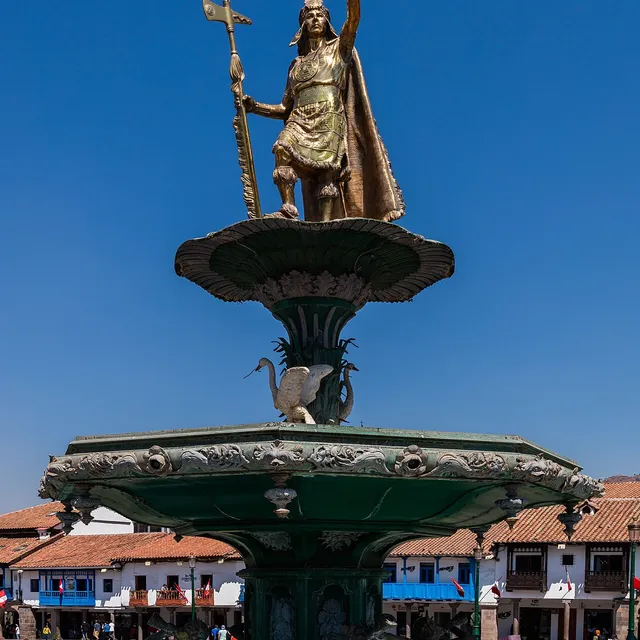
Plaza de Armas of Cusco with the Inca Pachacuti monument and cathedral

Wikimedia Commons

Country Record

Known by the Most Names in Peru

CidadeUNESCODestaque

Cusco

Seyfi Cem Baskin

Qosqo1200 d.C. – 1533 d.C.

The high-altitude capital of the Inca Empire — planned in the form of a puma, with Coricancha at its spiritual centre and colonial churches built atop Inca masonry — the gateway city to Machu Picchu and the heart of Andean imperial archaeology.

211
Interesse 79

Localização

Peru

13.53°S · 71.97°W · América do Sul

Elevation

~3,400 m in the Peruvian Andes

Inca capital

Tawantinsuyu administrative and ritual centre

Coricancha

Temple of the Sun — finest Inca ashlar masonry in the city

UNESCO

City of Cuzco World Heritage Site (1983)

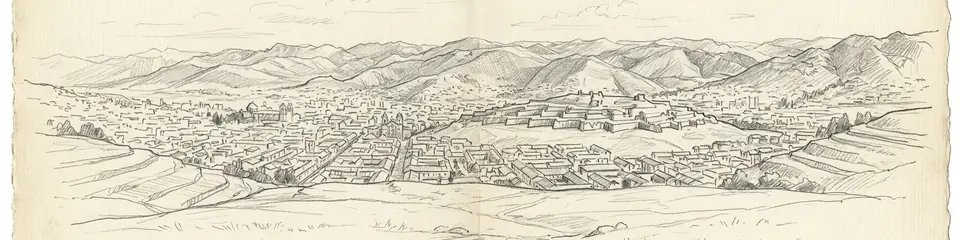
Graphite pencil sketch banner of Cusco

“Cusco is the only major imperial capital of the pre-Columbian Americas still inhabited — a palimpsest of Killke, Inca, and Spanish colonial urbanism at altitude.”

Localização

Visão geral

Cusco (Qosqo, "navel" in Quechua) lies at about 3,400 metres elevation in a basin of the Peruvian Andes. Killke culture peoples occupied the valley from c. 900 CE; according to Inca oral tradition recorded by Spanish chroniclers, the first emperor Manco Cápac founded Cusco as the imperial centre. Under Pachacuti Inca Yupanqui (mid-15th century) and his successors, the city was rebuilt as the capital of Tawantinsuyu — the Inca Empire — with a planned urban form likened to a puma: Sacsayhuamán as the head, the main canals as the spine, and the Plaza Huacaypata (now Plaza de Armas) as the belly.

Inca builders used ashlar and polygonal masonry in andesite and diorite; master walls survive in the Coricancha (Temple of the Sun), the Qorikancha cloister of Santo Domingo, and numerous street foundations. The Coricancha was the empire's richest temple, reportedly walled with gold sheets before Spanish looting. The Spanish founded their colonial capital atop Inca layouts, erecting the Cathedral and La Compañía on the plaza and stripping stone from Sacsayhuamán and other shrines.
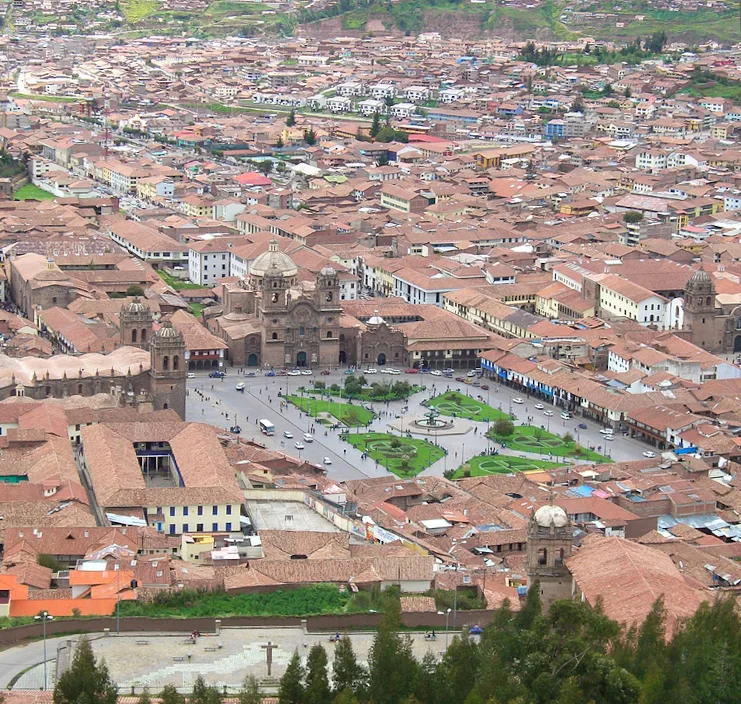
Plaza de Armas - Cusco

*Plaza de Armas - Cusco | Joachim Pietsch

derivative work: MrPanyGoff (CC BY-SA 2.0)*

"This was the navel of the world, where the Inca held the empire together — the House of the Sun blazed with gold, and the stones of the city were fitted so tightly that a knife could not pass between them."
— Composite from Spanish chronicles on Cusco and Coricancha (16th century)

Modern Cusco is a living city of roughly 400,000 people; the historic centre is a UNESCO World Heritage Site (inscribed 1983, extended 2013) encompassing Inca and colonial layers. Archaeological work continues on Killke and Inca phases beneath streets. Cusco is the rail and road hub for the Sacred Valley and Machu Picchu, making it one of South America's primary heritage tourism nodes.
Por que isso importa

Cusco is the only major imperial capital of the pre-Columbian Americas still inhabited — a palimpsest of Killke, Inca, and Spanish colonial urbanism at altitude. Understanding Inca statecraft — ceque lines, solar worship at Coricancha, and megalithic elite architecture — begins here, not only at outlying estates like Machu Picchu.

Evidências e interpretação

Distinguir o que está bem estabelecido do que permanece em debate.

Fatos bem estabelecidos

2
  • Inca polygonal and ashlar walls survive in situ at Coricancha, Loreto Street, and other foundations beneath colonial buildings.
  • Spanish chronicles (Cieza de León, Garcilaso de la Vega, Betanzos) describe the puma-shaped plan and Coricancha's wealth, corroborated by archaeology.

Inferências acadêmicas

1
  • Killke-phase occupation predates imperial Inca rebuilding; the degree of continuous urban planning versus Pachacuti's wholesale redesign is inferred from stratigraphy.

Interpretações debatidas

1
  • The exact extent and astronomical alignment of ceque (sacred sight-line) systems centred on Cusco remain debated among Andean scholars.

Fotos da comunidade

Compartilhe sua experiência

Você visitou este sítio? Envie suas fotos para ajudar outros a descobri-lo.

Histórias relacionadas

Como citar esta página

Atlas Anatolia. (1200). Cusco. Atlas Anatolia. https://atlasanatolia.com/pt/site/cusco

Conteúdo licenciado sob CC BY-SA 4.0 — atribuição necessária ao reutilizar.

Gráfico

Conexões com sítios e histórias relacionados.

Fontes

  • The Conquest of the Incas — Hemming, John (1970)
  • Inca Architecture — Gasparini, Graziano; Margolies, Luize (1980)

Perguntas frequentes

Onde fica Cusco?

Cusco está localizado em Peru.

Qual é a antiguidade de Cusco?

Cusco data de aproximadamente 1200 d.C. – 1533 d.C..

Quais civilizações estão associadas a Cusco?

Cusco está associado à civilização Inca.

Por que Cusco é importante?

Cusco is the only major imperial capital of the pre-Columbian Americas still inhabited — a palimpsest of Killke, Inca, and Spanish colonial urbanism at altitude.

Cusco é um Patrimônio Mundial da UNESCO?

Sim — Cusco está inscrito na Lista do Patrimônio Mundial da UNESCO.