
Pular para o conteúdo
Atlas Anatolia
NotíciasIce Age teeth in Sulawesi push betel-nut use back as far as 25,000 yearsRoman mosaic and Eros head uncovered in the basilica at Pompeiopolis, Kastamonu
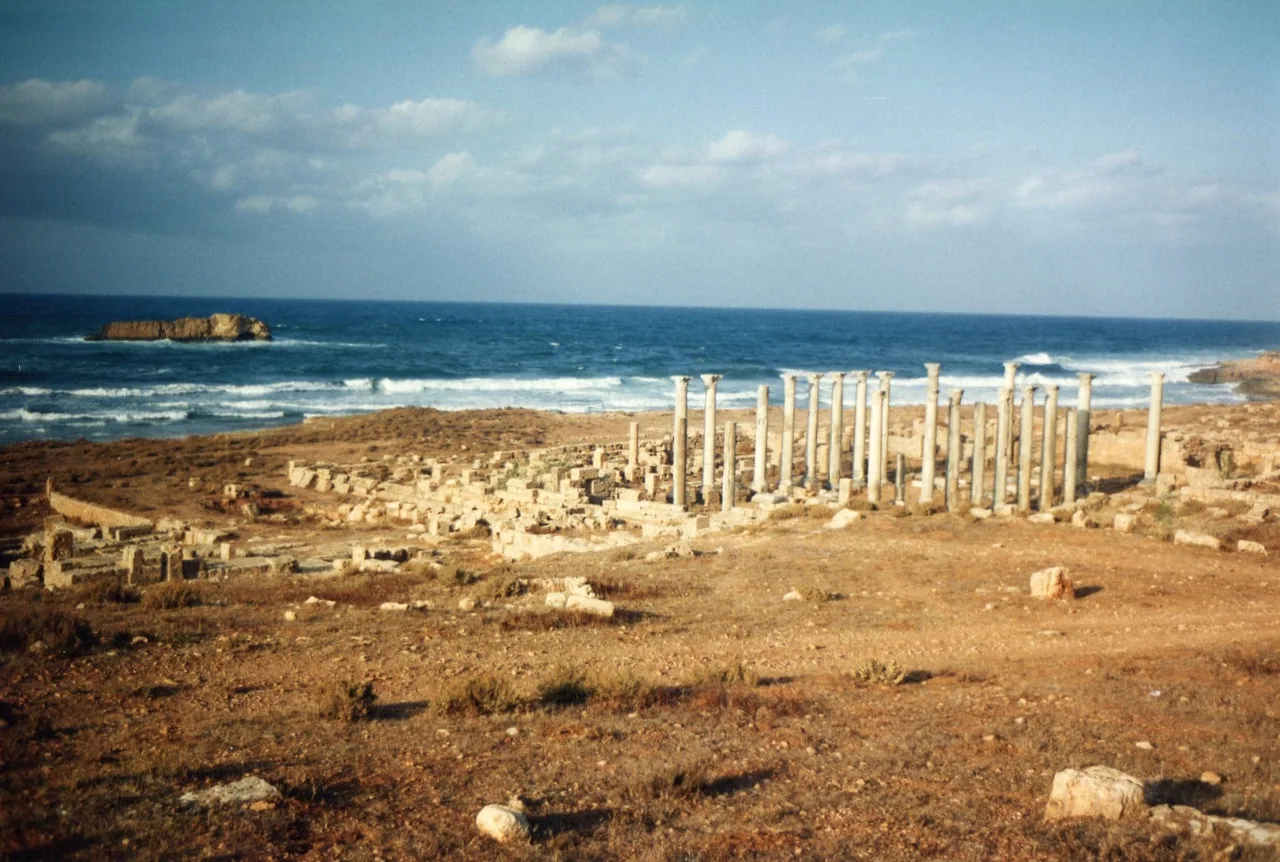
Ancient harbour city walls at Apollonia, Cyrenaica, Libya

Wikimedia Commons

Country Record

Known by the Most Names in Libya

CidadeUNESCO

Apollonia

Seyfi Cem Baskin

600 a.C. – 643 d.C.

The ancient port of Cyrene on the Libyan coast, Apollonia served as the harbour city for the inland Greek capital and preserves Roman walls, a theatre, Byzantine churches, and the most accessible coastal archaeology in Cyrenaica — including underwater remains of ancient harbour structures.

21
Interesse 45

Localização

Jabal al Akhdar · Cyrenaica · Líbia

32.90°N · 21.97°E · África

Role

Harbour city for Cyrene from the 6th century BCE

Highlight

Extensive Byzantine city walls and churches

UNESCO

Part of Cyrene World Heritage grouping

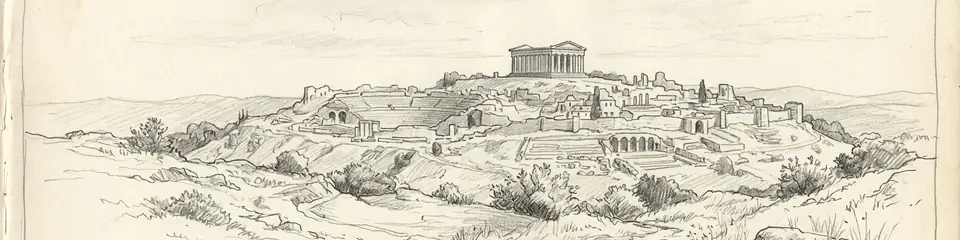
Graphite pencil sketch banner of Apollonia

“Apollonia completes the urban system of Cyrenaica — without its port, the inland capital of Cyrene cannot be understood as an economic and political entity.”

Localização

Visão geral

Apollonia lies on the Mediterranean coast of Cyrenaica in eastern Libya, roughly 20 kilometres north of Cyrene, serving as that city's principal port from the 6th century BCE onward. The Greek name reflects its dedication to Apollo, paralleling the great inland sanctuary at Cyrene.

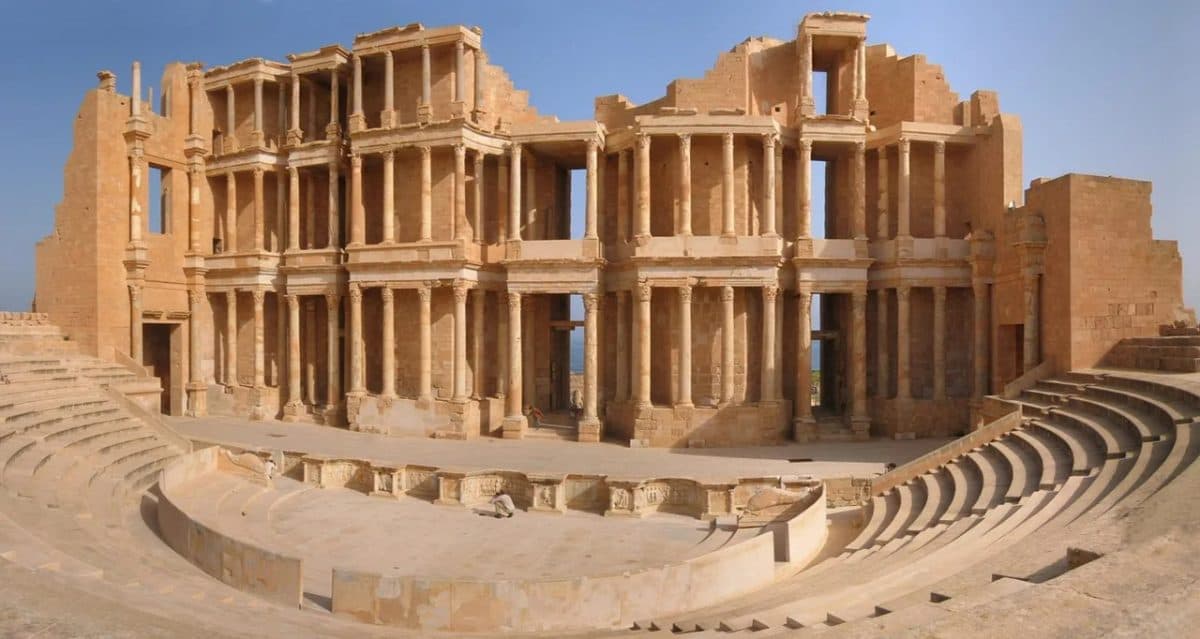
As Cyrene's harbour, Apollonia handled exports of silphium, grain, and horses while importing Mediterranean goods. Under Roman rule it became an independent city in the province of Crete and Cyrenaica, with its own magistrates and monumental building programme including baths, a theatre, and extensive fortification walls rebuilt in the Byzantine period.
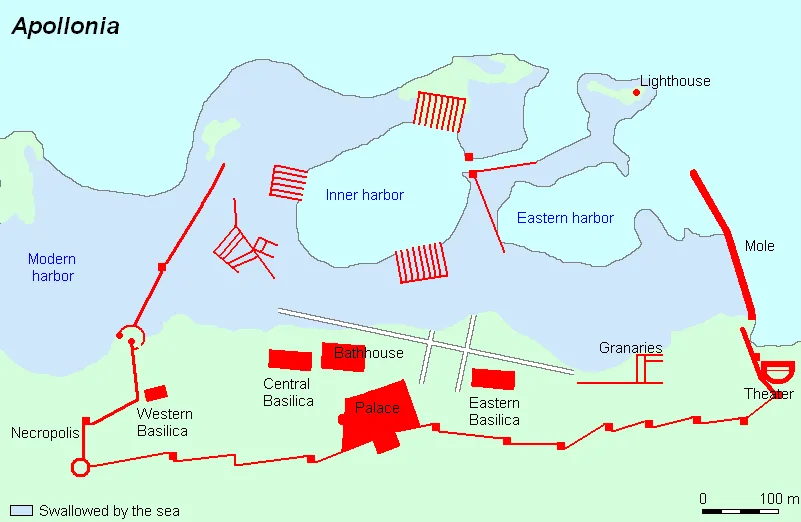
365 Crete Earthquake, Apollonia, Map (Jona)
365 Crete Earthquake, Apollonia, Map (Jona) | Jona Lendering (CC BY-SA 3.0)
"Apollonia served as the port of Cyrene, and its harbour works and fortifications guarded the trade of the Cyrenaican plateau."
— R. G. Goodchild, Cyrene and Apollonia: An Historical Guide (1959)

The site preserves one of the longest stretches of ancient city wall in North Africa, Byzantine churches with mosaic floors, and submerged harbour structures visible to divers and visible in aerial survey. Apollonia declined after Arab conquest but remained a coastal settlement (modern Susah/As-Susah).
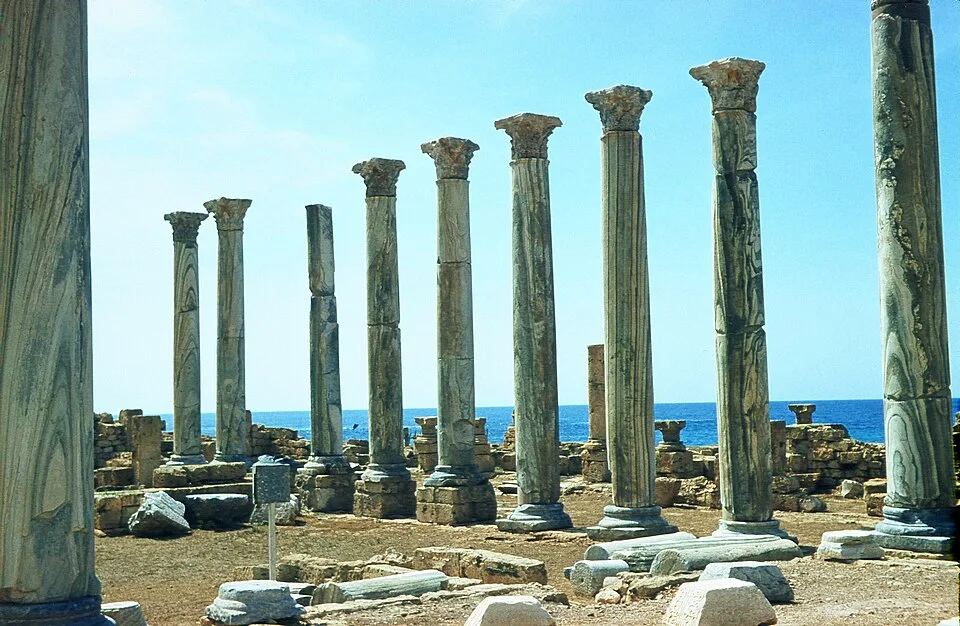
East Church, Apollonia (50108622657)
East Church, Apollonia (50108622657) | Libyan Studies (CC BY-SA 2.0)

Apollonia forms part of the UNESCO World Heritage grouping with Cyrene and Ptolemais, recognised for the integrated archaeological landscape of Cyrenaica's Greek-Roman urban system.
Por que isso importa

Apollonia completes the urban system of Cyrenaica — without its port, the inland capital of Cyrene cannot be understood as an economic and political entity. Its Byzantine fortifications and churches document the late antique transformation of a classical port into a defended Christian centre on Rome's African frontier. Underwater and coastal archaeology offers rare evidence for ancient harbour engineering in North Africa.

Evidências e interpretação

Distinguir o que está bem estabelecido do que permanece em debate.

Fatos bem estabelecidos

2
  • The site functioned as Cyrene's port, attested in literary sources and archaeological remains.
  • Byzantine fortification walls and church mosaics are among the best-preserved at the site.

Inferências acadêmicas

1
  • Submerged harbour structures suggest significant ancient maritime infrastructure now partially underwater.

Fotos da comunidade

Compartilhe sua experiência

Você visitou este sítio? Envie suas fotos para ajudar outros a descobri-lo.

Histórias relacionadas

Como citar esta página

Atlas Anatolia. (600). Apollonia. Atlas Anatolia. https://atlasanatolia.com/pt/site/apollonia-cyrenaica

Conteúdo licenciado sob CC BY-SA 4.0 — atribuição necessária ao reutilizar.

Gráfico

Conexões com sítios e histórias relacionados.

Fontes

  • Cyrene and Apollonia: An Historical Guide — Goodchild, R. G. (1959)
  • UNESCO — Archaeological Site of CyreneLink

Perguntas frequentes

Onde fica Apollonia?

Apollonia está localizado em Jabal al Akhdar, Cyrenaica, Libya.

Qual é a antiguidade de Apollonia?

Apollonia data de aproximadamente 600 a.C. – 643 d.C..

Quais civilizações estão associadas a Apollonia?

Apollonia está associado à civilização Greek, Roman, Byzantine.

Por que Apollonia é importante?

Apollonia completes the urban system of Cyrenaica — without its port, the inland capital of Cyrene cannot be understood as an economic and political entity.

Apollonia é um Patrimônio Mundial da UNESCO?

Sim — Apollonia está inscrito na Lista do Patrimônio Mundial da UNESCO.