
콘텐츠로 건너뛰기
Atlas Anatolia
디그
뉴스술라웨시 빙하기 치아에서 빈랑 사용 25,000년 전까지 소급카스타모누 폼페이오폴리스 바실리카에서 로마 모자이크와 에로스 두상 발견
Inscribed oracle bone from Yin Xu, Anyang, China, bearing Shang dynasty divination script c. 1300–1046 BCE

Wikimedia Commons

Country Record

Oldest City in China

도시유네스코주요

Yin Xu

Seyfi Cem Baskin

殷墟1300 기원전 – 1046 기원전

The last capital of China's Shang Dynasty and the site where, in 1899, scholars first identified oracle bone inscriptions — the earliest confirmed form of Chinese writing, and one of the world's oldest deciphered writing systems. Excavations here have recovered the tomb of Fu Hao, a Shang queen and military commander independently attested in the oracle bone texts themselves, making Yin Xu one of the rare archaeological sites where inscribed contemporary text and excavated physical remains directly confirm each other.

41
관심 59

위치

Anyang · Henan · 중국

36.13°N · 114.31°E · 아시아

Capital

Last capital of the Shang Dynasty, c. 1300–1046 BCE

Oracle bones

c. 150,000 fragments recovered — earliest confirmed Chinese writing

Discovery

1899, Wang Yirong identifies ancient script on "dragon bone" medicine ingredients

Tomb of Fu Hao

Excavated 1976, intact — the only Shang royal tomb whose occupant is independently textually confirmed

UNESCO

World Heritage Site 2006

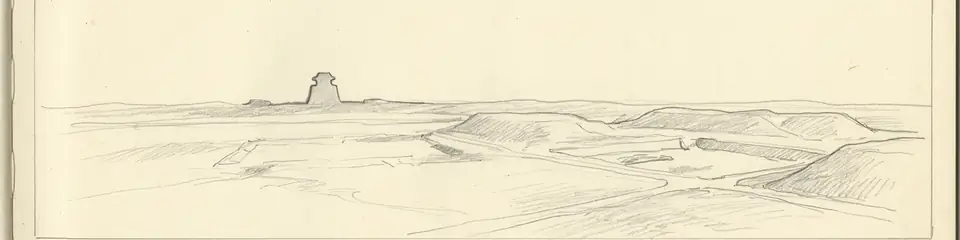
Graphite pencil sketch banner of Yin Xu

“Yin Xu anchors the entire chronology of early Chinese civilisation in verified, contemporary written evidence rather than later reconstruction.”

위치

개요

Yin Xu ("Ruins of Yin") lies near the modern city of Anyang in China's Henan province, on the northern bank of the Huan River. According to traditional Chinese historical sources, later substantially confirmed by archaeology, the Shang king Pan Geng moved the dynastic capital to this location around 1300 BCE, where it remained the seat of Shang royal power — known in its own time as Yin — until the dynasty's fall to the conquering Zhou around 1046 BCE.

The site's significance to world archaeology and the history of writing traces to a chance discovery in 1899. Wang Yirong, a Qing dynasty scholar and official, reportedly noticed unusual carved markings on so-called "dragon bones" — animal bones and turtle shells sold by traditional Chinese pharmacists as medicinal ingredients — and recognised the markings as an ancient form of Chinese script. This discovery launched decades of investigation that traced the bones to Anyang and identified them as oracle bones: shells and bones used by Shang diviners in a practice called pyromancy, in which heat was applied to create cracks whose patterns were interpreted as answers from ancestral spirits or deities to questions posed by the king or royal diviners, with the question and sometimes the outcome then inscribed onto the bone itself.

The roughly 150,000 oracle bone fragments recovered from Yin Xu since systematic excavation began in 1928 — led initially by the Academia Sinica's Institute of History and Philology — constitute the earliest confirmed body of Chinese writing, predating the bronze inscriptions and later classical texts long treated as China's oldest historical sources. These inscriptions record royal divinations covering warfare, harvests, weather, ancestor worship, hunting, and childbirth, providing an extraordinarily direct textual window into Shang royal concerns roughly 3,300 years ago, and have allowed historians to confirm and correct the king-lists and chronology previously known only from much later transmitted texts such as the Records of the Grand Historian.

Among Yin Xu's most celebrated discoveries is the tomb of Fu Hao, excavated in 1976 by archaeologist Zheng Zhenxiang. Remarkably, Fu Hao is independently named and described in numerous oracle bone inscriptions as a consort of King Wu Ding who led military campaigns and performed important ritual duties — meaning her tomb is one of the very few Shang royal burials whose occupant can be identified with high confidence through contemporary textual evidence rather than inference alone. Unlike most other Shang royal tombs at Yin Xu, which were looted in antiquity, Fu Hao's tomb was found essentially intact, containing over 1,600 objects including bronze ritual vessels, jade ornaments, and bone hairpins, along with sacrificial human and animal remains — offering an unparalleled combined textual and material portrait of a specific named individual from Bronze Age China.

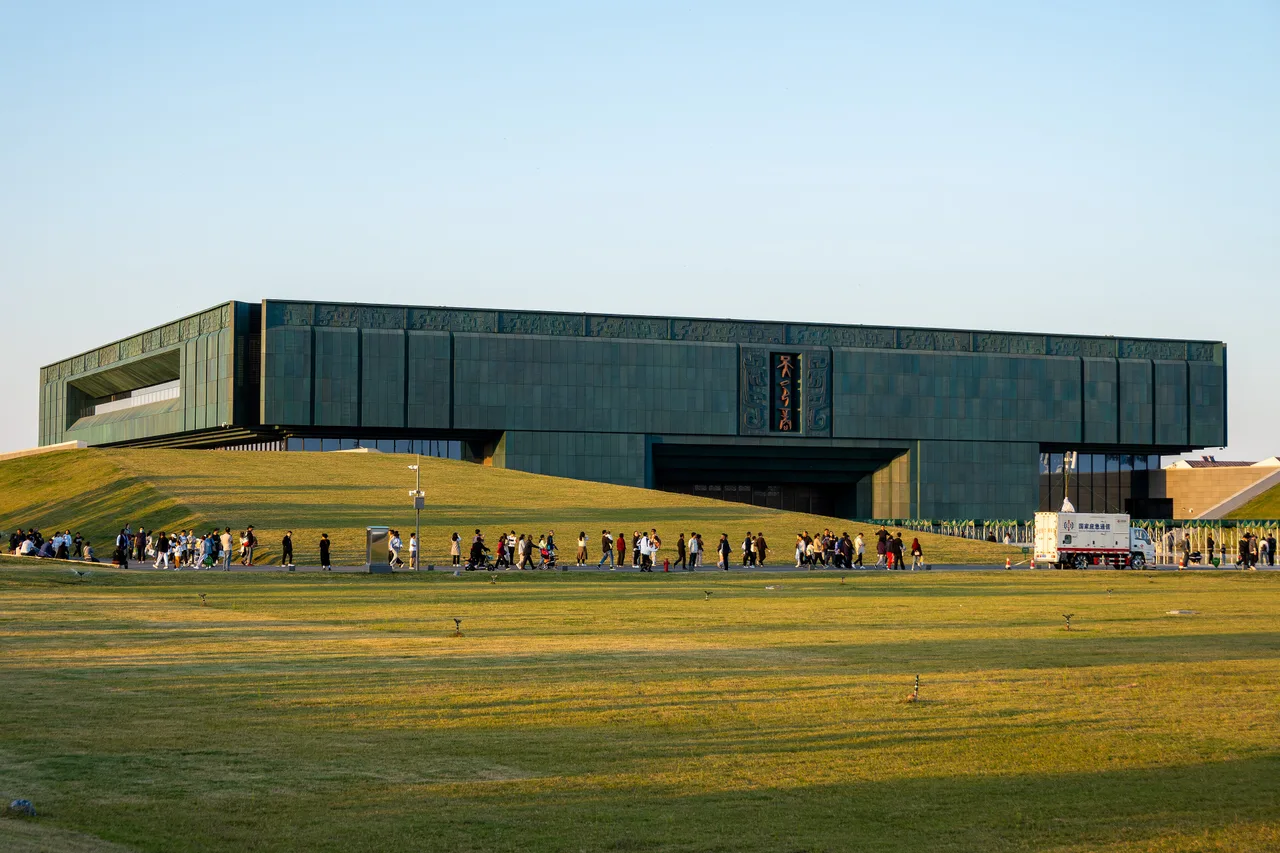
Excavation at Yin Xu has also revealed extensive palace and temple foundation platforms, bronze-casting workshops, and a large royal cemetery containing multiple large shaft tombs, several accompanied by extensive human sacrifice — a practice well documented both archaeologically and in the oracle bone texts themselves. Yin Xu was inscribed as a UNESCO World Heritage Site in 2006.
중요성

Yin Xu anchors the entire chronology of early Chinese civilisation in verified, contemporary written evidence rather than later reconstruction. Before its oracle bone inscriptions were identified and deciphered, the Shang dynasty's existence rested primarily on much later historical texts whose reliability for such an early period some scholars questioned; Yin Xu converted the Shang from a semi-legendary dynasty into a securely documented historical state, with named kings, dated events, and a functioning bureaucratic and religious system attested in their own contemporary writing. The Fu Hao tomb is one of archaeology's clearest examples of independent textual and material evidence converging on a single, specific historical individual — the oracle bones name her and describe her activities, and her undisturbed tomb then physically confirms her status, wealth, and approximate dates, a level of corroboration exceptionally rare for any Bronze Age burial anywhere in the world. As the site where the earliest confirmed Chinese writing system was identified, Yin Xu holds a foundational place not only in Chinese archaeology but in the global history of writing itself — the oracle bone script is a direct ancestor of the Chinese characters still in use today, giving modern Chinese writing among the longest continuously developing scripts of any writing system on Earth.

증거와 해석

확립된 사실과 논쟁 중인 사항을 구분합니다.

잘 확립된 사실

4
  • Approximately 150,000 oracle bone fragments recovered from Yin Xu bear inscriptions in an early form of Chinese script, securely dated to the late Shang period through archaeological context and internal content referencing named Shang kings.
  • The tomb of Fu Hao, excavated intact in 1976, was identified through inscriptions on bronze vessels within the tomb bearing her name, which matches a figure independently and extensively referenced in the oracle bone corpus as a consort and military commander under King Wu Ding.
  • Oracle bone chronological records have allowed historians to cross-check and substantially confirm the Shang royal king-list previously known primarily from the much later Records of the Grand Historian, resolving several points of prior uncertainty.
  • Excavation of the royal cemetery area has documented large shaft tombs accompanied by extensive human and animal sacrifice, corroborating sacrificial practices described within the oracle bone inscriptions themselves.

학술적 추론

1
  • Interpretation of specific oracle bone divination questions and their outcomes relies on ongoing paleographic decipherment; a portion of the recovered script remains only partially or provisionally translated, with some characters and phrases still debated among specialists.

발견과 발굴

1899

Wang Yirong identification of oracle bone script

Qing scholar Wang Yirong recognises ancient writing on "dragon bone" medicinal ingredients, launching the investigation that traced them to Anyang.

1928–1937

Academia Sinica systematic excavation

First large-scale scientific excavation of Yin Xu, led by the Institute of History and Philology, recovering the bulk of the early oracle bone corpus and establishing the site's archaeological framework.

1976

Discovery of the Tomb of Fu Hao

Zheng Zhenxiang excavates the only unlooted Shang royal tomb found at Yin Xu, containing over 1,600 grave goods.

커뮤니티 사진

당신의 경험을 공유하세요

이 유적지를 방문하셨나요? 다른 탐험가들을 위해 사진을 업로드해 보세요.

관련 이야기

이 페이지 인용 방법

Atlas Anatolia. (1300). Yin Xu. Atlas Anatolia. https://atlasanatolia.com/ko/site/yin-xu

콘텐츠는 CC BY-SA 4.0 라이선스에 따라 제공됩니다 — 재사용 시 출처 표시가 필요합니다.

그래프

관련 유적지와 스토리로의 연결.

출처

  • Sources of Shang History: The Oracle-Bone Inscriptions of Bronze Age China — Keightley, David N. (1978)
  • The Excavation of the Tomb of Fu Hao at Yinxu — Zheng, Zhenxiang (1980)
  • UNESCO — Yin Xu링크

자주 묻는 질문

Yin Xu은(는) 어디에 위치해 있나요?

Yin Xu은(는) Anyang, Henan, China에 위치해 있습니다.

Yin Xu의 연대는 언제인가요?

Yin Xu의 연대는 대략 1300 기원전 – 1046 기원전로 거슬러 올라갑니다.

Yin Xu과(와) 관련된 고대 문명은 무엇인가요?

Yin Xu은(는) Shang 문명과 관련이 있습니다.

Yin Xu이(가) 중요한 이유는 무엇인가요?

Yin Xu anchors the entire chronology of early Chinese civilisation in verified, contemporary written evidence rather than later reconstruction.

Yin Xu은(는) 유네스코 세계유산인가요?

예 — Yin Xu은(는) 유네스코 세계유산으로 등재되어 있습니다.